
Hindu side says Gyanvapi complex survey incomplete, seeks direction to ASI
The Hindu side's plea had demanded a survey by the Archeological Survey of India (ASI) in the remaining parts of the Gyanvapi complex
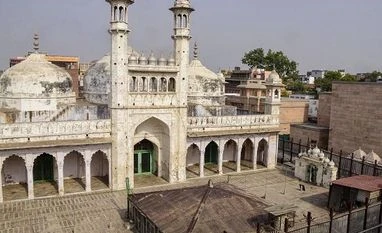 "Hindu side says Gyanvapi complex survey incomplete, seeks direction to ASI")
WebinarsNew
Deep DiveNew
Explore Business Standard
The Hindu side's plea had demanded a survey by the Archeological Survey of India (ASI) in the remaining parts of the Gyanvapi complex
Lawyers representing the Hindu side on Thursday furnished their submissions before a court here in response to the arguments put forth by the Muslim side in the Gyanvapi case two days ago.
The Hindu side's plea had demanded a survey by the Archeological Survey of India (ASI) in the remaining parts of the Gyanvapi complex.
Following the submissions, the court posted the hearing on October 16.
Advocate Madan Mohan Yadav, who is representing the Hindu side, said he appeared before Civil Judge Senior Division Yughul Shambhu, and submitted that the survey done by the ASI in the Gyanvapi complex was incomplete.
Yadav said the ASI was not in a position to furnish a correct report without excavation and therefore it should be ordered to conduct the excavation and survey the entire Gyanvapi complex.
On October 8, the Muslim side -- Anjuman Intezamia Committee -- had presented its views on the petition.
The lawyers then reportedly submitted before the court that when the Hindu side has appealed to agitate the case in the high court and Supreme Court, there was no point arguing the matter in the trial court.
They also submitted that when the ASI survey of the Gyanvapi complex had been done once already, there was no justification for conducting another survey.
The lawyers of the committee had also stated that digging a pit in the mosque premises for the survey was not practical in any way, and could damage the mosque.
Previously, the Hindu side had argued that the original place of 'Jyotirlinga' was in the centre, under the dome of the purported mosque located in the Gyanvapi complex.
"Geographical water used to flow continuously from the 'Argha' which used to collect in the Gyanvapi Kund. It was believed that drinking this water gives knowledge. Therefore, this pilgrimage is also considered as 'Gyanoday Tirth'," it was argued earlier during hearings.
The Hindu party has demanded the examination of the water through water engineering, geologists and archeologists.
Further, the 'Shivling' found from the Gyanoday Tirth, which the Muslim side termed as the "wazukhana", should also be examined to ascertain whether it is a 'Shivling' or a fountain, they had said.
(Only the headline and picture of this report may have been reworked by the Business Standard staff; the rest of the content is auto-generated from a syndicated feed.)
First Published: Oct 10 2024 | 6:22 PM IST


 Connect with us on WhatsApp