
Indian official takes over as spl rep of UN chief for disaster risk cut
Kamal Kishore was earlier with the National Disaster Management Authority, he succeeds Mami Mizutori of Japan
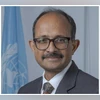 "Indian official takes over as spl rep of UN chief for disaster risk cut")
Explore Business Standard

Associate Sponsors
Co-sponsor
Kamal Kishore was earlier with the National Disaster Management Authority, he succeeds Mami Mizutori of Japan
A top Indian official, Kamal Kishore, has started his term as a special representative of UN chief Antonio Guterres for disaster risk reduction.
On March 28, Kishore, 55, was appointed by Guterres as his special representative for disaster risk reduction.
Kishore was earlier with the National Disaster Management Authority (NDMA). He succeeds Mami Mizutori of Japan at the United Nations Office for Disaster Risk Reduction (UNDRR).
The UNDRR welcomed on May 20 the arrival of Kishore, who started his term as the Special Representative of the UN Secretary-General (SRSG) for Disaster Risk Reduction and the Head of UNDRR, the office said in a statement on Thursday.
Kishore said that the UNDRR plays an important role in drawing together global efforts to reduce disaster risks in the face of increasing vulnerabilities, and said he was looking forward to building on the progress made to date.
"UNDRR's ambition matches the scale of the problem," he said.
He commended the leadership of the previous SRSG, Mizutori, and thanked UNDRR Director, Paola Albrito, for serving as the Acting SRSG prior to his arrival.
Kishore has served as Head of the Department of India's National Disaster Management Authority (NDMA) since 2015, leading the Group of 20 (G20) Working Group on Disaster Risk Reduction under India's G20 presidency.
Before joining NDMA, Kishore spent nearly thirteen years with the United Nations Development Programme (UNDP) in Geneva, New Delhi and New York. During this time, he led global advocacy to integrate disaster resilience concerns into the Sustainable Development Goals and a global team of disaster risk reduction advisers to support UNDP programme countries.
Kishore holds a Master of Science in Urban Planning, Land and Housing Development from the Asian Institute of Technology, Bangkok, Thailand, and a Bachelor of Architecture from the Indian Institute of Technology, Roorkee.
Geneva-headquartered UNDRR is the UN's focal point for disaster risk reduction and coordinates the UN-wide implementation of the Sendai Framework, which was the first major agreement of the post-2015 development agenda and provides member states with concrete actions to protect development gains from the risk of disaster.
(Only the headline and picture of this report may have been reworked by the Business Standard staff; the rest of the content is auto-generated from a syndicated feed.)
First Published: May 24 2024 | 7:36 AM IST

