Home / India News / Isro moves to wake up Chandrayaan-3 rover, lander as dawn breaks on Moon
Isro moves to wake up Chandrayaan-3 rover, lander as dawn breaks on Moon
The solar-powered modules of Chandrayaan-3 were put to sleep on September 4 after completed Isro's main scientific objectives on the south pole of the Moon
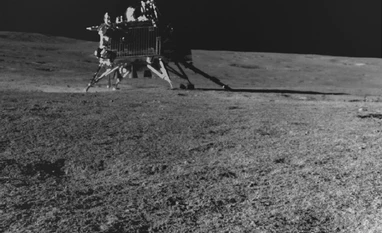
The Indian Space Research Organisation (Isro) is gearing up to wake up the lander and rover modules of Chandrayaan-3 mission from their "sleep mode" as dawn breaks on the Moon on Wednesday.
The Pragyan rover of the Chandrayaan-3 mission, which is stationed on the lunar surface, was deliberately placed in "sleep mode" by the Isro on September 4. The solar-powered rover had successfully completed its assignments and was put on this temporary hiatus until September 22
At the time, Isro had stated, "Currently, the battery is fully charged. The solar panel is oriented to receive light at the next sunrise expected on September 22, 2023. The receiver is kept on."
Now that dawn has broken, the rover will most likely be revived on either Thursday or Friday, contingent on the availability of sunshine on the south pole of the lunar surface.
On Thursday, Union Minister Jitendra Singh explained in the Lok Sabha, "Our communication circuit (with the lander and rover) has to get activated. The communication circuit is called the wake up circuit. It will work when the temperature rises to minus 10 degrees. Now, team Isro and everyone connected to the mission are waiting for the temperature to rise on the moon,"
According to a report by the Indian Express, Isro officials have stated that the chances of reviving the rovers is "not very high" but it is "not a hopeless situation" either. There is a possibility that the lander or the rover module may be able to wake up but without its full functionality.
The Chandrayaan-3 modules were not designed to combat extremely low temperatures. The south pole of the Moon is known to drop below -200 degrees Celsius. However, as Chandrayaan-3 had already completed its main scientific objective, Isro decided to take a chance by extending the lifespan of the lander and rover. For context, Chandrayaan-3 modules only had a mission life of one lunar day, which is equivalent to about 14 days on Earth.
"The moment of anxiety is that we are waiting for the wake up call to get activated and Vikram and Pragyan to respond to that alarm. Once they do, the communication from the earth will begin and we will be the first in the world to have accomplished this," the Union minister added.

 "Isro moves to wake up Chandrayaan-3 rover, lander as dawn breaks on Moon")


