Home / India News / LS speaker Birla urges political parties to curb disruptions in Parliament
LS speaker Birla urges political parties to curb disruptions in Parliament
Addressing the national level conference of Urban Local Bodies here, Birla said that people would teach a lesson to political parties that resort to disruption of the House proceedings
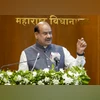
Birla also wanted the Urban Local Bodies to adopt similar practices as the Lok Sabha and state assemblies of having the Question Hour and Zero Hour in their functioning. (File photo: PTI)
Ahead of the Monsoon Session of Parliament, Lok Sabha Speaker Om Birla on Thursday urged all political parties to reduce disruptions in House proceedings and asserted it is time to change past practices.
Addressing the national level conference of Urban Local Bodies here, Birla said that people would teach a lesson to political parties that resort to disruption of the House proceedings.
Birla said there has been some reduction in disruption of the House proceedings in the 18th Lok Sabha, which had its first sitting in June last year.
"It is time for change. If we have to strengthen democracy and hold democratic institutions accountable, we have to ensure that the Houses function in a proper manner," he added.
The speaker said all political parties should make efforts to reduce disruptions in proceedings of the House.
Parliament's Monsoon Session is scheduled to begin on July 21 and continue till August 21, a week longer than the original plan to conclude on August 12.
Birla said that he had been witnessing the Lok Sabha proceedings since 2014 when he was elected as a member for the first time.
"The members used to get placards to disrupt the proceedings of the House. The 17th Lok Sabha (2019-2024) was no different, but change was visible in the 18th Lok Sabha," he said.
Birla said the political parties and members started thinking that the House should be allowed to function so that issues faced by people could be raised effectively.
"All political parties made efforts to ensure that the House functions properly," he said.
Birla also wanted the Urban Local Bodies to adopt similar practices as the Lok Sabha and state assemblies of having the Question Hour and Zero Hour in their functioning.
"Why can't we make efforts to have day-long sittings of ULBs? Let the meeting continue for eight hours. It can have Question Hour, Zero Hour. Issues can be discussed and accountability can be fixed to ensure transparency," the speaker said.
Birla said the government will in the coming years implement the law to have 33 per cent reservation for women in the Lok Sabha and state assemblies.
"We have to encourage women leaders in urban local bodies as it is from such institutions that a new national leadership will emerge," he said.
Birla noted that Sardar Vallabhbhai Patel, the country's first Home minister, was once the chairman of the Ahmedabad municipal body in 1922 before emerging as a national figure.
(Only the headline and picture of this report may have been reworked by the Business Standard staff; the rest of the content is auto-generated from a syndicated feed.)

 "LS speaker Birla urges political parties to curb disruptions in Parliament")


