Millions of years ago, parts of present-day Assam’s Karbi Anglong district were not the rugged landmass they are now, but a warm, shallow marine environment where lagoons, wetlands and inner continental shelf waters supported a diverse ecosystem of microscopic marine life.
A new first-of-its-kind geological study by researchers at Nagaland University has unearthed the ancient climatic conditions of Northeast India, revealing that Dillai Parbat, a hill in Karbi Anglong, was once covered by a shallow sea.
The study, which examined the Sylhet Limestone formations of Dillai Parbat, reconstructed the ancient depositional environment of the region during the Eocene period, millions of years ago.
After years of field observations, microscopic examination of rocks and the study of marine microfossils, researchers pieced together how the region’s climate, sea conditions and rock formations evolved over time.
The Dillai Parbat limestone deposits, which are part of the Eocene Sylhet Limestone Formation, are around 75 metres thick and comprise three limestone horizons interbedded with sandstone and shale.
The formation rests over Precambrian granite and granitic gneiss and is overlain by Oligocene Barail sediments, placing the deposits within a much older geological sequence that records the transformation of the region over millions of years.
The researchers examined five vertical sections at different locations, documented the sedimentary structures and collected samples of limestone, sandstone and carbonaceous shale. The samples were then subjected to petrographic analysis and processed for microfossils, which were subsequently identified through microscopic and scanning electron microscope studies.
“The rocks themselves provide some of the clearest clues to the conditions under which they formed. The limestone is dominated by micrite and occurs in the form of wackestone, packstone and grainstone,” said S K Srivastava, a professor in the Department of Geology.
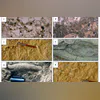
Alongside the carbonate rocks, the researchers found fine- to medium-grained sandstone and shale. Structures such as planar and cross-lamination, herringbone cross-stratification and hummocky cross-stratification were also recorded.
“These features indicate that the ancient environment experienced repeated changes in water movement and sediment supply. Herringbone structures are associated with tidal influences, while hummocky cross-stratification points to storm-related activity in shallow marine settings. The presence of cross-bedded sandstone between limestone units further suggests shifts from relatively low-energy carbonate deposition to higher-energy conditions,” he said.
The study also found evidence of fluctuating sea levels, which the researchers linked partly to regional tectonic activity. The alternation of limestone, sandstone and shale suggests that the depositional environment did not remain constant. Instead, the area went through transgressive and regressive phases, with the sea advancing and retreating and the energy of the water changing over time.
The researchers identified a wide variety of benthic and planktonic foraminifera, microscopic organisms that are highly sensitive to changes in water depth, oxygen availability, nutrients and other environmental conditions. The assemblage included forms such as Lagena, Bolivina, Rotalia, Pararotalia, Spiroloculina, Quinqueloculina, Triloculina, Bulimina, Operculina, Nummulites and Cibicides, among others.
Perhaps the most revealing evidence came from trace fossils, the preserved burrows and activities of organisms that lived in the ancient sediments. The researchers identified Skolithos verticalis, Palaeophycus tubularis and Thalassinoides horizontalis. These structures record how organisms interacted with the seabed and help reconstruct the energy and oxygen conditions of the ancient environment.
The vertical burrows of Skolithos point to periods of increased water energy, including conditions associated with shallow, high-energy marine environments. In contrast, the horizontally oriented burrows of Palaeophycus and Thalassinoides indicate comparatively lower-energy conditions. The presence of Thalassinoides also suggests well-oxygenated bottom waters.
“The study also found evidence of a diverse marine ecosystem beyond microscopic life. Fossil remains of gastropods, echinoderms and bivalves have been reported from the Sylhet Limestone, while the wider fossil record of the formation includes vertebrate and invertebrate fauna. These fossils, along with the microfossils, reinforce the conclusion that the region was once part of a biologically productive shallow sea,” said Tsenchumo Lotha, a research scholar.
The findings also offered insight into the broader geological history of Northeast India. The early Paleogene was a period of major climatic and tectonic change, with the widespread development of shallow-water carbonate systems. The Sylhet Limestone of Dillai Parbat preserves a record of these changes and provides evidence of how marine environments responded to fluctuations in climate, sea level, sediment supply and tectonic activity.
The findings, published in the peer-reviewed Journal of Geosciences Research, are expected to contribute to a better understanding of carbonate sedimentation, microfossil assemblages and the geological evolution of Northeast India.
Jagadish Kumar Patnaik, vice-chancellor of Nagaland University, said the scientific study would enhance the understanding of the geological history of Northeast India. He hoped it could also aid future studies on geological correlation and basin analysis in regions with similar rock formations.

 "A sea buried in stone: New study decodes Northeast's ancient marine world")


 Connect with us on WhatsApp