Home / India News / Parliament special session: PM Modi commends 7,500 members, 600 women MPs
Parliament special session: PM Modi commends 7,500 members, 600 women MPs
The history of the women's reservation bill is chequered. The Ramakrishna Hegde-led Janata Party government in Karnataka pioneered it, introducing a 25 per cent reservation for women in panchayats
Women's representation has only marginally improved in Parliament and legislative assemblies over the last 70 years
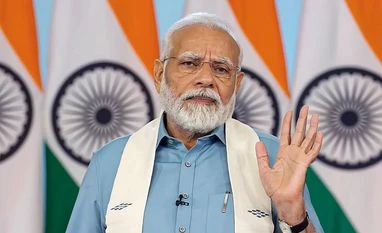
In his remarks in the Lok Sabha on Monday, Prime Minister Narendra Modi stated that since the first Lok Sabha, approximately 7,500 Members of Parliament have contributed to India's parliamentary democracy in the two Houses, of which 600 were women.
Amid anticipation that the government could introduce the Women's Reservation Bill during the five-day special session of Parliament, the Prime Minister observed that the number of women MPs was negligible in the first Lok Sabha but has gradually increased.
In speeches by Rajya Sabha and Lok Sabha members, MPs from the Opposition and the Bharatiya Janata Party (BJP) allies urged the government to introduce the women's reservation bill.
Political parties that had previously opposed the bill or demanded reservation for Scheduled Castes, Scheduled Tribes, and Other Backward Classes of women within the one-third quota for women also pledged support for the bill.
Nationalist Congress Party's Lok Sabha member Supriya Sule, Chirag Paswan of the Lok Janshakti Party, Shiromani Akali Dal's Harsimrat Kaur Badal, and Biju Janata Dal's Rajya Sabha member Amar Patnaik, among others, appealed to the government to bring the women's reservation bill.
Women's representation has only marginally improved in Parliament and legislative assemblies over the last 70 years. The first Lok Sabha in 1952 had 4.4 per cent women members. The current 17th Lok Sabha has 15 per cent. The US House of Representatives had 2 per cent women members in 1951 and 28.3 per cent in 2022, while the House of Commons increased from 3 per cent to 34.61 per cent over the same period.
The history of the women's reservation bill is chequered. The Ramakrishna Hegde-led Janata Party government in Karnataka pioneered it, introducing a 25 per cent reservation for women in panchayats. The state saw its first election under the changed law in December 1986.
By 1988, the National Perspective Plan for Women: 1988–2000 supported a 30 per cent reservation for women, becoming the first government document to set the quantum for women's reservation at one-third.
The Rajiv Gandhi government first introduced a constitutional amendment to reserve a third of seats in panchayats and nagarpalikas in May 1989. The amendment passed in the Lok Sabha but failed in the Rajya Sabha in September 1989. The bills, now known as the 73rd and 74th amendments, were eventually passed in 1993 during the tenure of P V Narasimha Rao. There are currently 1.4 million elected women representatives in the Panchayati Raj Institutions.
The HD Deve Gowda government introduced a bill to reserve a third of the seats in the Lok Sabha and legislative assemblies for women in 1996, which met opposition from his party leaders, such as Sharad Yadav, who demanded a quota within a quota. They argued that "parkati mahilayen," women with short hair or privileged urban women, would monopolise the seats.
On 29 March 2010, the Rajya Sabha passed the bill brought by the Manmohan Singh-led government. However, it was not considered in the Lok Sabha. According to Congress's Rajya Sabha member Jairam Ramesh, bills introduced or passed in the Rajya Sabha do not lapse, and the Women's Reservation Bill remains active.
The bill continues to hang in the balance, but in the last quarter-century, women have increasingly become a vote bank that influences election issues and outcomes, prompting parties to announce women-specific manifestos, promises, and "guarantees."

 "Parliament special session: PM Modi commends 7,500 members, 600 women MPs")


