SC curtails Centre's authority on industrial alcohol; overturns 1990 ruling

Chief Justice DY Chandrachud, writing for himself and seven other judges, declared that the central government does not possess regulatory authority over industrial alcohol
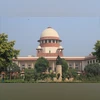
Supreme Court, SC
Chief Justice DY Chandrachud declared that the central government does not possess regulatory authority over industrial alcohol. | File Photo
Prateek Shukla New Delhi
2 min read Last Updated : Oct 23 2024 | 6:23 PM IST
In a significant ruling on Wednesday (October 23), the Supreme Court, by an 8:1 majority, ruled that states have control over the production, manufacture, and supply of industrial alcohol. This ruling overturned a 1997 decision, which had given this power to the central government. The case had been sent to a nine-judge bench in 2010 for review.
 
Chief Justice DY Chandrachud, writing for himself and seven other judges, declared that the central government does not possess regulatory authority over industrial alcohol. He mentioned that industrial alcohol falls under Entry 8 of List II of the Constitution, which pertains to intoxicating liquors, and cannot be taken over by Parliament under Entry 52 of List I. According to the ruling, states retain the power to legislate on intoxicating liquor, which includes industrial alcohol.
 
Justice BV Nagarathna provided the sole dissenting opinion, arguing that the states lack the authority to regulate industrial alcohol.
 
Under the Constitution’s 7th Schedule, Entry 8 of the State List grants states the authority to legislate on the manufacture, transport, and sale of intoxicating liquors. Conversely, Entry 52 of the Union List and Entry 33 of the Concurrent List allow Parliament to regulate industries in the public interest. However, this ruling affirms that industrial alcohol, which is not intended for human consumption, remains within the jurisdiction of the states.
 
Previous legal interpretations
 
The issue of industrial alcohol regulation has long been debated. In 1990, the Supreme Court, in Synthetics & Chemicals Ltd. v State of Uttar Pradesh case, held that ‘intoxicating liquors’ referred only to potable alcohol, excluding industrial alcohol from state control. During the verdict, the court also noted that Parliament could regulate industrial alcohol through a declaration under Entry 33 of the Concurrent List.
 
Despite both Parliament and state legislatures having the power to make laws on subjects in the Concurrent List, central laws take precedence over state legislation. Nevertheless, the latest ruling marks a pivotal moment in clarifying the extent of state versus central control over industrial alcohol, with Chief Justice Chandrachud highlighting that substances like alcohol, opium, and drugs, even if not traditionally intoxicating, fall under the umbrella of ‘intoxicating liquors’. Justice Nagarathna, however, maintained her view that state legislatures lack the necessary competence in this area.
*Subscribe to Business Standard digital and get complimentary access to The New York Times

Smart Quarterly

₹900

3 Months

₹300/Month

SAVE 25%

Smart Essential

₹2,700

1 Year

₹225/Month

SAVE 46%
*Complimentary New York Times access for the 2nd year will be given after 12 months

Super Saver

₹3,900

2 Years

₹162/Month

Subscribe

Renews automatically, cancel anytime

Here’s what’s included in our digital subscription plans

Exclusive premium stories online

  • Over 30 premium stories daily, handpicked by our editors

Complimentary Access to The New York Times

  • News, Games, Cooking, Audio, Wirecutter & The Athletic

Business Standard Epaper

  • Digital replica of our daily newspaper — with options to read, save, and share

Curated Newsletters

  • Insights on markets, finance, politics, tech, and more delivered to your inbox

Market Analysis & Investment Insights

  • In-depth market analysis & insights with access to The Smart Investor

Archives

  • Repository of articles and publications dating back to 1997

Ad-free Reading

  • Uninterrupted reading experience with no advertisements

Seamless Access Across All Devices

  • Access Business Standard across devices — mobile, tablet, or PC, via web or app

More From This Section

Topics :D Y ChandrachudSupreme CourtalcoholChief Justice of IndiaLiquorIndian legal system

First Published: Oct 23 2024 | 12:44 PM IST

Next Story