Sharing live location of accused in return for bail violates privacy: SC

The judgment comes on the heels of the Delhi High Court's conditions for granting interim bail to Frank Vitus, a Nigerian national accused in a drugs case
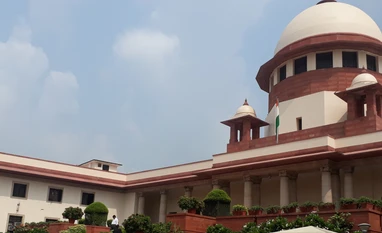
Supreme Court
Bhavini Mishra New Delhi
2 min read Last Updated : Jul 08 2024 | 6:42 PM IST
The Supreme Court on Monday said that a bail condition requiring an accused to share their Google Maps pin location for the investigating officer to access their location violates the person's right to privacy.

A bench of Justice Abhay S Oka and Justice Ujjal Bhuyan said there cannot be a bail condition that enables the police to constantly track the movements of the accused and 'peep into the privacy of the accused.'

"There can't be a bail condition defeating the very objective of bail. There can't be a bail condition enabling the police to constantly track the movement of the accused and virtually peep into the private life of the accused," the bench said.

The judgment comes on the heels of the Delhi High Court's conditions for granting interim bail to Frank Vitus, a Nigerian national accused in a drugs case.

The High Court in 2022 had ordered the accused and a co-accused to place a pin on Google Maps so their whereabouts would be visible to the investigating officer. The court also told the accused to obtain a certificate from the Nigerian High Commission confirming they would not leave India and would appear before the trial court.

While hearing the matter, the apex court had asked Google India to explain the functioning of Google PIN requiring the accused to share their live mobile location with the officer.

Additional Solicitor General Vikramjeet Banerjee for the Narcotics Control Bureau (NCB) had then argued that such a condition helps share the live location of the accused. However, Justice Oka disagreed, emphasising that it cannot be a bail condition, even if it has been used in two instances by the court.

The court also relaxed a bail condition that required the foreign accused to obtain an assurance from his embassy that they would not leave India. The bench said that there cannot be bail conditions that defeat the purpose of granting bail.
*Subscribe to Business Standard digital and get complimentary access to The New York Times

Smart Quarterly

₹900

3 Months

₹300/Month

SAVE 25%

Smart Essential

₹2,700

1 Year

₹225/Month

SAVE 46%
*Complimentary New York Times access for the 2nd year will be given after 12 months

Super Saver

₹3,900

2 Years

₹162/Month

Subscribe

Renews automatically, cancel anytime

Here’s what’s included in our digital subscription plans

Exclusive premium stories online

  • Over 30 premium stories daily, handpicked by our editors

Complimentary Access to The New York Times

  • News, Games, Cooking, Audio, Wirecutter & The Athletic

Business Standard Epaper

  • Digital replica of our daily newspaper — with options to read, save, and share

Curated Newsletters

  • Insights on markets, finance, politics, tech, and more delivered to your inbox

Market Analysis & Investment Insights

  • In-depth market analysis & insights with access to The Smart Investor

Archives

  • Repository of articles and publications dating back to 1997

Ad-free Reading

  • Uninterrupted reading experience with no advertisements

Seamless Access Across All Devices

  • Access Business Standard across devices — mobile, tablet, or PC, via web or app

More From This Section

Topics :Supreme Courtright to privacyGoogle Maps

First Published: Jul 08 2024 | 6:42 PM IST

Next Story