
'Unacceptable breach and violation of privacy': MoS IT warns Big Tech
Minister of State for Electronics and IT Rajeev Chandrasekhar on Wednesday warned Big Tech like Meta-owned WhatsApp over the alleged breach of personal data privacy of users
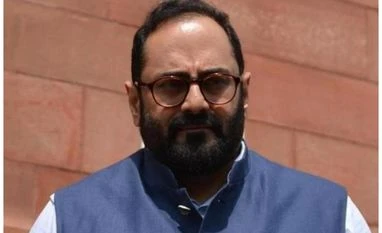 "'Unacceptable breach and violation of privacy': MoS IT warns Big Tech")
Explore Business Standard

Associate Sponsors
Co-sponsor
Minister of State for Electronics and IT Rajeev Chandrasekhar on Wednesday warned Big Tech like Meta-owned WhatsApp over the alleged breach of personal data privacy of users
Minister of State for Electronics and IT Rajeev Chandrasekhar on Wednesday warned Big Tech like Meta-owned WhatsApp over the alleged breach of personal data privacy of users.
Chandrasekhar reacted to a Twitter engineer Foad Dabiri, who posted on Twitter that WhatsApp has been using the microphone in the background.
"While I was asleep and since I woke up at 6 a.m. (and that's just a part of the timeline!) What's going on?" he posted on the micro-blogging platform.
Chandrasekhar said that this is an "unacceptable breach and violation of privacy".
"We will be examining this immediately and will act on any violation of privacy even as the new Digital Personal Data protection bill #DPDP is being readied," said the minister, as the country prepares its inclusive Digital India Act.
Meanwhile, WhatsApp responded to the Twitter engineer's claim late on Tuesday, saying it believes "this is a bug on Android that mis-attributes information in their Privacy Dashboard" and "have asked Google to investigate and remediate".
"Users have full control over their mic settings. Once granted permission, WhatsApp only accesses the mic when a user is making a call or recording a voice note or video - and even then, these communications are protected by end-to-end encryption so WhatsApp cannot hear them," said the Meta-owned platform.
The microphone issue came as WhatsApp users in India have been left baffled at the amount of international spam calls they have been receiving in the last couple of days, leaving many at the risk of financial loss.
These spam calls with international numbers, mostly from African and Southeast Asian countries, along with fake messages from unknown users, have flooded WhatsApp and Indians have nowhere to go but Twitter to share their ordeal.
Meta-owned WhatsApp has close to 500 million users in India.
Although the mobile numbers show country codes of Indonesia, Vietnam, Malaysia, and Ethiopia, it is not necessary that these calls are actually coming from these countries.
Most of these calls start with +251 (Ethiopia), +62 (Indonesia), +254 (Kenya), +84 (Vietnam) and other countries.
WhatsApp was yet to comment on the growing fake spam calls on its platform.
--IANS
na/prw/ksk/
(Only the headline and picture of this report may have been reworked by the Business Standard staff; the rest of the content is auto-generated from a syndicated feed.)
First Published: May 10 2023 | 1:49 PM IST


