Home / India News / Variable speed limits to be tested on Delhi-Meerut Expressway from Aug 15
Variable speed limits to be tested on Delhi-Meerut Expressway from Aug 15
In a first-of-its-kind project, commuters using the Delhi-Meerut Expressway will encounter different speed limits depending on the travel hour from August 15, officials said on Wednesday.
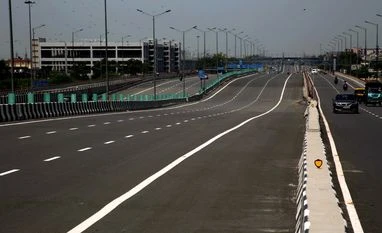
A deserted view of Delhi Meerut Expressway. (File photo)
In a first-of-its-kind project, commuters using the Delhi-Meerut Expressway will encounter different speed limits depending on the travel hour from August 15, officials said on Wednesday.
Passing through the key NCR cities such as Ghaziabad and Noida, the Delhi-Meerut Expressway (DME) has had the same speed limits for cars and heavy vehicles.
Under the 'variable speed limit' pilot project, speed limit on the Delhi side of the expressway will be subject to the congestion on the road.
"The variable speed limit project will be implemented from August 15 between the Akshardham and Sarai Kale Khan stretch of the expressway in the first phase. This will be first such project in the country," Satish Chandra, professor, Civil Engineering Department, IIT Roorkee, told PTI.
As per the plan, between 12 and 7 am, the speed limit will be 65 kmph for cars and 50 kmph for heavy vehicles (HVs). From 7 am to 5 pm, it will be 55 kmph for cars and 45 kmph for HVs. Between 5 pm and 12 am, it will be 60 kmph for cars and 40 for HVs.
The existing speed signboards on DME have been either covered or blurred to avoid any confusion.
The Central Road Research Institute (CRRI) has installed special sensors on the expressway to record the vehicular movement data.
Chandra, who is working on the project with the CRRI, said, "The researchers studied 24-hour traffic data of the expressway over the past few months and then decided upon these speed limits. The main objective of the project is to reduce congestion and accidents on the roads. We will collect data after an interval of three months and asses the actual effect of the project on ground," he said further.
The National Highways Authority of India (NHAI), which manages the expressway, is the implementing agency for this project.
A senior Delhi Traffic Police officer said the speed limits and any variation in them are based entirely on a scientific traffic study done by a different department and are aimed at improving road safety as well as traffic flow.
"So far, we have learnt that two digital variable speed limit display boards have been installed on separate foot overbridges along the Delhi stretch of the Delhi-Meerut Expressway. One has been installed near Akshardham temple and the other near the Pandav Nagar FOB. Our role is to monitor compliance and take action against motorists found overspeeding," the officer said.
Another police officer said that besides the variable speed limit display boards, speed detection cameras will also be installed along the corridor, which will automatically enforce the speed limit displayed at a particular time, detect vehicles violating the prescribed limit, and notify the drivers.
(Only the headline and picture of this report may have been reworked by the Business Standard staff; the rest of the content is auto-generated from a syndicated feed.)

 "Variable speed limits to be tested on Delhi-Meerut Expressway from Aug 15")


 Connect with us on WhatsApp