
Govt aims to cover 25% of kharif paddy area with climate-resilient seeds
The move comes as erratic rainfall patterns have become increasingly common in recent years, threatening rice production in the country.
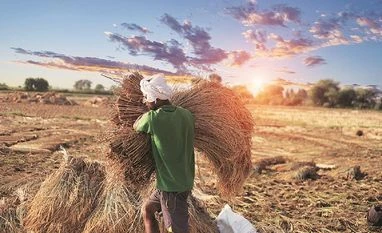 "Govt aims to cover 25% of kharif paddy area with climate-resilient seeds")
Explore Business Standard

Associate Sponsors
Co-sponsor
The move comes as erratic rainfall patterns have become increasingly common in recent years, threatening rice production in the country.
In a bid to combat the growing challenges posed by climate change, the government is targeting to bring 25 per cent of the total kharif paddy area under climate-resilient seeds, a senior agriculture ministry official said on Monday.
The move comes as erratic rainfall patterns have become increasingly common in recent years, threatening rice production in the country.
India, the world's second-largest rice producer after China, cultivates paddy on over 410 lakh hectares during the kharif season.
Speaking on the sidelines of ICAR's 96th Foundation and Technology Day celebrations, ICAR Director General Himanshu Pathak said, "While we have achieved 75 per cent coverage of climate-resilient seeds in wheat cultivation, the adoption in paddy is still limited."
Pathak revealed that ICAR has developed paddy seeds resistant to drought and lodging. These seeds were sown in 16 per cent of the total paddy area during the 2023 kharif season.
"For the ongoing kharif season, we aim to increase this coverage to 25 per cent," he added.
The push for climate-resilient seeds comes at a crucial time. Research studies indicate that climate change could reduce rice yields in India by 3-5 per cent under a medium emissions scenario, and up to 31.3 per cent by 2030 under high emissions.
India's estimated rice production for the 2023-24 crop year (July-June) stands at 136.7 million tonne. The top rice-producing states include West Bengal, Uttar Pradesh, Punjab, Tamil Nadu, and Andhra Pradesh.
Pathak attributed the record wheat output of 112.9 million tonne in 2023-24 to the widespread use of climate-resistant seeds, despite weather aberrations.
The government now hopes to replicate this success in paddy cultivation.
Sowing of paddy, the main kharif (summer) crop, is underway across the country. As of now, about 60 lakh hectares have been covered under paddy since the start of sowing operations in June, according to government data.
The adoption of climate-resilient varieties could play a crucial role in safeguarding India's rice production in the face of increasing climate uncertainty.
(Only the headline and picture of this report may have been reworked by the Business Standard staff; the rest of the content is auto-generated from a syndicated feed.)
First Published: Jul 15 2024 | 5:26 PM IST

