Delhi plans electrification mandate for four-wheelers, jolts automakers

Delhi's EV Policy 2.0 proposes future electric car sales mandates and measures to discourage polluting vehicles, prompting concerns among automakers over production and technology choices

EV, Electric Car
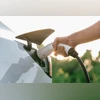
Delhi is set to become the first state in India to include car electrification mandates in its EV policy (Photo: Shutterstock)
Deepak Patel New Delhi
5 min read Last Updated : Jul 01 2026 | 11:17 PM IST
In a setback for several leading automobile manufacturers, the Delhi government has said in its EV Policy 2.0 that it will introduce electrification mandates for four-wheelers in the future and develop a framework to discourage the registration of polluting vehicles running on inefficient fuels.
 
Delhi is set to become the first state in India to include car electrification mandates in its EV policy. While the policy does not specify what these mandates will entail, they are expected to require automakers to ensure that a certain share of the cars they sell in the capital are electric.
 
Delhi is also set to become the first state to outline measures aimed at disincentivising the sale of non-electric vehicles.
 
Executives at several leading automobile companies — which have a limited number of electric vehicles (EVs) and rely more on strong hybrid or compressed natural gas (CNG) vehicle sales to demonstrate their commitment to curbing pollution — expressed serious concerns over the policy.
 
Speaking to Business Standard, they warned that neighbouring states, which are also facing severe air pollution, could adopt similar measures, forcing companies to alter their production plans.
 
The Delhi government notified its EV Policy 2.0 — which will remain in effect until 2030 — on Tuesday. The gazette notification contains a section titled "Electrification mandates for registration", which states: "The Delhi government intends to bring out electrification mandates for four-wheelers in future as well as aim to make a framework for disincentivising polluting vehicles that use inefficient fuels." Business Standard has reviewed the notification.
 
The policy drew contrasting responses from manufacturers. While Stellantis India told Business Standard that the transition to electric mobility must be aligned with factors such as customer acceptance and charging infrastructure, JSW MG Motor India said it was gearing up for higher EV demand and viewed the Delhi EV Policy as a pilot that could shape similar policies in other states.
 
The difference in their stance mirrors their EV portfolios. Citroën currently has one electric model in India, while JSW MG Motor sells five and plans to add two more this year.
 
Shailesh Hazela, chief executive officer and managing director, Stellantis India, said: "At Citroën, we welcome policy directions that encourage cleaner, more sustainable mobility. At the same time, the pace of any such transition needs a strong sync with improving customer purchase consideration, charging access, financing solutions, cost of ownership and the broader maturity of the ecosystem."
 
"Today, electric vehicles contribute approximately 8 per cent of our sales in India. Globally, Citroën has a strong electric portfolio, and in India we continue to study the market closely and evaluate opportunities in line with customer demand, policy evolution and infrastructure readiness," Hazela added.
 
A JSW MG Motor India spokesperson said: "In June 2026, 75 per cent of our total sales came from our EV portfolio... The recent West Asia conflict and geopolitical uncertainties surrounding crude supplies have acted as supportive tailwinds for EV sales."
 
"With its introduction, the new Delhi EV Policy will serve as a pilot for other states and provide crucial insights for broader implementation across the country. At JSW MG Motor India, we are preparing to meet the increased EV demand by ramping up production through supply chain optimisation and workforce management," the spokesperson added.
 
Meanwhile, during a video press conference on Wednesday, Maruti Suzuki India Senior Executive Officer (Marketing & Sales) Partho Banerjee reiterated the company's view that India's transition to cleaner mobility should not rely on a single technology. "Each technology has got a potential: be it the hybrid, the CNG, the electric. There is no comparison between one technology versus another technology," he said.
 
Maruti Suzuki sells about 18 passenger vehicle models in India, and only one of them is fully electric — the e Vitara.
 
Banerjee said electric vehicle charging infrastructure would take time to develop across India. "Till the time the EV infrastructure is not there, hybrids and the plug-in hybrids, they are going to play a role," he said.
 
He also said Maruti would not increase production of the e Vitara for the domestic market before September because of existing commitments.
 
Rahul Bharti, senior executive officer, corporate affairs, Maruti Suzuki India Ltd, expressed surprise over the final policy's decision to remove the 50 per cent road tax waiver for strong hybrid vehicles. This waiver was included in the draft version of the policy.
 
"We welcome the policy because it has incentives for EVs. In the draft policy, there was some benefit for strong hybrids also. It was very surprising that it was removed from the final policy, particularly because strong hybrids and diesel are being treated on the same platform. Treating strong hybrids the same as diesel is not understood," he said.
 
He said Maruti would continue investing across multiple clean technologies. "We have invested in lithium-ion cells and electrodes for making strong hybrids and will continue our efforts on all clean and green technologies, whether it is biofuels like ethanol, CNG and CBG, strong hybrids, electric. We are also researching hydrogen. We hope that cognisance is taken of this fact and cleaner fuels are differentiated from more polluting fuels," Bharti said. 
Policy change
  • Delhi becomes first state to propose EV sales mandates for passenger cars
  • EV Policy 2.0 to remain in force till 2030
  • Framework planned to discourage registration of polluting vehicles
  • Carmakers fear other states may adopt similar mandates
  • Stellantis India said EV transition must align with customer acceptance


One subscription. Two world-class reads.

Already subscribed? Log in

Subscribe to read the full story →
*Subscribe to Business Standard digital and get complimentary access to The New York Times

Smart Quarterly

₹900

3 Months

₹300/Month

SAVE 25%

Smart Essential

₹2,700

1 Year

₹225/Month

SAVE 46%
*Complimentary New York Times access for the 2nd year will be given after 12 months

Super Saver

₹3,900

2 Years

₹162/Month

Subscribe

Renews automatically, cancel anytime

Here’s what’s included in our digital subscription plans

Exclusive premium stories online

  • Over 30 premium stories daily, handpicked by our editors

Complimentary Access to The New York Times

  • News, Games, Cooking, Audio, Wirecutter & The Athletic

Business Standard Epaper

  • Digital replica of our daily newspaper — with options to read, save, and share

Curated Newsletters

  • Insights on markets, finance, politics, tech, and more delivered to your inbox

Market Analysis & Investment Insights

  • In-depth market analysis & insights with access to The Smart Investor

Archives

  • Repository of articles and publications dating back to 1997

Ad-free Reading

  • Uninterrupted reading experience with no advertisements

Seamless Access Across All Devices

  • Access Business Standard across devices — mobile, tablet, or PC, via web or app

Topics :Electric VehiclesMaruti Suzuki IndiaJSW

Next Story