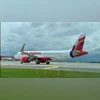
The pilot-in-command of an Air India Phuket-Delhi flight, which suddenly lost about 300 feet in altitude and caused injuries to 24 people on board, has tested positive for marijuana in a confirmatory drug test.
If this is the pilot’s first incident of using drugs, the Directorate General of Civil Aviation (DGCA) rules do not provide for automatic cancellation or even suspension of his pilot licence.
The DGCA’s Civil Aviation Requirements (CAR), Section 5, Series F, Part V, lays down the procedure for testing aviation personnel for “psychoactive” substances.
Psychoactive substances are those that can affect a person’s mental state, behaviour or performance. The rules cover cannabis (marijuana) through tetrahydrocannabinol (THC), its main psychoactive component, along with amphetamine-type stimulants, opiates and their metabolites, cocaine, barbiturates and benzodiazepines.
Under the CAR, aviation personnel are randomly subjected to screening tests for such substances. When a urine sample is collected, it is divided into two portions — Sample A and Sample B — with the initial screening conducted on Sample A.
If the result from Sample A is “non-negative”, the personnel is immediately removed from safety-sensitive duties, such as flying, until the confirmatory test is completed.
Sample B is then sent for a confirmatory test. If Sample B also tests positive and it is the first time the pilot has been found using drugs, he or she is referred for a de-addiction or rehabilitation programme, according to the CAR.
Rehabilitation in this context involves treatment and professional assessment for substance use. The pilot can return to active flying only after completing the medical rehabilitation programme, passing another urine test and obtaining a fresh medical fitness clearance certificate.
If a pilot is found using psychoactive substances for a second time, the CAR prescribes stricter action. The pilot’s licence can be suspended for three years if he or she has already undergone rehabilitation and subsequently tests positive again.
If a pilot is found using drugs for a third time, the licence is cancelled, according to the CAR.
However, a pilot caught using drugs for the first time could face action beyond the DGCA’s prescribed licensing consequences.
According to sources, Air India’s internal rules governing such violations are stricter than the DGCA’s minimum regulatory requirements, and the airline could take more severe disciplinary action against the pilot depending on the findings of its internal inquiry.
Sources said the severity of the incident, including the fact that the pilot was operating the aircraft when the incident occurred and that several people were injured, could be a factor in determining the action taken by the airline.
The Phuket-Delhi flight incident resulted in injuries to four crew members and 20 passengers. The Aircraft Accident Investigation Bureau (AAIB), India’s statutory body for investigating aircraft accidents and serious incidents, is probing the matter.
The aircraft had experienced a sudden loss of altitude before stabilising and subsequently landing safely in Delhi.
The CAR also prescribes separate action for refusal to undergo testing. A person refusing the test is removed from safety-sensitive duties and given 48 hours to clear the drug-testing profile.
Failure to do so can lead to a one-year licence suspension and rehabilitation. A second refusal, or a positive test after a first refusal, can lead to a three-year suspension, with subsequent violations potentially resulting in cancellation.

 "Marijuana positive might not mean licence loss for Air India pilot")


 Connect with us on WhatsApp