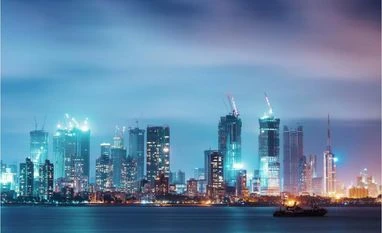
Cluster redevelopment in Mumbai races against time amid red tape

While the Maharashtra government has been promoting the scheme since 2018, it recently called for an audit of 13,000 cessed buildings in the Mumbai Metropolitan Region to ensure timely redevelopment

Mumbai
Photo: Shutterstock
Prachi Pisal Mumbai
7 min read Last Updated : Mar 04 2025 | 12:07 AM IST
Cluster redevelopment in the land-starved island city of Mumbai appears to be taking off despite challenges related to tenant consent, financing, bureaucratic delays, and skyrocketing land prices.
 
While the Maharashtra government has been promoting the scheme since 2018, it recently called for an audit of 13,000 cessed buildings in the Mumbai Metropolitan Region (MMR) to ensure timely redevelopment, offering a huge opportunity to developers.
 
Realty majors like Mahindra Lifespaces, Tata Projects, Adani group, and Prestige group have commenced projects as they seek to capture a share of Mumbai’s cluster redevelopment market, which, according to the Brihanmumbai Municipal Corporation (BMC), is valued at ₹30,000 crore.
 
With difficulties in redeveloping small, isolated buildings in Mumbai’s dense areas, realtors are increasingly banking on cluster redevelopment, which not only provides more space to develop but also promises
larger returns.
 
“In a redevelopment project, developers should be making 20-30 per cent in earnings before interest, tax, depreciation, and amortisation margins. It is viable. In the case of joint ventures, margins are lower, ranging from 15-20 per cent,” said Vijay Agarwal, managing director (MD) of investment banking at Equirus.
 
According to norms, any building over 30 years old or declared dilapidated can be redeveloped.
 
Cessed buildings are old, dilapidated, tenanted buildings constructed in Mumbai before September 1969, for which the Maharashtra Housing and Area Development Authority (MHADA) collects a repair cess. Any cluster redevelopment scheme requires consent from at least 70 per cent of tenants.
 
Marquee cluster redevelopment projects in MMR include the BDD Chawl Redevelopment Project by MHADA, undertaken through a consortium of Tata Projects, Capacite Infraprojects, and CITIC Group Corporation (₹11,744 crore), and the Bhendi Bazaar Redevelopment Project by the Saifee Burhani Upliftment Trust (₹4,000 crore). Navbharat Mega Developers, where Adani group has an 80 per cent stake, is developing  slum cluster in Dharavi, in India's largest slum rehabilitation project.
 
“Several major cluster redevelopment projects in Girgaon, Byculla, Dadar, and Sion have already gained traction,” said Dominic Romell, president of the Confederation of Real Estate Developers' Associations of India-Maharashtra Chamber of Housing Industry and director of Romell Group.
 
Mumbai needs cluster redevelopment
 
Cluster redevelopment is an urban planning strategy that involves redeveloping multiple neighbouring buildings as a single, unified project. The concept provides better amenities and more space for residents while developing gated communities.
 
In Maharashtra, the government has introduced the Development Control & Promotion Regulation 2034, which offers a higher floor space index (FSI) of 4, interest subsidies, and flexibility for developers to sell apartments at market rates.
 
In the island city, buildings spanning an area of at least 4,000 square (sq.) metre (m) qualify for the cluster redevelopment scheme. In the suburbs, the required area is 6,000 sq. m.
 
Romell added that cluster redevelopment contributes to improved infrastructure amid growing metro connectivity, more open spaces, and transit-oriented development.
 
Harsh Parikh, partner at Khaitan & Co., said, “It ensures that smaller buildings that couldn't be redeveloped on a standalone basis get redeveloped under the cluster scheme with adjoining buildings, offering better infrastructure.”
 
Challenges of consent and financing remain
 
Despite attractive incentives and benefits, obtaining tenant consent and maintaining cash flows and profitability due to the long-term nature of cluster projects remain key challenges for developers.
 
Amit Kumar Sinha, MD and chief executive officer at Mahindra Lifespaces, said during the recent 2024-25 third-quarter earnings call, “We found that there are some issues when two societies want to come together. The amalgamation process has very different expectations from different societies. We are trying to resolve that in a smart, efficient manner, but it’s taking time, given the two different parties are on two different sites.”
 
Mahindra Lifespaces is redeveloping a cluster of three residential buildings in Borivali, with a gross development value (GDV) of ₹950 crore. Earlier, it partnered Livingstones Infra for a cluster project in Mahalaxmi, with a GDV of ₹1,650 crore.
 
Gulam Zia, senior executive director at Knight Frank India, believes consent remains the biggest hurdle for developers.
 
“A few schemes are starting in Kalina, Bandra Reclamation, Lokhandwala, etc. These schemes have taken more than a decade to formalise, and none of them have reached any stage of significant development,” he added.
 
Realtors believe that the lengthy and complex nature of cluster redevelopment projects also impacts returns on investment, leading developers to collaborate.
 
“Anybody going for redevelopment under the Slum Rehabilitation Authority or cluster redevelopment will not find it easy. That’s why developers collaborate,” said Vinod Goenka, chairman and managing director (CMD) at Valor Estate.
 
Valor Estate typically manages approvals and coordination while its partners provide the funding. Valor is reportedly in talks with RC group and Prestige group to redevelop a project in Mumbai’s Bandra area with a GDV of ₹7,000 crore, according to media reports. The company is developing a Rs 4,544 crore luxury residential project called Ten BKC with Adani Realty and another Rs 3,600 crore project in Mahalaxmi with  a luxury residential project with Godrej Properties.  
 
Industry leaders highlight funding hurdles, as financial lenders often hesitate due to concerns over loan security since, in cluster redevelopment projects, the land belongs to societies or landlords.
 
“Securing timely financing can be difficult, as lenders often perceive these projects as high-risk due to tenant relocation, legal approvals, and delays. Rising costs during extended timelines and shifting regulatory policies further add to financial strain,” said Amit Jain, CMD of Arkade Developers. Jain’s firm recently bagged a cluster redevelopment project in Dahisar, with a GDV of ₹1,700 crore.
 
However, developers with a proven track record find it easier to secure financing.
 
Chintan Sheth, CMD at Sheth Realty, said, “Sometimes, MHADA is also involved, so lenders don’t get clarity on the security.”
 
Jain said that developers typically rely on equity, pre-sales, and external financing, but disruptions in these can lead to financial stress.
 
Upcycle and faster approvals
 
Industry experts believe that a single-window clearance system, merging approvals from the BMC, the Slum Rehabilitation Authority, and the Mumbai Metropolitan Region Development Authority, could help avoid bureaucratic delays.
 
Zia said, “Players like Prestige and Adani are getting into it because residential sales are at an all-time peak, both in terms of velocity and prices. Hence, the viability is huge, and the margins are much better.”
 
In 2024, Mumbai, India’s largest housing market, saw 96,187 units sold, up 11 per cent year-on-year (Y-o-Y), according to Knight Frank India. The average residential price in the city increased by 5 per cent Y-o-Y to ₹8,277 per square foot.
 
However, Valor’s Goenka cautioned against oversupply and a potential slowdown. “The market has been extremely good over the last three to four years. But I feel it is slowing down now due to oversupply and modifications in the Coastal Regulation Zone (CRZ) rules, which relaxed FSI restrictions on developments within 500 metres of CRZ. Hence, supply is quite extensive in certain pockets.”
 
Brick by brick
 
Major cluster redevelopment projects in MMR    
 
BDD Chawl Redevelopment Project (under construction)
Developer: MHADA, through a consortium of Tata Projects, Capicite Infraprojects, and CITIC group
Cost : ₹11,744 cr
 
Bhendi Bazaar Redevelopment Project (under construction)
Developer: Saifee Burhani Upliftment Trust
Cost : ₹4,000 cr
 
One Avighna Park  (completed)
Developer: Avighna group
Cost : ₹1,000 cr
 
Source: Companies
 

One subscription. Two world-class reads.

Already subscribed? Log in

Subscribe to read the full story →
*Subscribe to Business Standard digital and get complimentary access to The New York Times

Smart Quarterly

₹900

3 Months

₹300/Month

SAVE 25%

Smart Essential

₹2,700

1 Year

₹225/Month

SAVE 46%
*Complimentary New York Times access for the 2nd year will be given after 12 months

Super Saver

₹3,900

2 Years

₹162/Month

Subscribe

Renews automatically, cancel anytime

Here’s what’s included in our digital subscription plans

Exclusive premium stories online

  • Over 30 premium stories daily, handpicked by our editors

Complimentary Access to The New York Times

  • News, Games, Cooking, Audio, Wirecutter & The Athletic

Business Standard Epaper

  • Digital replica of our daily newspaper — with options to read, save, and share

Curated Newsletters

  • Insights on markets, finance, politics, tech, and more delivered to your inbox

Market Analysis & Investment Insights

  • In-depth market analysis & insights with access to The Smart Investor

Archives

  • Repository of articles and publications dating back to 1997

Ad-free Reading

  • Uninterrupted reading experience with no advertisements

Seamless Access Across All Devices

  • Access Business Standard across devices — mobile, tablet, or PC, via web or app

Topics :MumbaiReal Estate Slums

Next Story