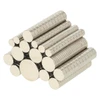
The Union Cabinet, in a meeting chaired by Prime Minister Narendra Modi, on Wednesday approved a ₹7,280 crore scheme to promote manufacturing sintered rare-earth permanent magnets (REPM), marking India’s first attempt to build an integrated domestic supply chain for the critical material.
The “Scheme to Promote Manufacturing of Sintered Rare Earth Permanent Magnets” aims to create a production capacity of 6,000 tonnes of REPM a year to meet growing demand from sectors such as electric vehicles, renewable energy, electronics, aerospace, and defence, ultimately boosting local manufacturing competitiveness and the broader energy transition.
Under the scheme, five beneficiaries will be selected through a global competitive bidding process, with each eligible for up to 1,200 tonnes per annum capacity.
It includes ₹6,450 crore in sales-linked incentives for five years and ₹750 crore as capital subsidy for setting up manufacturing facilities.
The scheme will run for seven years from the date of the award, including a-two year gestation period for building manufacturing units and five years for incentive disbursement.
India is dependent on import for REPMs, which are among the strongest types of permanent magnets and are used across high-technology applications. The country imports almost all of the 900 tonnes of the magnets used annually despite holding the fifth-largest rare earth reserves in the world.
The domestic consumption of REPMs is expected to double between 2025 and 2030, driven by the rapidly growing demand from electric vehicles, renewable energy, industrial applications, and consumer electronics.
“With this initiative, India will establish its first ever integrated REPM manufacturing facilities, generating employment, strengthening self-reliance and advancing the nation's commitment to achieve net zero by 2070,” said an official statement.
It added the scheme also aimed at positioning India as a key player in the global REPM market. It will support the creation of integrated REPM-manufacturing facilities, involving the conversion of rare earth oxides into metals, metals into alloys, and alloys into finished REPMs.
The automobile industry welcomed the scheme. The initiative is a significant step toward building a resilient and stable supply chain, particularly for components and sub-assemblies essential for the production of electric vehicles, Society of Indian Automobile Manufacturers (SIAM) President Shailesh Chandra said.
Investment magnet
What the ‘Scheme to Promote Manufacturing of Sintered Rare Earth Permanent Magnets’ entails:
- 6,000 TPA is the target REPM manufacturing capacity
- 5 bidders to be selected through competitive bidding
- ₹6,450 crore in sales-linked incentives and ₹750 crore in capital subsidies
- 7-year scheme duration, including 2 years for setting up units
- Designed to boost domestic magnet manufacturing and fortify supply chains for EVs, defence, electronics, and other high-tech sectors
“The scheme is expected to accelerate the adoption of clean-mobility solutions and support India’s broader sustainability goals. By strengthening indigenous manufacturing capabilities, it will contribute to reducing carbon emission and lowering dependence on importing crude oil, enhancing the nation’s energy security,” he said.
Commenting on the scheme, Vikrampati Singhania, president of the Automotive Component Manufacturers Association (ACMA), said it was a strategic and forward-looking intervention that addressed one of the most critical gaps in the electric-vehicle and advanced mobility ecosystem.
“Rare-earth permanent magnets are foundational to electric motors and high-efficiency systems, and the establishment of a domestic, integrated manufacturing base will strengthen India’s technological competitiveness.”
Experts say the announcement of incentives for rare-earth magnets, along with the existing allocations in the National Critical Minerals Mission, signals a broader national commitment to building a secure, competitive critical-minerals ecosystem.
”The proposed support for magnet manufacturing, a segment where India has historically depended on global supply chains, can unlock opportunities across mining, processing, alloying and advanced materials. It creates headroom for Indian companies to participate in high-value applications,” said Raju Kumar, partner and energy tax leader, EY India.
He added the real test for the initiative would be disciplined implementation. That means ensuring access to technology, developing high-quality processing capability, building responsible mining practices and maintaining ESG (environment, social, governance) safeguards.

 "Cabinet greenlights ₹7,280 cr scheme for rare earth magnet manufacturing")

