However, industry experts believe that FY26 could mark a turnaround, with mid-single-digit growth expected in the MHCV segment as replacement demand begins to pick up
premium
The transition from BS IV to BS VI norms has substantially raised costs —monthly truck EMIs have surged by 50 per cent, alongside additional operational and maintenance expenses.
4 min read Last Updated : May 27 2025 | 6:35 AM IST
After several sluggish years, India’s truck market remains in a challenging phase, with the average fleet age now at a historic high of 9 – 9.5 years — up from the earlier 7–7.5 years. This rise reflects a broader concern — weakening cyclical demand that has delayed fleet renewal across the industry.
However, a turnaround may be on the horizon. Industry experts predict mid-single-digit growth in the Medium and Heavy Commercial Vehicle (MHCV) segment in FY26, driven by an expected uptick in replacement demand.
Tempering optimism, truck owners, however, strike a note of caution. The transition from BS IV to BS VI standards led to a 50 per cent increase in truck EMIs, along with additional operational expenses and a persistent shortage of skilled drivers in the sector.
“We anticipate growth on the trucks this year, especially after two softer years. The fleet age is at its peak now, which should spur replacements,” said KM Balaji, CFO of Ashok Leyland.
He pointed to a robust rebound in the bus segment, where sales rose from 53,000 to 64,000 units in just a year, and projected a similar mid-single-digit growth trajectory for MHCVs.
Tata Motors echoes this sentiment. “We expect single-digit growth across segments, with HCVs and buses slightly outperforming ILMCV and SCV pickups,” said Girish Wagh, executive director and head of commercial vehicles, during the company's Q4 earnings call.
Despite the cautious optimism, truck owners remain wary.
The transition from BS IV to BS VI norms has substantially raised costs —monthly truck EMIs have surged by 50 per cent, alongside additional operational and maintenance expenses.
“We now pay ₹90,000 in EMI for a 12-wheel truck, up from ₹60,000 before BS VI,” said K Arul, secretary of the Namakkal Taluk Lorry Owners Association. Namakkal is a key logistics hub in South India.
The BS VI upgrade requires sophisticated emission control systems, including Diesel Particulate Filters and Selective Catalytic Reduction units — adding to both purchase and running costs. Meanwhile, a shortage of skilled drivers, despite salaries averaging ₹ 40,000 per month, continues to weigh on fleet operations.
Another factor holding back demand is the post-Covid slowdown in freight movement.
“Freight hasn’t recovered fully, and without that, there’s no incentive to buy expensive new trucks,” Arul explained.
The policy shifts may offer a glimmer of hope. The Vehicle Scrappage Policy, in effect since April 2022, mandates emissions and fitness tests for commercial vehicles over 15 years old. Non-compliant vehicles face scrapping, nudging operators toward new purchases.
“The average fleet age rose to 9.5 years due to extended use of vehicles by second owners who couldn't afford replacements,” noted Ravi Bhatia, President of JATO Dynamics. “But this trend may reverse as policy and market pressures drive renewals.”
Yet, fleet owners argue that incentives remain insufficient. “Scrapping only gives us ₹3–4 lakh, while a new truck costs around ₹50 lakh. How can we bridge that gap?” Arul added.
The road to recovery for India’s commercial vehicle industry remains complex, lined with regulatory hurdles, cost pressures, and demand uncertainty. But if replacement demand strengthens and policy support improves, FY26 could be the turning point for the sector.
Number plate
9–9.5 years: Average fleet age of trucks in past 5 years
7–7.5: Average fleet age of trucks before 2020
50%: Increase in truck EMIs after transition from BS IV to BS VI standards
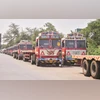
Industry majors expect truck sales to be in mid-single digits this financial year





