Kaynes Semicon to fire off India's first paid chip prototype next month

Deal with US-based AOS secures over 60% of Phase-I output
semiconductors chipmakers
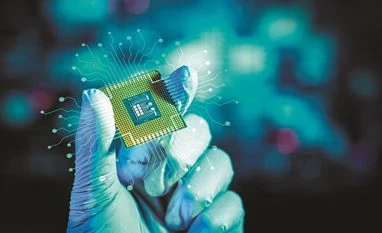
The company, which received government approval in September 2024, began construction of its plant in December that year. Representative image.
Surajeet Das Gupta New Delhi
4 min read Last Updated : Jun 30 2025 | 11:35 PM IST
Kaynes Semicon, an outsourced semiconductor assembly and test (OSAT) player, which has secured its first anchor client, US-based Alpha & Omega Semiconductor (AOS), will deliver its first paid prototype Made in India chip sample for qualification to the company in August this year.
 
It will be the first OSAT company among the five approved by the government under the Indian Semiconductor Mission to reach this milestone. Kaynes has already set up a pilot line in a 1,000 square metre facility with a clean room in Sanand, Gujarat (where Micron Technology and CG Power and Industrial Solutions also have plants), from where the prototypes will be manufactured.
 
As part of the plan, Kaynes expects to begin commercial rollout of Made in India chips for AOS by the first quarter (Q1) of 2026, with an initial capacity of 1.5 million chips a day and an investment of $200–220 million. It has also signed a five-year offtake agreement with AOS, which will consume over 60 per cent of its first-phase production capacity.
 
The company is in talks with global chipmakers, including Qualcomm, Broadcom, ROHM Semiconductor, STMicroelectronics, Infineon Technologies, and Intel, to offer OSAT services within India.
 
Speaking on the road map, Kaynes Semicon Chief Executive Officer Raghu Panicker said: “We are the first company among those approved by the government to provide a chip prototype sample to a paying customer — AOS — for qualification. We expect the qualification process, which includes both AOS and its end user, to take around three months. We aim to begin commercial rollout from our factory by Q1 2026. In the second phase, we will invest another $220 million for more complex chips.”
 
The company, which received government approval in September 2024, began construction of its plant in December that year.
 
Panicker added that discussions with top global chip players were underway.
 
“We’ve started applying for requests for proposal and are in talks with Qualcomm, Broadcom, STMicro, Infineon, and others. We’re keeping them updated quarterly on our progress. If deals go through, we’ll prioritise them in the first phase of production,” he said.
 
Kaynes is also in discussions to bring in investors directly or through joint ventures. “We are in talks with semiconductor companies — one in the US, two in Europe, and one in Taiwan — who are looking to take equity stakes in exchange for reserved capacity at our plant. We expect to make some announcements in a few weeks. With this and possible contracts from global chipmakers, contrary to what many expected, we believe our first-phase capacity will be 100 per cent utilised,” said Panicker.
 
The company, along with Larsen & Toubro (L&T), recently acquired the power module business of Japanese firm Fujitsu General Electronics. Panicker said they will shift these production lines from Japan to India, with Kaynes taking over contract manufacturing of the modules. L&T, meanwhile, will use the company’s design expertise.
 
Kaynes Semicon is a subsidiary of listed firm Kaynes Technology, an integrated electronics manufacturing company based in Mysuru. It has tied up with two global technology providers for its OSAT operations — Globetronics Technology Bhd of Malaysia for legacy technologies, and Japan’s AOI, the largest OSAT player in the country, for advanced packaging.
 
Chip off the block: Kaynes’ aggressive OSAT push
 
·         To deliver Make in India chip prototype to anchor client AOS in August for qualification
 
·         Commercial rollout for AOS planned in Q1 2026
 
·         In talks with chip majors — Qualcomm, Infineon, Intel, Broadcom — for OSAT support
 
·         Negotiating with four semicon firms from the US, Europe, and Taiwan to take stakes and reserve capacity
 
·         Hopes to secure contracts covering 100% of Phase-I capacity

One subscription. Two world-class reads.

Already subscribed? Log in

Subscribe to read the full story →
*Subscribe to Business Standard digital and get complimentary access to The New York Times

Smart Quarterly

₹900

3 Months

₹300/Month

SAVE 25%

Smart Essential

₹2,700

1 Year

₹225/Month

SAVE 46%
*Complimentary New York Times access for the 2nd year will be given after 12 months

Super Saver

₹3,900

2 Years

₹162/Month

Subscribe

Renews automatically, cancel anytime

Here’s what’s included in our digital subscription plans

Exclusive premium stories online

  • Over 30 premium stories daily, handpicked by our editors

Complimentary Access to The New York Times

  • News, Games, Cooking, Audio, Wirecutter & The Athletic

Business Standard Epaper

  • Digital replica of our daily newspaper — with options to read, save, and share

Curated Newsletters

  • Insights on markets, finance, politics, tech, and more delivered to your inbox

Market Analysis & Investment Insights

  • In-depth market analysis & insights with access to The Smart Investor

Archives

  • Repository of articles and publications dating back to 1997

Ad-free Reading

  • Uninterrupted reading experience with no advertisements

Seamless Access Across All Devices

  • Access Business Standard across devices — mobile, tablet, or PC, via web or app

Topics :semiconductorBluechip companiesMade in India

Next Story



