Cadence Design Systems, the world’s leader in electronic systems design and automation, headquartered in San Jose in the US, sees a huge opportunity for homegrown chip and electronic design startups to make products catering to the global electric two-wheeler industry, beginning with supplying to domestic players like Ola, TVS and Ather, amongst others.
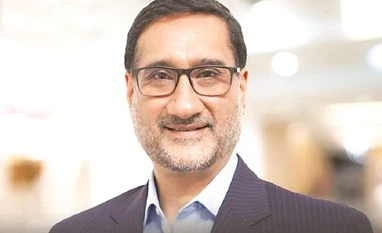
Speaking to Business Standard in an exclusive interview, Cadence Systems managing director for India and corporate vice-president, international headquarters, Jaswinder Ahuja, said: “Globally, chip design companies concentrate on the four-wheeler industry or, at most, serve the high-end of the two-wheeler market like a BMW. So here lies an opportunity for Indian design startups to get in.”
Ahuja said that though India has a vibrant two-wheeler market, companies like Ola or TVS have no choice but to buy chips from global players to power their EVs. However, the big chip design players do not provide them the same service as they do, for instance, to a Bosch or a Denso, which buy from them in huge volumes.
“This is a big and growing market for home-grown chip design players to address. And they should not restrict themselves only to India. They should tap the entire global two-wheeler market, which is bigger than four-wheelers, in Asia, Africa and Latin America to get volumes and economies of scale. No chip player depends only on one market,” said Ahuja.
He points out, moreover, that there are two clearly different markets in the semiconductor sweepstakes. The first is the established and matured market in developed countries, where the big global players control the narrative as they have the advantage of economies of scale and huge resources which cannot be matched by any Indian startup.
“However, there is another market in emerging economies whose requirements are very different, such as in India, Asia, Africa, and Latin America. This is where Indian startups should focus with rugged, low-cost solutions and new applications,” Ahuja said.
Emphasising the importance of design in electronics and semiconductors, Ahuja said that the global electronic product market is pegged at $3 trillion annually, which in turn is fuelled by a $600 billion semiconductor market. At the bottom of the inverted pyramid is a $10 billion design industry which enables them. “The fact is that if you cannot design chips and electronic products, semiconductor manufacturing cannot flourish for very long,” Ahuja said.
He pointed out that India has an abundance of design talent, which is why all global players are using the country as a hub for cutting-edge designing. But he argued that it has very few electronic product or chip design companies and that is where there is a lacuna. “In large global companies someone in their headquarters is making a risk assessment as to where the business opportunity is, defining what products to build in the future, and handing it all over to the design team.
This expertise in the front-end process is missing in India,” Ahuja said. He identified many market opportunities for home-grown design companies, such as the building of electronic products to solve the problems of rural consumers, designing chips to support the country’s own navigation system, Navic., which can be used for fleet management, and also tapping into the Indian and global market for power management (smart meters) by designing chips for them so as to not have to import them.
Energy meters for power management is another big global market, according to Ahuja, who said that Indian startups should build a low-cost, rugged product to address this market.

 "Local chip design firms can cater to e2Ws worldwide: Cadence's India MD")


