Researchers at the National Institute of Technology (NIT), Rourkela, have developed a novel three-dimensional (3-D) reinforced advanced composite manufacturing technology that will enhance the strength, durability and damage tolerance of fibre-reinforced polymer (FRP) composites, paving the way for their use in aerospace, automotive, renewable energy and other high-performance engineering sectors.
The patented technology developed at the FRP Composite Laboratory of the Department of Metallurgical and Materials Engineering, NIT Rourkela, addresses one of the major limitations of conventional FRP composites: Their vulnerability to internal damage under heavy loading, which can lead to cracks, delamination and structural failure over prolonged use.
The innovation is expected to improve the reliability and lifespan of lightweight structural components used in commercial aircraft, defence platforms, space launch vehicles, high-speed rail systems, wind energy installations and hydrogen storage infrastructure.
FRP composites are widely regarded as advanced engineering materials because of their exceptional strength-to-weight ratio, high fatigue resistance, design flexibility and excellent corrosion resistance.
These characteristics have made them indispensable in industries where reducing weight without compromising structural integrity is critical. However, conventional FRP composites often suffer from weak interlaminar bonding, making them susceptible to damage under repeated or heavy loading conditions.
The NIT team has developed a hybrid three-dimensional reinforced composite by integrating glass fibres with graphene nanoplatelets aligned through the thickness of the composite during manufacturing.
"This unique internal architecture enables the fibres, graphene nanoplatelets and epoxy matrix to work together more efficiently, resulting in a significantly tougher and more durable material capable of resisting crack propagation and structural failure," said Rajesh Kumar Prusty, assistant professor at NIT Rourkela.
A distinguishing feature of the patented technology is its ability to align unmodified graphene nanoplatelets within glass fibre-reinforced epoxy composites using a simple and industry-compatible manufacturing process.
Instead of requiring expensive or complex fabrication techniques, the researchers introduced only a minor modification to conventional composite manufacturing by applying a standard 50 Hz alternating-current electric field of 800 volts during the curing stage.
According to the researchers, this makes the process readily adaptable to existing industrial composite production systems without substantial changes in manufacturing infrastructure.
"The technology has broad applications wherever lightweight materials with superior damage tolerance are essential. Aircraft panels, automotive crash structures, wind turbine blades, pressure vessels, marine structures and several other advanced engineering components could directly benefit from the innovation," said Prusty.
During performance evaluations, the newly developed material recorded a 37 per cent increase in tensile strength, a 30 per cent improvement in flexural strength, a 63 per cent rise in flexural modulus, a 26 per cent enhancement in tensile modulus and a 24 per cent increase in interlaminar shear strength.
The researchers also observed a 33 per cent improvement in Mode-I fracture toughness, a 53 per cent increase in Mode-II fracture toughness and a 55 per cent higher storage modulus at 40 degrees Celsius, indicating superior stiffness and durability under operating conditions.
Bankim Chandra Ray, professor at NIT Rourkela, said the innovation could lower maintenance costs, improve energy efficiency and promote sustainable manufacturing by producing lighter yet more durable structural materials.
"The technology has the potential to contribute significantly to India's Atmanirbhar Bharat mission by strengthening domestic capabilities in advanced materials manufacturing," he said.
The research team is now preparing to validate the technology in larger structural components and assess its long-term environmental durability under real-world operating conditions.
They have also sought industry collaborations to facilitate commercialisation and accelerate the adoption of the patented composite technology across aerospace, automotive, renewable energy and other advanced manufacturing sectors.

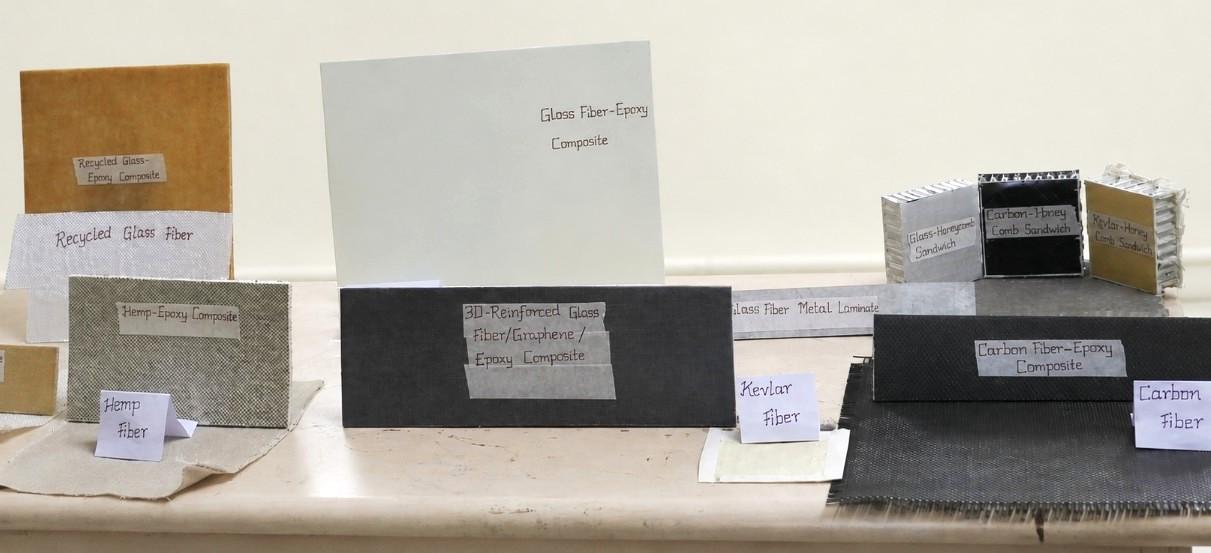 "NIT Rourkela develops advanced composite for aerospace, auto sectors")


 Connect with us on WhatsApp