
Oil prices rise as Blinken begins week-long sweep through the Middle East
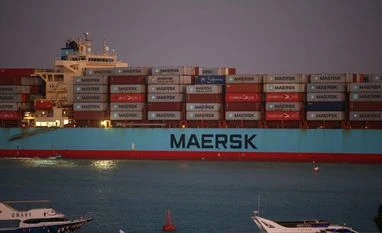
Shipping giant Maersk said it will divert all vessels away from the Red Sea for the foreseeable future, warning customers of disruptions
 "Oil prices rise as Blinken begins week-long sweep through the Middle East")
Explore Business Standard

Associate Sponsors
Co-sponsor
Shipping giant Maersk said it will divert all vessels away from the Red Sea for the foreseeable future, warning customers of disruptions
Oil prices rose on Friday as U.S. Secretary of State Antony Blinken began a week-long sweep through the Middle East in an attempt to contain regional tensions stoked by the Israel-Hamas conflict.
Brent crude futures settled up $1.17, or 1.51 per cent, at $78.76 a barrel while U.S. West Texas Intermediate crude futures finished up $1.62, or 2.24 per cent, at $73.81.
Both benchmarks are on track to end the first week of the year higher, rebounding from losses on Thursday triggered by hefty increases in U.S. gasoline and distillate stocks.
"With the tensions in the Middle East, the geopolitical trading premium has to get pushed higher," said John Kilduff, partner at Again Capital LLC. "It's hard for traders to fight the headlines."
Shipping giant Maersk said it will divert all vessels away from the Red Sea for the foreseeable future, warning customers of disruptions.
A U.S. government report showing employment grew in December would be supportive of demand in the coming year, Kilduff said.
U.S. employers hired more workers than expected in December while raising wages at a solid clip, prompting financial markets to dial back expectations that the Federal Reserve would start cutting interest rates in March.
Non-farm payrolls increased by 216,000 jobs last month, the Labor Department's Bureau of Labor Statistics said. Economists polled by Reuters had forecast payrolls rising by 170,000 jobs. The economy added 2.7 million jobs in 2023, down sharply from the 4.8 million positions created in 2022.
"Strong employment should point to strong demand for fuel," Kilduff said.
The latest Fed meeting on Thursday gave a growing sense that inflation is under control and raised concern about the risks that an "overly restrictive" monetary policy may hold for the economy.
Bank of America on Friday said it was taking a defensive stance towards oil stocks because of the long-term price forecast for oil.
It said it expects the $70-$90 a barrel Brent trading range in place since OPEC+ intervened to hold, adding that "a permanently backward oil curve steepened by spare capacity" is a headwind for sector value.
Oilfield services company Baker Hughes said the count of active drilling rigs - oil and natural gas rigs combined - fell by one last week to 621 for the third decline in four weeks.
Crude oil drilling rigs were up by one at 501 while natural gas drilling rigs fell by two to 118.
(Reporting by Erwin SebaAdditional reporting by Robert Harvey and Noah Browning in London and Sudarshan Varadhan in SingaporeEditing by David Gregorio, Jonathan Oatis, Alexander Smith and David Goodman)
(Only the headline and picture of this report may have been reworked by the Business Standard staff; the rest of the content is auto-generated from a syndicated feed.)
First Published: Jan 06 2024 | 8:46 AM IST


