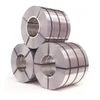
The Indian steel industry is faced with a paradox: Rising demand and falling prices. Demand continues to surge as user industries gather pace, with the World Steel Association projecting around 9 per cent annual growth for India over 2025 and 2026, the year domestic demand is projected to be almost 75 million tonnes (mt) higher than in 2020.
Major producers are pouring billions of dollars in ambitious capacity expansion. But as new supply comes on stream and global trade flows tighten, steel prices and demand are beginning to move out of sync — a sign that the next chapter in India’s steel story may depend as much on balance sheets as on blast furnaces.
The stickiness is attributed to a combination of increased supplies, imports (down but still a concern), and limited trade opportunities.
At an event on November 4, Steel Secretary Sandeep Poundrik acknowledged that prices remain a significant challenge. He said, around 150 small steel producers have halted production amid depressed market conditions. “Price is a problem, especially when we need to invest in 100 million tonnes of capacity in the next maybe five to seven years,” he said.
As steelmakers push the growth pedal, the question resurfacing is: Do current levels of margins justify the mega expansion plans?
The slip
Domestic flat steel prices started rising in the last week of December 2024 in anticipation of the Indian safeguard duty. The trend continued until early May 2025, with prices increasing by ₹4,500-5,000 per tonne during the period.
However, the early onset of the monsoon, a deceleration in overall manufacturing activity, and tariff uncertainties made end-consumers cautious, said Sehul Bhatt, director, Crisil Intelligence. As a result, prices plunged by ₹2,000-2,500 per tonne between mid-May and July-end. Mills tested higher prices in the early week of August, but this did not hold, and the declining trend continued through September and October, he added.
According to market intelligence and price reporting firm BigMint, in October 2025, the monthly average for hot-rolled coil (HRC) stood at ₹47,900 per tonne compared with ₹48,222 per tonne for October 2024 and ₹57,838 per tonne for October 2023. The spot price as of October 31 this year settled lower at ₹47,000 per tonne, marking a five-year low.
The last time prices were seen at comparable levels was in November 2020, when the monthly average hovered around ₹46,000 per tonne, BigMint said.
The weak prices showed up in margins.
Thinning margins
Icra Vice President Sumit Jhunjhunwala noted that Q1FY26 witnessed a strong performance; however, margins have come under pressure in Q2FY26, primarily due to softer HRC realisations. HRC serves as the benchmark for flat steel, used across a broad range of sectors. Producing it demands significant investment.
“Steel spreads (the differential between steel prices and raw material costs) are estimated to have contracted by ₹2,500-3,000 per tonne sequentially in Q2FY26, largely reflecting the decline in HRC prices,” Jhunjhunwala said.
Consequently, the industry’s earnings before interest, taxes, depreciation and amortisation, or ebitda (a measure of profitability per tonne), which had improved in Q1FY26, is estimated to remain subdued in Q2FY26, he said. For the full fiscal, margins are likely to stay soft and broadly align with the previous fiscal year average of around $110 per tonne.
Major flat steel manufacturers have, however, raised list prices for HRC and cold-rolled coil (CRC) by ₹1,250 per tonne for November 2025 vis-a-vis late-October levels. This, said BigMint, indicated a broad-based upward adjustment across product categories. But a steel industry executive said this doesn’t really move the needle for margins.
Mega plans
According to Crisil Intelligence, India’s crude steel capacity by the end of FY25 is estimated at 200 million tonnes per annum. An additional 16-17 mt is expected by the end of FY26.
Tata Steel, JSW Steel, and Jindal Steel have together commissioned 13 mt of capacity, and they are ramping up production, said Amit Lahoti, senior research analyst, institutional equities at Emkay Global. Even as absolute ebitda is rising, margins are coming under pressure due to lower steel prices, he added. Prices of HRC need to be at least ₹52,000-53,000 a tonne for any company to commit to new capacity, he said.
Steel companies echo the concerns.
“Demand-wise, India is in a good place, and we are likely to improve in H2,” said JSW Steel Joint Managing Director and Chief Executive Officer Jayant Acharya. “The real challenge is margins — they need to move up for companies to reinvest meaningfully in capex.” They did improve over last year, helped by some price gains in the first quarter, but softened in Q2, he said, adding that prices are at the bottom and need to improve.
Ranjan Dhar, director and vice president, sales and marketing, ArcelorMittal Nippon Steel India, pointed out that the national steel policy lays a clear road map for companies through 2047.
“To make this vision a reality, steel companies need a minimum of ₹17,000 ebitda per tonne to plough back into capex,” he said. “Comprehensive trade measures are required to achieve these levels, from the current range of (about) ₹6,000-10,000 per tonne.”
Forces behind the squeeze
So, what is dragging prices? The steel market is largely shaped by dynamics playing out in China, which produces about half of the world’s steel, said Sanjay Singh, director, Jindal Steel. “While its production has only marginally declined, consumption has fallen sharply,” he explained. “Based on recent figures, China is expected to export either at the same level as last year or more.”
In India, consumption over the last six months has been higher than production, which means the gap is being covered by imports, putting additional pressure on domestic prices, he added.
The uncertain global environment, too, is weighing on industries, with export opportunities to certain regions impacted due to trade restrictions.
Given the backdrop, the industry is questioning whether a 12 per cent safeguard duty is enough to protect it. According to Dhar, India continues to be not just a country of interest for the world, given its growth, but also a destination for dumping due to low safeguards for the domestic industry.
The provisional safeguard of 12 per cent was till November 7. The Centre’s trade remedies watchdog, the Directorate General of Trade Remedies, has proposed a phased duty for three years: 12 per cent in the first year, 11.5 per cent in the second, and 11 per cent in the third. This is yet to be approved by the finance ministry.
Green shoots?
There is expectation, however, that prices will see some uptick as the second half of the financial year is typically stronger for the steel industry.
According to BigMint, the price revision in November follows a comprehensive evaluation of improving manufacturing indicators, stronger order inflows from downstream industries such as automotive, and a slight increase in raw material costs, particularly imported coking coal and iron ore.
But new capacities and limited trade opportunities may keep prices in check.
Dhar believes that current prices are unsustainable and have bottomed out; they are likely to move up. “The industry is already witnessing improved demand (after the monsoon).”
However, how much and how soon prices rise is anybody’s guess.