Ultra-luxury housing in India sees shift to ultra-customised marketing

Prestige Group, a leading real estate developer, is targeting ultra-luxury buyers using the "by appointment" method
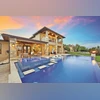
Luxury Housing
Raghav Aggarwal New Delhi
4 min read Last Updated : Jun 10 2024 | 6:58 PM IST
With the rise of ultra-luxury housing in India comes ultra-customised marketing. Developers selling high-end homes, priced above Rs 20 crore, are moving away from traditional marketing for these homes to newer methods, such as painstaking profiling of customers before showing them the property, augmented reality for visualisation of interior decor, virtual tours, and closed-door international shows.

There is also marketing through online ads, social media influencers, and exclusive memberships.

Prestige Group, a leading real estate developer, is targeting ultra-luxury buyers using the "by appointment" method.

"There is profiling of a client done before showcasing an entire product to them. It's not that a show-and-tell is done for every customer who walks in. It is by appointment," said Anand Ramachandran, senior vice president of business expansion at Prestige. "We receive a certain profile, we evaluate it and then an appointment is set with a client based on the profile."

Something must be working. Prestige recently launched its first residential tower at the "Prestige Ocean Towers" project in Mumbai's Marine Lines, overlooking the Arabian sea and priced at Rs 20-25 crore each. It quickly sold 64 out of the 75 homes.
"The mass-market advertising for luxury homes has faded, and developers are leveraging the power of targeted online ads and social media campaigns tailored to specific demographics," said Anshuman Magazine, chairman and chief executive officer (India, South-East Asia, Middle East & Africa) of real estate consultancy CBRE.

Recently, DLF, the largest developer in India by market capitalisation, announced it would launch a new project in Gurugram's Phase-5, where homes would be priced around Rs 50 crore. Its marketing is “by invitation only”.

"We will first introduce it to our close network of family and friends before making them available to a select group in the broader market," said Aakash Ohri, joint managing director, DLF Home Developers. "These luxury developments are designed to be exclusive and understated to retain their unique appeal and allure."

Krisumi Corporation, another developer focusing on ultra-luxury projects, said it was organising exclusive events for potential buyers.

"Curated events own the largest pie in our marketing budget, ensuring our approach is tailored, exclusive, and effective in reaching our target market," said Mohit Jain, managing director at Krisumi, adding that developers were also offering private club memberships, concierge services, and unique amenities.

That is not all. "Augmented reality is used to visualise furniture placement or design options," said Jain.

This ultra-customisation of marketing is necessary because high-net-worth individuals and rich non-resident Indians form a chunk of buyers of these homes.

Ramachandran of Prestige speaks of three categories of potential buyers. The is the "old-money" category, where second and third generations are buying these homes. The second category consists of C-Suite executives, and the third is first-generation entrepreneurs of unicorns and other highly valued start-ups.

Real estate consultancy Anarock said developers were reaching out to potential buyers through wealth managers.

"Interestingly, with global markets remaining low, many investors including HNIs and NRIs are increasingly eyeing Indian cities for investments, and they are buying luxury residential homes," said Anuj Puri, chairman at Anarock. "And for these clients, strong referral programmes work very well. Several leading developers today are also seen organising closed-door property shows across countries to reach out to the NRI clients, which is seeing success too."

However, some developers say word-of-mouth continues to be a strong promotion technique.

"Apart from appealing to a new clientele with our design philosophy, we continue to focus on our existing customers, who become the biggest spokespersons for our projects," said Ramesh Ranganathan, chief executive officer at K Raheja Corp Homes. The developer is coming up with two projects in Mumbai's Haji Ali and Worli, with homes priced at Rs 30-35 crore.

DLF's Ohri, too, agrees that word of mouth plays a significant role in marketing super luxury.

One subscription. Two world-class reads.

Already subscribed? Log in

Subscribe to read the full story →
*Subscribe to Business Standard digital and get complimentary access to The New York Times

Smart Quarterly

₹900

3 Months

₹300/Month

SAVE 25%

Smart Essential

₹2,700

1 Year

₹225/Month

SAVE 46%
*Complimentary New York Times access for the 2nd year will be given after 12 months

Super Saver

₹3,900

2 Years

₹162/Month

Subscribe

Renews automatically, cancel anytime

Here’s what’s included in our digital subscription plans

Exclusive premium stories online

  • Over 30 premium stories daily, handpicked by our editors

Complimentary Access to The New York Times

  • News, Games, Cooking, Audio, Wirecutter & The Athletic

Business Standard Epaper

  • Digital replica of our daily newspaper — with options to read, save, and share

Curated Newsletters

  • Insights on markets, finance, politics, tech, and more delivered to your inbox

Market Analysis & Investment Insights

  • In-depth market analysis & insights with access to The Smart Investor

Archives

  • Repository of articles and publications dating back to 1997

Ad-free Reading

  • Uninterrupted reading experience with no advertisements

Seamless Access Across All Devices

  • Access Business Standard across devices — mobile, tablet, or PC, via web or app

Topics :luxury housinghousing sectorReal Estate

Next Story


