For the October-December quarter (Q3), on a standalone basis, ONGC’s adjusted earnings before interest, taxes, depreciation and amortisation (Ebitda) of Rs 18,510 crore, up 25 per cent year-on-year (Y-o-Y), was above consensus.
Adjusted profit after tax (PAT) of Rs 8,240 crore (down 14 per cent Y-o-Y) fell short of estimates. The oil & gas output of 10.35 million tonne of oil equivalent (mtoe) was flat Y-o-Y and up 1 per cent quarter-on-quarter (Q-o-Q). Consolidated Ebitda of Rs 26,100 crore was down 21 per cent Y-o-Y and PAT of Rs 8,620 crore declined 17 per cent Y-o-Y, due to weak performances by Mangalore Refinery & Petrochemicals (MRPL) and ONGC Videsh (OVL). It was partly offset by higher earnings from Hindustan Petroleum Corporation (HPCL).
MRPL is 71.63 per cent owned by ONGC and another 16.96 per cent by HPCL, which in turn is 54.9 per cent owned by ONGC. OVL is ONGC’s wholly-owned overseas subsidiary.
Brent crude oil price per barrel averaged $75 in Q3 (versus $80.7 in Q2), with weak demand and comfortable supply.
ONGC’s Q3FY25 crude realisation of $72.5 per barrel wasdown 3 per cent Y-o-Y compared to $74.4.
Crude averaged $80.1 in M9FY25 but there’s potential for more supply from Opec starting April 2025. Withdrawal of windfall tax could help ONGC with realisations.
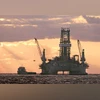
The Q3FY25 oil production was up 1 per cent Y-o-Y at 5.24 million tonnes (MT), and gas production at 5.1 billion cubic meters (bcm) was also flat. ONGC’s standalone production (including share in joint ventures) had declined for the past five years. In Q3, the decline was arrested with higher production from the KG basin. There’s optimism about ONGC’s standalone production clocking a compound annual growth rate (CAGR) of 6 per cent during FY25–27.
For investors, ramp-up of KG basin assets would be key triggers over FY25-27, and KG 98/2 is the key asset.
Recovery in HPCL’s and MRPL’s earnings and lower leverage may be other drivers.
ONGC has signed up BP Plc, UK, as a technical services provider. BP has committed up to 60 per cent incremental production over base levels of 40 million standard cubic meters per day (mmscmd) of gas and 0.25 mb/d (million barrels
per day) over the 10-year contract period.
Even part achievement would transform ONGC’s production profile.
The key risks to the bull case include reversal in oil & gas price trends and slower-than-expected ramp-up of production. Analysts may downgrade earnings estimates due to lower other income and weak subsidiary performances.
In KG98/2 basin, 13 wells have current oil production per day of 35,000 barrels and are expected to ramp up to 45,000 by March 2025. And, 3 mmmscd of gas production is expected to ramp up to Rs 10 mmscmd by mid-CY25.
ONGC has invested Rs 18,370 crore in ONGC Petro additions Limited (OPal), and increased stake from 49 per cent to 95.6 per cent. OPal ran at 92 per cent capacity for M9FY25 with an Ebitda loss of Rs 48 crore for M9FY25 versus loss of Rs 445 crore for M9FY24.
The government has allocated up to 3.2 mmscmd of new gas for the OPal plant. The profitability may increase once additional new gas comes in.

 "Higher production likely to help revive investor sentiment in ONGC")











