Street positive on cement stocks despite pricing pressures, demand woes

The industry continues to see consolidation and the top five will gain aggregate market share due to large capex. This could lead to more pricing power
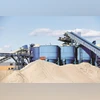
Cement industry
Given July 2024 weakness, and cautious guidance, further Q-o-Q declines in realisation will have happened in Q2FY25 over Q1FY25. But Q3FY25 and Q4FY25 may see a realisation rebound as rains ease. Representational Image
Devangshu Datta
3 min read Last Updated : Sep 02 2024 | 10:59 PM IST
Cement manufacturers have hiked prices after a challenging Q1FY25, and Q2FY25 (so far) when general elections and seasonal factors cut down on construction activity. The August prices are currently around 3-6 per cent above July 2024 but may not be sustainable in the face of weak demand. H2FY25 may see realisation growth which, if it happens, would drive average operating profit/tonne improvements in H2FY25 over a muted H1FY25.

The industry continues to see consolidation and the top five will gain aggregate market share due to large capex. This could lead to more pricing power.

Cement prices corrected M-o-M from November 23 to July 24 due to higher competition and slow demand. All-India average cement price was down 13 per cent in July 24 from a peak in October 24, and average realisation for major players was down 8 per cent in Q1FY25 compared to Q3FY24. In South India, prices hit decadal lows. In this backdrop, sustaining price hikes is hard. But industry-watchers believe that another hike may be on the cards, as players try to shore up earnings.

In Q1FY25, most cement companies reported lower-than-estimated profitability, due to weak realisation (average realisation declined 3 per cent Q-o-Q). Average operating profit/tonne was down 9 per cent Q-o-Q at ~827.

Given July 2024 weakness, and cautious guidance, further Q-o-Q declines in realisation will have happened in Q2FY25 over Q1FY25. But Q3FY25 and Q4FY25 may see a realisation rebound as rains ease.  


Cement industry is expected to see demand growth of 6-8 per cent Y-o-Y in H2FY25. In H1FY25, demand was soft due to elections, extended heat-wave, labour shortages and early monsoons. If power and fuel and freight costs stay stable, operating profit growth should revive.

As consolidation rises and capex is concentrated among top players, capacity share will also be tilted in their favour. Between FY13-18, aggregated capacity share for top five companies was around 47 per cent and realisation was poor at just 1 per cent annually.

But over FY19-24 and top five cement companies’ capacity share increased to 54 per cent and realisation grew at 3 per cent over this period. By FY26, capacity share will grow to 63 per cent. This will lead to pricing power and higher realisation.

After Q1FY25 results, analysts cut aggregate operating profit estimates for FY25, due to lower cement prices. If the hikes cannot be sustained, further earnings downgrades are likely. Apart from consolidation, cost reduction measures, increasing green power capacity, alternative fuels, logistics cost optimizations, and brand focus are key positives.

International and domestic petcoke prices were lower by 1 per cent Q-o-Q in Q2FY2025 so far, and diesel prices are also flat, and this is margin-positive. Operating costs per tonne are likely to be benign Q-o-Q during Q2FY2025.

The expected kick-start of government spending on infrastructure and sustained housing demand are drivers to revive volume offtake in H2FY2025 and may lead to improved cement prices. Operating profit margins fell by average 225-250 basis points Q-o-Q in Q1FY25 over Q4FY24 and Q4FY24 had lower margins than Q3FY24. Aggregate operating profit/tonne dropped to ~840 in Q1FY25 versus ~884 in Q4FY24 and ~996 in Q3FY24.

The hoped-for H2FY25 revival would therefore have to push up operating profit margins considerably to recover lost ground.  

Many analysts still remain positive about the sector's prospects, but most cement stocks have seen corrections in the last three months. The exceptions are UltraTech (up 11 per cent), India Cements (up 75 per cent, due to  acquisition) and Ramco Cements (up 4 per cent).

One subscription. Two world-class reads.

Already subscribed? Log in

Subscribe to read the full story →
*Subscribe to Business Standard digital and get complimentary access to The New York Times

Smart Quarterly

₹900

3 Months

₹300/Month

SAVE 25%

Smart Essential

₹2,700

1 Year

₹225/Month

SAVE 46%
*Complimentary New York Times access for the 2nd year will be given after 12 months

Super Saver

₹3,900

2 Years

₹162/Month

Subscribe

Renews automatically, cancel anytime

Here’s what’s included in our digital subscription plans

Exclusive premium stories online

  • Over 30 premium stories daily, handpicked by our editors

Complimentary Access to The New York Times

  • News, Games, Cooking, Audio, Wirecutter & The Athletic

Business Standard Epaper

  • Digital replica of our daily newspaper — with options to read, save, and share

Curated Newsletters

  • Insights on markets, finance, politics, tech, and more delivered to your inbox

Market Analysis & Investment Insights

  • In-depth market analysis & insights with access to The Smart Investor

Archives

  • Repository of articles and publications dating back to 1997

Ad-free Reading

  • Uninterrupted reading experience with no advertisements

Seamless Access Across All Devices

  • Access Business Standard across devices — mobile, tablet, or PC, via web or app

Topics :Cement stockscement industrystock market tradingshare marketMarket news

Next Story


