A new frontier in communications has opened up for consumers in India. Satellite-based communication services, or satcom, will soon roll out across the country after Parliament passed a new law supporting spectrum allocation. Artificial intelligence (AI) will play a critical role in the efficiency and quality of satcom services.
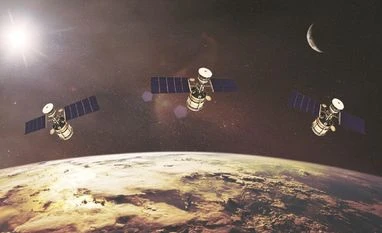
A fresh race is on across the world to cover the Earth with low earth orbit (LEO) satellite constellations. Elon Musk, the world’s richest man, has launched Starlink, which had more than 4,000 such satellites in orbit as of July 2023. Amazon founder Jeff Bezos is supporting Project Kuiper, which will have 3,236 satellites. “Billions of people around the world don’t have reliable access to broadband. Cost, complexity, and geography can make it difficult to install traditional, ground-based fibre and wireless connectivity solutions in these areas. Satellite broadband can fill many of those coverage gaps, but developing and deploying satellite technology requires significant innovation and investment,” said Amazon in a statement about Kuiper.
India’s Bharti Group is supporting OneWeb, which has launched more than 600 LEO satellites in the first phase of creating its own constellation and hopes to launch commercial services by next year. India’s satellite broadband market will be worth more than $1.1 billion in five years, according to estimates by the Indian Space Association, an industry group.
The European Union is forging ahead with its IRIS2. With a budget of euros 2.4 billion, the programme aims at deploying a satellite constellation that will be called IRIS2 (Infrastructure for Resilience, Interconnectivity and Security by Satellite).
A cluster of small satellites is effective in offering communication and connectivity. AI is being deployed to manage the efficiency and connectivity of these communication constellations. The European Space Agency has funded many projects to apply the latest developments in AI and advanced computing to make satellites more reactive, agile and autonomous.
A report by TS2 Space, a satcom operator, said AI would play a critical role for service providers. Companies like OneWeb are incorporating AI for improved optimisation of satellites. “Not only will the incorporation of AI and machine learning enable faster speeds and better connections, but it will also help OneWeb develop and launch its new satellite internet service. By utilising AI and machine learning to identify any potential problems or issues with the satellites, OneWeb will be able to launch its service without any delays or complications,” said TS2.
“AI and ML (machine learning) will enable satellites to use less power and be able to operate in a more efficient manner. This will enable the system to use fewer resources and therefore be more cost-effective. Additionally, AI and ML will enable the satellite network to detect any possible network issues and make corrections to the system in order to keep the network running smoothly.”
AI will be critical for managing thousands of satellites operating in different clusters and constellations. One of the biggest challenges is to prevent satellites from crashing into each other. As the orbits around the Earth get more crowded, AI will help manage satellites' trajectories and minimise the chance of collision.
A coordination mechanism for satellite operators, space agencies, and national regulatory bodies is being empowered by AI. The United States Space Surveillance Network is using AI to detect and track objects in space.
Even though the world is focusing on the next phase of terrestrial networks after the rollout of 5G, the launch of satellite-based communications for individuals and enterprises will bring a new age of connectivity. AI will not only drive satcom, but it will also advance the cause of data management with high-speed connectivity. The defence, aviation and shipping sectors will benefit from efficient satcom services powered by AI.

 "AI in the sky: How the technology has become guiding light for satcom")












 Connect with us on WhatsApp