When Homi Bhabha unveiled India’s nuclear programme in the 1950s, the vision was profound: An indigenous path to energy independence built on pressurised heavy water reactors (PHWRs), fast breeder reactors (FBRs), and ultimately, thorium-based systems to unlock the country’s vast reserves. This early promise unfolded slowly. The Tarapur Atomic Power Station, India’s first, was commissioned in 1969, but progress stalled under the weight of post-1974 sanctions, limited uranium reserves, technological hurdles, and policy caution. Even today, nuclear power accounts for just 8.8 Gw of India’s 466 Gw installed power capacity.
It has now been 20 years since the announcement of the historic US-India Civilian Nuclear Agreement. This high-profile deal, signed in 2005 by Prime Minister Manmohan Singh and US President George Bush, dominated Indian politics through the late 2000s. It involved bitter infighting between the government and the Left, with the Left adamantly opposed to the deal; and Singh, who personally shepherded it, risked his own, as well as the Congress Party’s future.
Cut to the present, India’s nuclear journey is all set to enter its most transformative phase — that too by inviting private capital to participate in scaling up nuclear power to 100 Gw by 2047. This goal is intimately tied to India’s net-zero emissions pledge for 2070, which depends on decarbonisation of the power sector. At the heart of this renewed push are small modular reactors (SMRs): Compact, factory-built units under 300 Mw that can be quickly deployed at industrial zones or repurposed coal plant sites. The 2025–26 Budget allocated ₹20,000 crore for a research & development mission to commission five indigenous SMRs by 2033. According to the Department of Atomic Energy, SMRs will help revive old coal plants by utilising their existing grid infrastructure, water supply systems, and land. If the Ministry of Power’s advisory to retire coal-based generation units older than 25 years is implemented, as much as 50–60 Gw of capacity will retire in the coming 10 years, opening up significant opportunities for SMR deployment at these sites. SMRs are expected to contribute 41 Gw to the 100 Gw target.
Nuclear power will no longer be a government monopoly. Bhuwan Chandra Pathak, chairman and managing director of NPCIL, anticipates that nearly 50 per cent of the national target will come from private partnerships. Industrial giants such as Tata, Adani, Reliance, and Larsen & Toubro are establishing dedicated nuclear divisions and committing large-scale investments. Among international players, Connor Teskey, president of Brookfield Asset Management — one of the world’s largest infrastructure investors — is ready to back Indian nuclear ventures, recognising that the technology “provides clean, dispatchable baseload power”. Brookfield-owned Westinghouse Nuclear, a key global supplier, sees India as a pivotal growth market. So do GE-Hitachi and Areva (the French nuclear company) and Holtec International.
The exact contours of private involvement vis-à-vis oversight and assurance by NPCIL are being worked out. To address concerns of private investors, the government is likely to advance two key amendments to the Atomic Energy Act. The first relates to the easing of provisions in the Nuclear Liability Law, which would effectively cap the liability of equipment vendors in the event of an accident, both in terms of limiting the monetary exposure to the original value of the contract, and a possible time frame limitation on when this liability would apply. The second would allow private companies to build, co-own, or operate nuclear plants, subject to regulatory safeguards. Both amendments are expected to be introduced during the Monsoon Session of Parliament and are seen as crucial to unlocking long-term private investments and international collaboration. The government is also considering a proposal to allow foreign direct investment of up to 49 per cent of equity.

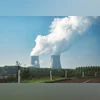 "Backed by private capital, India's nuclear energy set for transformation")










 Connect with us on WhatsApp