Epitaph of a school of entrepreneurship

Four businessmen who died this year might have done things differently from today's founders
PRS Oberoi
PRS Oberoi
Suveen Sinha
5 min read Last Updated : Dec 28 2023 | 8:36 PM IST
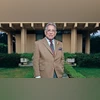
Two days after the death of P R S Oberoi in November, Scene Unseen, brood in tow, found themselves at the Clarkes Hotel in Shimla. The hotel does not bear the Oberoi name, but this is where the Oberoi story began.

In the 1920s, when it was called the Cecil (now there is another hotel by this name in Shimla), the manager, Ernest Clarke, took a liking to a front desk clerk called Mohan Singh Oberoi, so much so that he handed over the management to the young man. The young Oberoi later became the hotel’s owner, changed its name as a mark of respect to his benefactor, and the legend started.

His son, PRS, did not have to do the hard grind his father endured. In the words of Vir Sanghvi, he lived the life of a global playboy until the age of 32, sampling the best of the luxuries the world had to offer. But when he took charge of the hotel chain, he plunged headlong into it, remoulded its hotels in the mould of someone who had sampled the best of the world’s luxuries, and, as Mr Sanghvi says, redefined Asian hospitality before the word was coined.

Kedarnath Aggarwal died on November 13, the day before PRS checked out. Aggarwal’s father set up the Bikaner Namkeen Bhandar in Bikaner, Rajasthan, in 1905. Aggarwal and his brother, Satyanarayan, brought the name — and little else — to Delhi. They would go around the streets and lanes of Old Delhi in the 1950s selling bhujia and rasgulla out of plastic buckets. Yep, as street vendors.

It took a while before they could set up a shop in Chandni Chowk. In time, the Bikanervala group rose to touch Rs 1,300 crore in turnover and have 150 outlets in India and abroad.

Shimla, where the Oberoi story began, was also where Keshub Mahindra was born in 1923. His father, Kailash Chandra, started Mahindra & Mohammed in 1945 with his brother Jagdish Chandra and friend Ghulam Mohammed. The company became Mahindra & Mahindra after Mohammed left for Pakistan in 1947. Soon after, as the young country tried to find its feet, M&M, into steel trading at the time, ventured into assembly of Willy’s Jeeps and later into tractors.

Keshub Mahindra, who died on April 12, became chairman in 1963 and remained so until 2013, when his nephew, Anand, replaced him. In the intervening period, M&M turned into a true-blue conglomerate, straddling more than 20 industries, including information technology, hospitality, logistics, financial services, real estate, and renewable energy.

Some of you would frown upon the next person I talk about, Subrata Roy. He practised a different kind of entrepreneurship, but there is no denying the expanse, influence and — to some — the appeal of that entrepreneurship. To the faithful, what mattered was that Sahara’s name was on Sachin’s jersey. In Lucknow, it was everywhere: Road signs, dividers, and roundabouts. In Gomti Nagar, Sahara Shahar loomed large with its ornate facade, high walls, watch towers, and tight security.

When this writer got inside 10 years ago, Sahara Shahar was spread over 300 acres, had wide empty roads, imposing arches, an auditorium that could seat 5,000, a cinema hall, a medical unit, a fuel station, a lush cricket field, a lake whose circumference measured 2.5 km, a Bharat Mata temple, and Jyoti Sthal, a monument dedicated to Roy’s father, Sudhir Chandra.

The story goes that Roy started in 1978 with Rs 2,000 in capital, a Lambretta scooter, a clerk, and an errand boy. Several may have had similarly humble beginnings, but Roy built a company like none other, struggling with regulations from the start.

Roy called his corporate philosophy “collective materialism”. The group did not declare dividends. Apparently, it spent 40 per cent of its profits on welfare of its workers (called Kartavyayogi), 35 per cent went into the company’s net-owned funds, and the rest was spent on social work. Roy, who died on November 14, the same day as PRS, was the “Managing Worker and Chairman”.

In March 2013, at Roy’s granddaughter's annaprashan in New Delhi, which this writer happened to attend, you had to look where you were putting your foot, for you could well be stepping on a bonafide celebrity’s toes: Cricketer, film star, politician, or fashion designer. (No one from the Reserve Bank of India or Securities and Exchange Board of India was visible).

With the passing of these gentlemen, this year scripts the epitaph for their school of entrepreneurship, a school that wrote new chapters in Indian entrepreneurship.

Today’s entrepreneurs are on a different trip, be it in India or outside.

Look at the most talked about entrepreneur in the world right now, Sam Altman of OpenAI. The Wall Street Journal ran a front-page story on Tuesday depicting how Mr Altman, 38, has been frequently rescued by his influential allies, and that his firing and reinstatement at OpenAI is part of a pattern.

Closer home, one of India’s most famous entrepreneurs is — as reported by this newspaper — telling his investors they can have more control over his company if they pumped in $300 million.

A street vendor, a global playboy, a Willy’s Jeep assembler, and a Lambretta scooter rider would probably have done it differently, though not necessarily right, especially the Lambretta rider. But must 2023 put the lid on their school of entrepreneurship? It was fun to have them around, including the Lambretta rider.

One subscription. Two world-class reads.

Already subscribed? Log in

Subscribe to read the full story →
*Subscribe to Business Standard digital and get complimentary access to The New York Times

Smart Quarterly

₹900

3 Months

₹300/Month

SAVE 25%

Smart Essential

₹2,700

1 Year

₹225/Month

SAVE 46%
*Complimentary New York Times access for the 2nd year will be given after 12 months

Super Saver

₹3,900

2 Years

₹162/Month

Subscribe

Renews automatically, cancel anytime

Here’s what’s included in our digital subscription plans

Exclusive premium stories online

  • Over 30 premium stories daily, handpicked by our editors

Complimentary Access to The New York Times

  • News, Games, Cooking, Audio, Wirecutter & The Athletic

Business Standard Epaper

  • Digital replica of our daily newspaper — with options to read, save, and share

Curated Newsletters

  • Insights on markets, finance, politics, tech, and more delivered to your inbox

Market Analysis & Investment Insights

  • In-depth market analysis & insights with access to The Smart Investor

Archives

  • Repository of articles and publications dating back to 1997

Ad-free Reading

  • Uninterrupted reading experience with no advertisements

Seamless Access Across All Devices

  • Access Business Standard across devices — mobile, tablet, or PC, via web or app

More From This Section

Disclaimer: These are personal views of the writer. They do not necessarily reflect the opinion of www.business-standard.com or the Business Standard newspaper

Topics :Oberoi groupBS OpinionEntrepreneurshipBusiness schoolsMahindra

Next Story



