Kejriwal's no-ideology politics over as his 'cynical image' cost him Delhi

Kejriwal and the AAP are devastated, but not finished. They still have a big state in Punjab, the municipal corporation in Delhi and 43 percent of the vote, even in defeat

Arvind Kejriwal, Arvind, Kejriwal
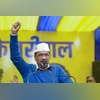
AAP convener Arvind Kejriwal (Photo: PTI)
Shekhar Gupta
9 min read Last Updated : Feb 09 2025 | 12:26 PM IST
Much is being written and said about why Arvind Kejriwal and his Aam Aadmi Party suffered such a crushing defeat. You’ve seen a lot of wisdom about it: lack of a new story and fatigued politics, attrition from central agencies’ assault and lawfare, unidimensional giveaway proposition and lack of leadership depth, and so on. Most of this is correct.
 
We are, therefore, moving forward and exploring the larger political consequences of what is, quite certainly, among the most significant turns in national politics—not confined to Delhi, the state—of the past decade.
 
The most important outcome is that the era of ideology-free politics is now over. For almost 15 years, Kejriwal built a politics without any ideological pillar or foundation. And it was deliberate. His was an insurgent party that grew from street protests and urban middle-class anger. It is the closest India has seen to a colour revolution and at the time the Anna Hazare movement raged, the comparison with Tahrir Square was often made.
 
Check out newspaper op-ed and TV channel “debate” archives. Through the Anna movement, Kejriwal, his volunteers, the India Against Corruption leadership of Magsaysay Award winners, two men in saffron (Swami Agnivesh and Baba Ramdev), a judge and two top lawyers worked in close conjunction with the RSS front organisations and indirectly, the BJP. Some of the most prominent voices heard on TV discussions calling the UPA’s the most corrupt government ever and how enough was enough, were BJP-linked.
 
Those that weren’t obviously in the party, later joined it. Much intellectual fuel came from New Delhi’s Chanakyapuri-based Vivekananda Foundation, for all practical purposes a BJP-RSS think tank. For evidence, check out how many really smart people active there immediately joined the first Modi government. These included National Security Adviser Ajit Doval and the first and then long-serving principal secretary to the prime minister, Nripendra Mishra. Later, he was put in charge of the project to build the Ram Temple.
 
Despite the pretence of being apolitical and not seeking power, Kejriwal had exactly the same ambitions. That’s why his ideological choices were limited. Either he could go with the BJP, or strike out on his own. We aren’t sure the BJP needed him or if he’d be satisfied with just being a middling leader there. His popularity was now at its peak at a very young age and he was dreaming big. He could be prime minister by 2019, those close to him say he imagined.
 
Distancing himself from Anna Hazare was easy. He was, in any case, a nobody and a ridiculous wannabe Mahatma Gandhi. He was used and thrown with no-risk nonchalance. The political plunge was taken with the formation of the AAP, which initially had prominent faces from what could be safely described as the ideological Left. Yogendra Yadav and Prashant Bhushan among them. He wasn’t going to go with the BJP, his ambition and audacity took him to challenge Narendra Modi in Varanasi in 2014. I had then thought, and written in a piece under my series WritingsOnTheWall that we were seeing the rise of a national leader after a very long time, and for the first time from a non-Congress, non-BJP catchment.
 
He had already beaten both the incumbent Congress and the BJP to emerge the largest party in Delhi the previous year and run a rebellious 49-day government. We met him during his Varanasi campaign and even then, I wrote in this WritingsOnTheWall that his message was muddled. I quote from that May 2014 piece, with Kejriwal saying: “Why am I in Varanasi when I could easily become an MP from Delhi? I have come to defeat Modi, save India from this monster.” Good question, I had then asked, but why’s Modi such a monster? Is he communal, a threat to secularism? We didn’t hear that from him.
 
“He is a deadly threat,” he said, “because he’s in the pocket of Ambani and Adani (even in 2014), I have the documents to prove that.” He then pulled out one sheaf of papers after another, rather in the fashion of a pamphleteer in faux fury than a young new, liberal crusader. “He is blowing it,” I had written, “he could’ve made an arguable case by seeking votes against Modi to save secularism. But help me defeat Modi to save you from Ambani and Adani? Tell me another.” Ok, we end self-referencing here.
 
In the 2013 Delhi assembly polls, his was not the single-largest party and he had no qualms taking outside support from the Congress, which he had just defeated, after devastating it in a three-year anti-corruption campaign. Cynicism, pragmatism, sharp politics, you can call it what you wish.
 
The fact is, he was carrying no burden of principle, philosophy or ideology. A true Indian politician. But Indian politicians also, however cynical or amoral, still need some emotional fuel. It can be an ideology, even nationalism, an identity group as in caste, religion, ethnicity, language. Kejriwal had none. His politics was one-track, or monochromatic: we stand against corruption and all others are thieves. And we’ve come to change the system.
 
He ducked the ideological question. He had plonked himself in the opposition to both the BJP and the Congress, hoping to be the new national hope. However, his idea of changing the system was also undefined. We’ve seen some of that work in democracies lately. Javier Milei literally campaigning with a chainsaw promising to cut Argentina’s government into half—which he has done. Or Donald Trump bringing the bulldozer with Elon Musk as its driver, to what he sees as the ‘Deep State’. Kejriwal had no such original idea. Jan Lokpal Bill, which promised to send every other politician to jail, wasn’t one such.
 
He couldn’t be more Hindu than BJP’s Hindutva. And a Left-Centre positioning would put him in the same space as the Congress. So, what did he stand for? That’s the question he deftly avoided answering, using portraits of Ambedkar and Bhagat Singh in his party and government offices. This was too clever by half. This is one of the key reasons behind this comeuppance.
 
Through these years, he has played with both sides of the ideological spectrum. His anti-elitism took him closer to the Left but then, he purged all his comrades of the same bent, probably because they were not supplicant enough. Or were building significant profiles of their own.
 
Then, reciting Hanuman Chalisa in a TV interview, building of a temporary Ram Mandir in Delhi, Atishi comparing his jailing to Lord Ram’s Vanvas and claiming that she was only filling in for him as Bharat did at Ayodhya during older brother Ram’s exile. You can do all of this and more. But, as Rahul Gandhi’s also realised after multiple temple visits and talk of his janeu, high Brahmin gotra or Shiv-bhakti, you cannot out-Hindutva the original in the BJP and Modi.
 
His first 49-day tenure was marked by much drama and headline-hunting, including the Jantar Mantar protest, where he and his comrades ‘slept’ in the open at the peak of winter, wrapped in quilts brought from home. He pulled the curtain by equally dramatically resigning, protesting that the Jan Lokpal Bill wasn’t passed. This impressed the people of Delhi sufficiently to give him a landslide in the assembly elections that followed. In 2015 and 2020, he swept Delhi despite the fact that Modi was at the peak of his popularity. Another five years, and the half-life of ideology-free politics is over.
 
The fact is, he did become an alternative, but as an unfocused, cynical politician. On some key BJP issues such as Article 370, Ram Mandir, Rohingya and Bangladeshi immigrants, he was with the BJP. Then, he would go with the Congress when it suited him, as in Lok Sabha elections and opposing it most of the time.
 
The fundamental contradiction in his politics is that while he needs to be with the INDIA bloc where the Congress forms the core, the only political turf he seeks to win is from them. In Delhi, he vacuum-cleaned the Congress vote.
 
Then, he entered Gujarat, Goa, Himachal Pradesh, Uttarakhand and Punjab. He wanted the AAP to be the new Congress. And then, as the 2024 Lok Sabha polls ended, he was at the Congress party’s throat in Haryana. The Congress has now paid back in Delhi. In 13 seats, as this analysis by Sourav Roy Barman of ThePrint shows, the Congress has got more votes than the AAP’s margin of defeat. These include AAP stalwarts Kejriwal, Manish Sisodia, Somnath Bharti, Saurabh Bharadwaj and Durgesh Pathak.
 
Vote transfer isn’t a simple fact of arithmetic. But a reasonably generous alliance with the Congress could’ve won the AAP another 10 seats and the Congress three or four. His absence in Haryana might’ve made the BJP’s task tougher. This is the contradiction in his politics we had mentioned earlier. The BJP is out to destroy him, but he thinks he can only expand at the cost of the Congress. He needs it as an ally instead. This is also what makes the AAP a particularly conflicted constituent of INDIA.
 
Kejriwal and the AAP are devastated, but not finished. They still have a big stake in Punjab, the municipal corporation in Delhi and 43 percent of the vote, even in defeat. Kejriwal has resurrected himself from several crises earlier. This, however, is his gravest, especially because the BJP wants to finish him. They will try to break his MLAs and corporators in Delhi and the government in Punjab. He has the political smarts and courage to fight back. His party workers may still believe in him. Can he keep his politics alive and also fight on two fronts, BJP and Congress, without stating with any clarity where he stands on the main polarising issues in national politics, is the question this defeat has left him confronting.

One subscription. Two world-class reads.

Already subscribed? Log in

Subscribe to read the full story →
*Subscribe to Business Standard digital and get complimentary access to The New York Times

Smart Quarterly

₹900

3 Months

₹300/Month

SAVE 25%

Smart Essential

₹2,700

1 Year

₹225/Month

SAVE 46%
*Complimentary New York Times access for the 2nd year will be given after 12 months

Super Saver

₹3,900

2 Years

₹162/Month

Subscribe

Renews automatically, cancel anytime

Here’s what’s included in our digital subscription plans

Exclusive premium stories online

  • Over 30 premium stories daily, handpicked by our editors

Complimentary Access to The New York Times

  • News, Games, Cooking, Audio, Wirecutter & The Athletic

Business Standard Epaper

  • Digital replica of our daily newspaper — with options to read, save, and share

Curated Newsletters

  • Insights on markets, finance, politics, tech, and more delivered to your inbox

Market Analysis & Investment Insights

  • In-depth market analysis & insights with access to The Smart Investor

Archives

  • Repository of articles and publications dating back to 1997

Ad-free Reading

  • Uninterrupted reading experience with no advertisements

Seamless Access Across All Devices

  • Access Business Standard across devices — mobile, tablet, or PC, via web or app

Topics :Arvind KejriwalDelhi Assembly ElectionsAam Aadmi PartyAAPAAP government

Next Story