New economy, old habits

There is no doubt that the world needs to move with speed and at scale. But what will be the business model that we take to the new green world?
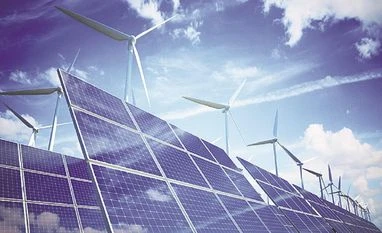
renewable solar wind energy
Sunita Narain
5 min read Last Updated : May 12 2024 | 10:05 PM IST
The world is fast-tracking the transition to a green economy. It is moving towards renewables, like solar and wind, to replace coal and gas in energy systems; towards electric vehicles to replace oil for transportation; and towards hydrogen to replace fossil fuels in industry and energy. These are the three big changes expected to drive reduction in emission in a world that is fast heating up, and with hugely consequential weather disasters. 

There is no doubt that the world needs to move with speed and at scale. But what will be the business model that we take to the new green world? I ask this as there are inherent problems with the old model of resource utilisation and its social and environmental fallouts.
 
Take the issue of mineral extraction — be it coal, iron ore, or aluminium. The mining of these raw materials, needed for energy and industry, have led to massive environmental fallouts. In India, as we have painfully found out, this mineral wealth is often in forests, wildlife habitats, and, of course, tribal homes. This is why we say this resource curse is about rich lands and poor people. The fact also is that to get to the minerals we need for the economy, we have had to cut forests and displace local communities that had lived in this habitat. The tragedy of this extractive and revenue-generating economic model has been that the people who live on these lands have hardly benefited from the resources. This is the core of what is wrong in our world, not just emission from these industries that then led us to catastrophic climate change.
 
I ask this because in the new green economy, the world will still need minerals, though, different ones — lithium, nickel, copper, cobalt, graphite — but still those that are found in forests and, invariably, on the lands of the most marginalised. This is true of not just India but the world. New York-based market consultancy MSCI reports that 97 per cent of nickel, 89 per cent of copper, 79 per cent of lithium, and 68 per cent of cobalt reserves in the US are within 55 km of Native American reservations. It is the same in other regions — from Central America to Africa to Asia.
 
The green transition will mean exponential growth in the need for these minerals. Will there be a difference in the way we conduct business with Earth and its people? Battles are already being waged. In the US, for instance, mining majors Rio Tinto and BHP Billiton’s Resolution Copper mine in Arizona has come under fire from indigenous communities because the digging will have to happen on lands held sacred. The story is the same wherever the new gold rush is, across the world, with no new rules of engagement.
 
In India, we have had a long tryst with making mineral extraction environmentally and socially just — sadly without solutions that work. Years ago, the Supreme Court had ruled in the Samata judgment that no mining could happen on tribal lands without the participation of the tribal people. It meant that, at the least, the tribal people would need to be equal shareholders in the business. But this was negated. Then came the effort to share the revenue from mining with these communities. In fact, the first draft of what then became the District Mineral Foundation (DMF) was to make the communities partners in the business. But this, too, got diluted. The grand idea of sharing benefits or making people partners in mineral development got reduced to an additional cess on minerals. This tax is deposited with the DMF and gratuitously used by the government to fund what it would like to see as development, without much participation of the people who live on the land where the minerals are found.
 
The situation is the same with the environment and forest clearances. The objective at one time was to ensure that communities had the right to consent to these projects; that clearance would give weight to their objections to projects in greenfield forestlands. But this protection is being whittled away in the name of growth. It could have helped build a socially inclusive and just green future. 
 
The other issue that always led to contests in the old economy was the location of the project — from thermal power to iron smelters — because communities feared that pollution would jeopardise their life and livelihood. The same question is now being raised about the location of windmills and solar projects — that they are in areas inhabited by people or wildlife. The question, again, is this: In our promised green economy, will governments make rules that resolve the conflict in ways that improve local communities and their environment, or will the rush for transition mean more of the same old ways, or even worse? The fact is that the poor never really benefited from the wealth generated in the old economy. The lands where coal was mined and energy produced still remain without electricity. Will the new economy make sure it is inclusive? Only then can it be sustainable. And if not, the new economy is not new, or green.

 The writer is at the Centre for Science and Environment sunita@cseindia.org, X: @sunitanar

One subscription. Two world-class reads.

Already subscribed? Log in

Subscribe to read the full story →
*Subscribe to Business Standard digital and get complimentary access to The New York Times

Smart Quarterly

₹900

3 Months

₹300/Month

SAVE 25%

Smart Essential

₹2,700

1 Year

₹225/Month

SAVE 46%
*Complimentary New York Times access for the 2nd year will be given after 12 months

Super Saver

₹3,900

2 Years

₹162/Month

Subscribe

Renews automatically, cancel anytime

Here’s what’s included in our digital subscription plans

Exclusive premium stories online

  • Over 30 premium stories daily, handpicked by our editors

Complimentary Access to The New York Times

  • News, Games, Cooking, Audio, Wirecutter & The Athletic

Business Standard Epaper

  • Digital replica of our daily newspaper — with options to read, save, and share

Curated Newsletters

  • Insights on markets, finance, politics, tech, and more delivered to your inbox

Market Analysis & Investment Insights

  • In-depth market analysis & insights with access to The Smart Investor

Archives

  • Repository of articles and publications dating back to 1997

Ad-free Reading

  • Uninterrupted reading experience with no advertisements

Seamless Access Across All Devices

  • Access Business Standard across devices — mobile, tablet, or PC, via web or app

More From This Section

Disclaimer: These are personal views of the writer. They do not necessarily reflect the opinion of www.business-standard.com or the Business Standard newspaper

Topics :BS OpinionRenewables marketsrenewable enrgysolar

Next Story



