The world faces action and inaction against climate: What will win?

For the first time, renewable energy has overtaken coal as the primary source of electricity in the first six months of 2025
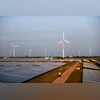
Renewable energy, climate
Another major trend and counter-trend can be seen in the shift toward electric vehicles (EVs). (Image: Bloomberg)
Sunita Narain
4 min read Last Updated : Nov 09 2025 | 10:46 PM IST

Don't want to miss the best from Business Standard?

As I write this, world leaders are meeting in Brazil for the annual climate conference of parties (COP 30). This COP is being held in the shadow of the massive churning in the world — not the kind that makes headlines but deeper undercurrents: Collisions of powerful forces working against one another. What will emerge as the victor? At this point, the only certainty is uncertainty.
 
Consider this. The World Meteorological Organization has reported that carbon-dioxide levels in the atmosphere have reached a record high — rising from 420.4 ppm (parts per million) in 2023 to 423.9 ppm in 2024. According to the agency, this signals new threats of rising temperatures and more extreme weather events. Yet, we are witnessing clear signs of reversal in the commitment needed to take urgent climate action. And it is not just the United States (US) that is leading this retreat. There is a broader global hesitancy; countries find it difficult to scale up low-carbon solutions that can drastically cut emission. So, the question is, what will “win” — the urgency to act in the face of mounting climate threats, or inaction driven by economic interests?
 
Then there is the news that, for the first time, renewable energy has overtaken coal as the primary source of electricity in the first six months of 2025. In its report: “Global Electricity Mid-Year Insights 2025”, energy think tank Ember reports that solar power has recorded rapid growth, doubling over the past three years and adding more electricity than any other source during this period. More than half this increase in solar generation came from a single country: China. India also played a significant role. However, the report, in the same breath, highlights that countries are reverting to fossil fuel-based electricity to meet the rising energy demands of data centres working on artificial intelligence (AI) and intensifying heatwaves. Natural gas-based electricity has increased by 1.6 per cent to reach a record high, led by the US.
 
The ultimate counter-push comes from China, which, despite its renewable-energy achievements and substantial underused coal-power capacity, is building new coal-power plants, adding up to 95 Gw of new capacity, according to CarbonBrief, a website. This is also what we see in India. The question now is: Which energy sense will prevail? Will renewable energy continue its surge toward dominance, or will fossil fuels make a comeback?
 
Another major trend and counter-trend can be seen in the shift toward electric vehicles (EVs). This has the potential to be a gamechanger because it reduces the carbon intensity of the transport sector. According to the International Energy Agency (IEA), in 2024, some 20 per cent of all new cars sold globally were electric. China led the growth, with electric cars accounting for almost half the sales of new cars in the country. EVs are now cost-competitive and offer performance on a par with that of the petrol and diesel variants. But this transition faces headwinds, more from geopolitics than technology.
 
China’s near-total dominance across the EV supply chain — from rare-earth minerals to battery production to EV manufacturing — has prompted other vehicle-manufacturing countries to step back on their ambition to electrify vehicles; subsidies are being rolled back and plans for phasing out internal combustion engine cars are being reconsidered. China’s recent move to restrict exports of critical rare minerals is likely to further unsettle this global green transition. Will EVs accelerate or hit the brakes, amid this deepening polarisation in the global trade and economy?
 
The world appears to have grouped into two camps: Countries that have invested in “older” technologies and fossil fuels, and those that can invest in emerging, greener technologies. The nub is that the transition to new energy systems will hinge on access to finance so that the new world can leapfrog to new green technology.
 
The recently released World Economic Outlook, by the International Monetary Fund, aptly captures today’s uncertainty with its tagline: “Global economy in flux, prospects remain dim.” But its real kicker comes from its data that says for the first time in 2025 since 2000, the world’s poorest and most vulnerable countries are spending more on servicing debt than they receive in official development assistance.
 
What, then, does the future hold for all of us in this confused and disordered world? The final, and perhaps only, question is this: What can be done to make the winds of positive change to blow stronger and faster? 
The author is at the Centre for Science and Environment.sunita@cseindia.org, X: @sunitanar

One subscription. Two world-class reads.

Already subscribed? Log in

Subscribe to read the full story →
*Subscribe to Business Standard digital and get complimentary access to The New York Times

Smart Quarterly

₹900

3 Months

₹300/Month

SAVE 25%

Smart Essential

₹2,700

1 Year

₹225/Month

SAVE 46%
*Complimentary New York Times access for the 2nd year will be given after 12 months

Super Saver

₹3,900

2 Years

₹162/Month

Subscribe

Renews automatically, cancel anytime

Here’s what’s included in our digital subscription plans

Exclusive premium stories online

  • Over 30 premium stories daily, handpicked by our editors

Complimentary Access to The New York Times

  • News, Games, Cooking, Audio, Wirecutter & The Athletic

Business Standard Epaper

  • Digital replica of our daily newspaper — with options to read, save, and share

Curated Newsletters

  • Insights on markets, finance, politics, tech, and more delivered to your inbox

Market Analysis & Investment Insights

  • In-depth market analysis & insights with access to The Smart Investor

Archives

  • Repository of articles and publications dating back to 1997

Ad-free Reading

  • Uninterrupted reading experience with no advertisements

Seamless Access Across All Devices

  • Access Business Standard across devices — mobile, tablet, or PC, via web or app

Topics :Climate ChangeBS OpinionClimate accordsrenewable enrgy

Next Story



