Bihar: The first republic, the lost republic, thanks to political obsession

Bihar is blessed with a land more fertile for revolutions than any in India. Why has it fallen so far behind then? Constant obsession with politics is at the root of its destruction

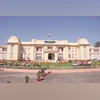
Bihar Assembly
Nobody is now promising to turn it into Gujarat or Karnataka, forget Shanghai. Everybody has generational grievances, and already has a leader who promises to address these.
Shekhar Gupta
7 min read Last Updated : Nov 08 2025 | 9:30 AM IST
Bihar, now voting to elect its 18th state Assembly, says with pride that democracy was born here. That’s why Prime Minister Narendra Modi says that India is the mother of democracy. 
A signboard on the highway as you approach Bihar’s Vaishali district reads: “Welcome to the First Republic in the World.” This is no folklore. There is plenty of recorded history, rock edicts, and academic writing affirming this. For a refresher, you can swing by Patna’s spectacular museum. 
Democracy, the idea of a republic where each individual has a voice and a choice, is Bihar’s greatest contribution to India, and India’s to the world. Which raises the question: How good has democracy been for Bihar? Where is its people’s democracy dividend? 
The state of its society, people and economy shows it’s got nothing. Not even what you would call a tiny royalty for patent over democracy. It has no industry, tax revenues, or economic activity besides subsistence farming. Its per capita income is the country’s lowest and one-fifth of our richest state. The gap is widening. Its only productive activity is labour export, mostly for the lowest paying jobs in states with better economies. 
In exasperation over the state of Bihar’s morass and the renewed hopes from another caste census, I had written in National Interest on October 7, 2023: “What Bihar thinks today, Bihar used to think the day before yesterday.” As the state goes through its current election, its third generation in independent India is still paying for that old-think-turned-new-think — content with caste, identity, social coalitions, and still at the bottom of the pile. 
We can see why nobody seems bothered. Bihar has been left so far behind the rest, even its neighbouring states, that the only comparison its voters make is with their own past. Am I doing better than my parents? The answer is mostly yes. Will my children do better than me? The realistic hope is yes. That sets the bar for aspiration frightfully low. 
Over the generations, Bihar’s voters have lived by and fought for minimalistic expectations: Protection from feudal and upper caste oppression, three meals a day, and going ahead basic law and order, electricity, and some connectivity. So far, so good.  Tragic that this is all you dream of in India of 2025. That’s why Narendra Modi and Nitish Kumar, both of whom used to deride giveaways, are now front-loading their political offering with just those. Of course, their rivals promise a government job to each of its 27.6 million families. It isn’t a cruel joke. It’s the serious reality of Bihar even after 20 years under Nitish Kumar. 
Where’s the ambition for a leap forward, to break out of the trap? And it is no tiny state on the peripheries. This is almost 140 million people in the nation’s heartland, or one in 10 Indians living a sub-sub-Saharan Africa quality of life. In this election, too, the main contenders are offering more of the same and sadly, it might just be enough. The third, Prashant Kishor, at least, has some new ideas. He won’t admit it, but he also knows that even imagining new ideas in Bihar is seen as an act of wishful thinking, if not outright nuttiness. 
It is particularly tragic for a state with such a deep, vibrant, and audacious political culture. See it this way. But for Bihar, there would’ve been no Gandhi. He returned to India from South Africa in 1915 and first caught the national — and international — imagination with the satyagraha against forced indigo cultivation by British contractors in Champaran. That zone still has some of the poorest districts of India’s poorest state by far. Go there to see how poor, distant and deprived its people are even now. You can then imagine how wretched their existence was in 1917. And yet they embraced Gandhi. The poorest of Bihar were his first political allies. 
Besides the incidental fact that he was a Bihari, would Jayaprakash Narayan (JP) have risen to being hailed as Lok Nayak (leader of the masses) but for the people of Bihar, their political awareness and courage? His Nav Nirman Andolan (rejuvenation movement) had Bihari human resources and acquired pan-India influence so dramatically, it forced a rattled Indira Gandhi into imposing the Emergency, and ultimately led to her defeat in 1977. He acquired the most moral and briefly political capital since Gandhi in 20thCentury India. Bihar triggered the decline of the Congress party’s national domination. It never recovered.
 
If Mahatma Gandhi and Jayaprakash Narayan owe their rise to Bihar and its people, let’s talk about Karpoori Thakur who rose in the mid-sixties. Until then, the state had elected upper-caste chief ministers as its default choice. Karpoori Thakur, from a humble barber (nai) family from Samastipur, challenged and changed this, and not just for Bihar. He sparked the social justice movement for subaltern caste empowerment that lives on six decades later. 
He was instrumental in the social coalitions that denied  majority to the Congress for the first time in many states in 1967. The Samyukta Vidhayak Dal state government, which he joined as deputy chief minister with the education portfolio, among others, didn’t last long. But he had founded a new politics, which ultimately came to be known as Mandalite. It built a secular answer to both, the Congress, seen by early nineties as retreating to soft Hindutva, and the Bharatiya Janata Party (BJP). 
Until then, the Congress had seen itself as a big-tent party that could laugh off the Jan Sangh, which Indira Gandhi had derided as a party of baniyas (never of Hindus). Karpoori Thakur and the people of Bihar built India’s first anti-Congress, and ultimately anti-BJP, social coalition. It’s a different matter that it split ultimately, each faction joining one of the two national coalitions. Even today, 37 years after Thakur’s death, both the Congress and the BJP still have to piggyback on one of his legatees. You can see why the Modi government awarded him a posthumous Bharat Ratna. 
From  Licchavi-era democracy to Champaran, Karpoori Thakur’s social justice, and JP’s Sampoorn Kranti (total revolution), the many-armed Left subaltern movements (Marxist-Leninist) and their feudal upper-caste counters (Ranvir Sena), Bihar is blessed with a land more fertile for revolutions than any in India. Why has it fallen so far behind then? What’s the curse chasing it? Why do its revolutions keep eating their own children? 
The one thriving pastime in the state is political theorising. See, we are avoiding “punditry” because it carries a caste signal. Political awareness, passion and debate among the people of Bihar rages on at an industrial scale, probably to make up for the utter lack of industry here. I don’t say this lightly. The constant obsession with politics is at the root of Bihar’s relative decline compared to the rest of the country. While identity politics everywhere harks back to the past, in Bihar it has become a self-destructive obsession. 
Nobody is now promising to turn it into Gujarat or Karnataka, forget Shanghai. Everybody has generational grievances, and already has a leader who promises to address these. And when everybody promises the same thing, the one who throws more money can expect to be in front. The state that gave the world democracy, and India its Mahatma and Lok Nayak, and its social justice revolution, is cursed by politics of minimal expectation. It is a national tragedy.
 
By special arrangement with ThePrint

One subscription. Two world-class reads.

Already subscribed? Log in

Subscribe to read the full story →
*Subscribe to Business Standard digital and get complimentary access to The New York Times

Smart Quarterly

₹900

3 Months

₹300/Month

SAVE 25%

Smart Essential

₹2,700

1 Year

₹225/Month

SAVE 46%
*Complimentary New York Times access for the 2nd year will be given after 12 months

Super Saver

₹3,900

2 Years

₹162/Month

Subscribe

Renews automatically, cancel anytime

Here’s what’s included in our digital subscription plans

Exclusive premium stories online

  • Over 30 premium stories daily, handpicked by our editors

Complimentary Access to The New York Times

  • News, Games, Cooking, Audio, Wirecutter & The Athletic

Business Standard Epaper

  • Digital replica of our daily newspaper — with options to read, save, and share

Curated Newsletters

  • Insights on markets, finance, politics, tech, and more delivered to your inbox

Market Analysis & Investment Insights

  • In-depth market analysis & insights with access to The Smart Investor

Archives

  • Repository of articles and publications dating back to 1997

Ad-free Reading

  • Uninterrupted reading experience with no advertisements

Seamless Access Across All Devices

  • Access Business Standard across devices — mobile, tablet, or PC, via web or app

Topics :BS OpinionShekhar GuptaBihar Assembly Elections

Next Story