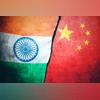
To counter China, India needs to first crack down on corruption like Xi did

For years, China was viewed as a cheap manufacturing hub. No longer. When Xi Jinping assumed power in 2012, he made no secret of his intention to move China up the value chain

India china, India, China
(Photo: Shutterstock)
Debashis Basu
5 min read Last Updated : Jun 01 2025 | 10:36 PM IST

Don't want to miss the best from Business Standard?

Rajiv Bajaj, chairman of Bajaj Auto, sounded the alarm last week: If China were to restrict exports of rare earth metals — crucial for magnets in electric vehicles— India’s nascent electric-vehicle (EV) industry could grind to a halt. His anxiety is not unwarranted. As geopolitical tensions rise and trade wars simmer, headlines like these expose uncomfortable truths: The world remains deeply dependent on Chinese supply dominance, and India is no exception. In domain after domain — artificial intelligence (AI), robotics, green energy, and defence — China’s ascendancy is no longer a prediction but a reality. Its stronghold is not accidental; it is the result of sustained state ambition, disciplined execution, and an unparalleled mobilisation of resources. 
This has strategic ramifications, particularly in South Asia. During a brief flareup between India and Pakistan last month, independent analysts suggested Chinese-supplied military technology might have given Islamabad a temporary edge. More than 80 per cent of Pakistan’s defence imports now come from China. While New Delhi and Islamabad traded blows and narratives, the real winner sat silently to the north — its influence perhaps subtly reconfiguring the region’s balance of power. Last week India was celebrating its ascent to the position of the world’s fourth-largest economy, overtaking Japan. But such pointless milestones belie deeper imbalances. Trade with China, for instance, remains embarrassingly one-sided. Indian exports to China fell nearly 15 per cent in the first 10 months of last financial year to $11.5 billion. In contrast, Chinese exports to India rose 3.3 per cent, reaching $101.7 billion. That China is India’s largest trading partner — and simultaneously a strategic adversary — is a paradox New Delhi will increasingly have to reckon with. 
For years, China was viewed as a cheap manufacturing hub. No longer. When Xi Jinping assumed power in 2012, he made no secret of his intention to move China up the value chain. The “Made in China 2025” blueprint, launched in 2015, prioritised a few strategic sectors, from aerospace and semiconductors to clean energy and biotech. While many dismissed it as aspirational, China quietly got to work. The results are now visible, and formidable. In many cutting-edge sectors, China is not catching up but leading. It produces the majority of the world’s EVs, solar panels, wind turbines, and drones. It controls 60 per cent of rare earth processing and supplies 40 per cent of the world’s bulk drugs. It is home to the world’s largest high-speed rail network and installs more industrial robots annually than the rest of the world combined. According to the United Nations Industrial Development Organization, by 2030 China may account for 45 per cent of global manufacturing, up from 30 per cent today and just 6 per cent in 2000. Even areas of relative weakness are being aggressively addressed. Semiconductor fabrication remains a challenge, but Huawei is reportedly developing an indigenous chip supply chain to circumvent Western restrictions, according to the Financial Times. 
In AI, Chinese firms are narrowing the gap. Earlier this year, Chinese startup DeepSeek launched an AI model rivalling OpenAI’s, at a fraction of the price, while other tech giants followed suit. Without pausing for breath, Beijing is also laying the groundwork for future supremacy. In March, it announced a $138 billion venture capital fund to invest in frontier technologies such as quantum computing and robotics. Research and development spending continues to climb. The Belt and Road Initiative has expanded China’s influence across South and Central Asia, including in India’s immediate neighbourhood. 
This matters hugely for India. As China’s technological and economic dominance grows, New Delhi will face increasing dilemmas. Dependence on Chinese imports weakens domestic industry. The risk of technological lockin grows as China sets standards in areas such as 5G and AI. Politically, China's leverage expands, both through economic ties with India’s neighbours and its military posturing along the Line of Actual Control. China’s soft power too is growing. Online, China is winning a subtle propaganda war, projecting itself as a beacon of social order and techno-competence, in stark contrast to the political dysfunction and decaying infrastructure of the West. When the 2025 democracy perception index canvassed more than 110,000 respondents across 100 countries, China turned out to be more popular than the United States. 
What, then, is India to do? The blueprint for economic transformation is no secret. Japan pioneered it. South Korea, Taiwan, and Singapore (and partly Thailand and Malaysia) copied it.  China supersized it. India has the ingredients: A vast and youthful population, a vibrant entrepreneurial class and a solid (if unevenly distributed) educational base. What it lacks are serious intent and goal orientation. It would be too much to expect China’s laser-like focus on long-term goals and rapid execution from India’s netas and babus. One place to start would be an unflinching crackdown on corruption, something Mr Xi made a centrepiece of his policies. While such campaigns do not guarantee prosperity, they would signal the intent that Indian leadership is at last serious about nation-building. Continuing along the same path is not an option. To use Donald Trump’s pet expression: China has all the cards now.
The author is editor of www.moneylife.in and a trustee of the Moneylife Foundation; @Moneylifers

One subscription. Two world-class reads.

Already subscribed? Log in

Subscribe to read the full story →
*Subscribe to Business Standard digital and get complimentary access to The New York Times

Smart Quarterly

₹900

3 Months

₹300/Month

SAVE 25%

Smart Essential

₹2,700

1 Year

₹225/Month

SAVE 46%
*Complimentary New York Times access for the 2nd year will be given after 12 months

Super Saver

₹3,900

2 Years

₹162/Month

Subscribe

Renews automatically, cancel anytime

Here’s what’s included in our digital subscription plans

Exclusive premium stories online

  • Over 30 premium stories daily, handpicked by our editors

Complimentary Access to The New York Times

  • News, Games, Cooking, Audio, Wirecutter & The Athletic

Business Standard Epaper

  • Digital replica of our daily newspaper — with options to read, save, and share

Curated Newsletters

  • Insights on markets, finance, politics, tech, and more delivered to your inbox

Market Analysis & Investment Insights

  • In-depth market analysis & insights with access to The Smart Investor

Archives

  • Repository of articles and publications dating back to 1997

Ad-free Reading

  • Uninterrupted reading experience with no advertisements

Seamless Access Across All Devices

  • Access Business Standard across devices — mobile, tablet, or PC, via web or app

Topics :BS OpinionChinaIndia China relations

Next Story