Home / Opinion / Editorial / End unpredictability: Leaders of US, China must step back from trade brink
End unpredictability: Leaders of US, China must step back from trade brink
The exact outline of what has been decided is not known - and may never be known - especially if one or both the leaders end up rejecting it
premium
Mr Trump’s ambition to push Beijing into committing it to fairer trade principles is admirable. But the way he has gone about it is, to say the least, unwise.
3 min read Last Updated : Oct 27 2025 | 9:44 PM IST
Over the weekend, trade negotiators from the United States (US) and the People’s Republic of China said they had come to an agreement on a range of outstanding issues between the two nations, and were ready to present the outcome of their talks to Presidents Xi Jinping and Donald Trump. This is the product of a week of hectic diplomacy surrounding the American President’s visit to Asia for the gathering in Malaysia of the Association of Southeast Asian Nations and the East Asian Summit in South Korea. The American and Chinese leaders are due to meet during the latter event, and it is to be hoped that the talks will be constructive and they will be able to utilise this hard-won breakthrough. Actions by both countries have been extremely disruptive for normal trading partnerships throughout the world, and some degree of normalcy and predictability must be restored to their relations. While nations like India will continue to have issues with both China and the US, these must be resolved independently — and not become part of a broader economic and strategic conflict between the two.
The exact outline of what has been decided is not known — and may never be known — especially if one or both the leaders end up rejecting it. But US Treasury Secretary Scott Bessent has indicated that Mr Trump’s recent announcement of 100 per cent tariffs on Chinese goods might be traded away in return for a deferral on the large-scale controls on rare earths and magnets exports, which Beijing had announced. An agreement to resume soybean purchases from the US might also be part of the deal, as well as further action on the illegal production and export of fentanyl by China, which is responsible for a major addiction crisis in the US. Other outstanding issues, such as the conditions attached to a sale of the video aggregator TikTok and the scope of US restrictions on technology export, might also be addressed. Some of these might be irrelevant to countries like India. But in others, Indian companies and citizens have become collateral damage in a burgeoning cold war. The licensing regime decided on by China for rare earths and magnets export, for example, does not distinguish on paper between US purchasers and any others, though it was initiated presumably in response to Washington’s actions.
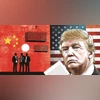
Mr Trump’s ambition to push Beijing into committing it to fairer trade principles is admirable. But the way he has gone about it is, to say the least, unwise. He has acted unilaterally, without consulting other partners. His actions have been unpredictable, undiscussed, and unsustainable. Markets have whipsawed and companies have paused action because of the risks he has introduced into global trade. Nor have Beijing’s actions helped; it has been equally unilateral and sweeping, punishing the entire world for Mr Trump’s decisions. When the two leaders meet, they will have an opportunity to step back from the brink. Both have sounded conciliatory notes. The Beijing mouthpiece, People’s Daily, insisted that the summit should “jointly safeguard hard-won achievements” and Mr Trump has said of some of his actions that he “has a feeling” that the Chinese leader will “talk us out of it”. The rest of the global economy hopes that these positive noises will end with a sustainable agreement that does not erase differences but ensures that future geoeconomic conflict is fought within predictable and manageable bounds.




