Fighting air pollution will take more than masks and symbolic fixes

The human cost is staggering. If India were to bring its pollution levels down to WHO norms, life expectancy will increase for everyone
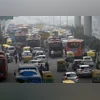
New Delhi, India, air pollution
EPIC study warns air pollution cuts Indian lives short by 3.5 years on average; clean energy and tougher action needed beyond seasonal fixes. (Photo: Bloomberg)
Business Standard Editorial Comment Mumbai
3 min read Last Updated : Sep 03 2025 | 10:16 PM IST
A new study by the Energy Policy Institute (EPIC) at the University of Chicago has confirmed what millions of Indians feel every day — the air they breathe is silently cutting their lives short. Far from being a problem confined to the smog-choked skies of Delhi and northwestern India, the effects of air pollution are being felt across the country. On average, Indians are losing 3.5 years of life expectancy to particulate pollution, which has a far greater impact than malnutrition, tobacco use, or unsafe water and sanitation. The numbers highlighted in the report are grim. In 2023, India’s average annual concentration of fine particulate matter (PM2.5) stood at 41 μg/cubic metre (1 μg is one-thousandth of 1 milligram) — more than eight times the World Health Organization’s (WHO’s) recommended limit of 5 μg/cubic metre, and even marginally higher than India’s own weaker standard of 40 μg/cubic metre. 
The human cost is staggering. If India were to bring its pollution levels down to WHO norms, life expectancy will increase for everyone. In Delhi, which is now the global poster child for polluted cities, the potential gain rises to 8.2 years. In the northern plains, home to over half a billion people, residents could add five years to their lives if clean air became the norm. Outside North India, states such as Chhattisgarh, Tripura, and Jharkhand also report some of the country’s highest particulate concentrations, cutting short lives by an estimated 3.7 years. Clearly, bad air is now a nationwide emergency. Emission from neighbouring South Asian countries is also drifting across borders, worsening conditions in India. 
To its credit, the government has been working in this area. The National Clean Air Programme (NCAP), launched in 2019, set ambitious goals of reducing PM2.5 levels by 20-30 per cent from 2017 levels by 2024. In 2022, this was revised upward to a 40 per cent reduction by 2026 across 131 “non-attainment” cities. Some progress is visible. As of 2023, particulate pollution in these cities has declined by 10.7 per cent, adding six months to the lives of nearly 445 million people. Fuel standards have also improved from Bharat Stage-IV to Bharat Stage-VI, and as many as 22 cities now meet India’s national standards. However, these standards remain far more lenient than WHO guidelines, and the gap in ambition translates directly into lives lost. 
China, on the other hand, provides a telling contrast. Within a decade of determined policy action, Beijing reduced pollution levels by nearly 40 per cent. India’s challenge is larger, but the lesson is clear. Incremental steps alone will not suffice. The transition to clean energy must be accelerated, whether through programmes like PM Surya Ghar for rooftop solar, PM Kusum for clean farm energy, or stronger incentives for electric vehicles. Tackling stubble burning requires more than seasonal crackdowns; it calls for crop diversification, investment in waste-to-energy plants, and accessible alternatives for farmers. The EPIC report comes just months before the annual pollution season grips northern India again. If the past is any guide, air purifiers will hum in urban homes and masks will reappear. The evidence is clear. Air pollution is not a seasonal affliction. It is a year-round, nationwide crisis that is silently robbing Indians of years of life.

One subscription. Two world-class reads.

Already subscribed? Log in

Subscribe to read the full story →
*Subscribe to Business Standard digital and get complimentary access to The New York Times

Smart Quarterly

₹900

3 Months

₹300/Month

SAVE 25%

Smart Essential

₹2,700

1 Year

₹225/Month

SAVE 46%
*Complimentary New York Times access for the 2nd year will be given after 12 months

Super Saver

₹3,900

2 Years

₹162/Month

Subscribe

Renews automatically, cancel anytime

Here’s what’s included in our digital subscription plans

Exclusive premium stories online

  • Over 30 premium stories daily, handpicked by our editors

Complimentary Access to The New York Times

  • News, Games, Cooking, Audio, Wirecutter & The Athletic

Business Standard Epaper

  • Digital replica of our daily newspaper — with options to read, save, and share

Curated Newsletters

  • Insights on markets, finance, politics, tech, and more delivered to your inbox

Market Analysis & Investment Insights

  • In-depth market analysis & insights with access to The Smart Investor

Archives

  • Repository of articles and publications dating back to 1997

Ad-free Reading

  • Uninterrupted reading experience with no advertisements

Seamless Access Across All Devices

  • Access Business Standard across devices — mobile, tablet, or PC, via web or app

Topics :Air qualityair pollutionDelhi PollutionLife expectancyclean energyWHO guidelinesBusiness Standard Editorial CommentEditorial CommentBS Opinion

Next Story



