Prime Minister Narendra Modi’s first visit to China in seven years — this time to attend the Shanghai Cooperation Organisation (SCO) summit — offered the first signals of “positive momentum” in relations, which have been under the shadow of the border standoff in Ladakh. After a meeting with President Xi Jinping on the sidelines of the summit in Tianjin, the language deployed in the statements by the two sides reflected a notable change in tonality. Building on the goodwill accruing since the two leaders met in the Russian city of Kazan last year, both statements spoke of India and China as “development partners, not rivals” and underlined that differences should not turn into disputes. The fact that an article on the Xi-Modi meet, titled “Partnership seen as key to Sino-Indian relations”, appeared on the front page of the China Daily, the Chinese Communist Party’s mouthpiece, suggests a significant shift in Beijing’s outlook. Both statements referred to the need to pursue “strategic autonomy”, with Mr Modi adding that relations should not be viewed through a “third country lens”, an oblique reference that Beijing should not view India as a United States-allied counterweight in Asia.
Equally, with a hug, handshake and a 45-minute car-ride meeting with Russian President Vladimir Putin, Mr Modi also sought to underline India’s disinclination to respond to American President Donald Trump’s demand to stop buying Russian oil as a condition for lifting part of the punitive 50 per cent tariff on India. These shifts, however welcome, must be viewed against the backdrop of attempts at rebalancing power alignments across the globe as a result of the erratic policies of the current White House incumbent. Indeed, Mr Xi has made little secret of his objective of heralding a China-led reconfiguration of global alliances via the pageantry of the SCO summit, with 20 leaders attending, including Turkish President Recep Tayyip Erdogan, who is seeking to raise awareness of United States-supported Israeli atrocities in Gaza. His opening summit remarks on “an equal and orderly multipolar world” and “inclusive globalisation” emphasised the effort at shifting equations.
Given this, the choreographed bonhomie between Mr Modi and Mr Xi must be tempered by a realistic understanding of the geopolitical compulsions driving relations. This much is evident in some critical differences between the Indian and Chinese readouts of the Xi-Modi meet. On the border issue, for instance, the Indian statement spoke of “fair, reasonable and mutually acceptable resolution of the boundary question processing from the political perspective of … overall bilateral relations”. The Chinese statement implied that the border issue should not define overall China-India relations. It stated that both sides should “handle China-India relations from a strategic and long-term perspective” and “further elevate them through the Tianjin summit”. The Chinese readout also invoked Jawaharlal Nehru’s “Panchsheel Policy” underlining that “the five Principles of Peaceful Coexistence, advocated by the older generation of leaders of China and India over 70 years ago, must be cherished and promoted”. Panchsheel finds no mention in the Indian statement. Further, where China spoke of a joint leadership of the Global South, the Indian statement was silent. In the current climate of self-interested cooperation, these divergences may be kept in abeyance. But they reflect a fundamental difference in outlook, which could become consequential if geopolitical circumstances change.

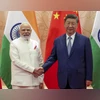 "From rivals to partners: Sino-Indian relations see a cautious reset")










 Connect with us on WhatsApp