Manmohan Singh's legacy: 1991 reforms, rights-based laws, nuclear deal

Singh's term as Prime Minister also witnessed several landmark decisions which, in a way, were built on the foundation he laid as finance minister
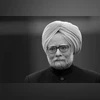
Manmohan Singh
Singh, who passed away at 92 last week, spearheaded India’s reform efforts as Union finance minister under Rao’s leadership, and 1991 marked a new beginning for the Indian economy
Business Standard Editorial Comment Mumbai
4 min read Last Updated : Dec 29 2024 | 10:00 PM IST

Don't want to miss the best from Business Standard?

In the life of a nation, there are times that leave a lasting imprint, to be remembered by generations to come. The year 1991 was one such momentous year in India’s contemporary history. The country was struggling with both political and economic instability. It went for Lok Sabha polls for the second time within two years, having seen two coalition governments failing to achieve much. As the country began voting with hope in the summer of 1991, the nation was shocked by the killing of former Prime Minister Rajiv Gandhi in a terror attack. While the Congress emerged as the largest party, it was short of the majority mark, and P V Narasimha Rao took over as Prime Minister. On the economic front, India was struggling practically in all aspects with a balance of payments crisis. The global environment was not particularly supportive, either. The status quo was not an option. It was against this backdrop that Rao brought technocrat Manmohan Singh to steer the Indian economy. 
Singh, who passed away at 92 last week, spearheaded India’s reform efforts as Union finance minister under Rao’s leadership, and 1991 marked a new beginning for the Indian economy. It was also a new beginning for Singh, who went on to become Prime Minister, serving two consecutive terms (2004-14). Singh had served in various capacities before — including in the Ministry of Finance and as governor of the Reserve Bank of India (RBI) — and was the right person for the job in 1991. Consequently, the policy changes that followed were well thought through. Although there was political opposition, including within the Congress, there was broader intellectual support for reforms. Singh’s deep understanding of issues and clarity of thought helped build a consensus for decisive action. 
He also had the full support of the Prime Minister, who wanted him to take the middle path. Several momentous decisions were taken over time, such as a sharp devaluation of the rupee, dismantling controls for most industries, and ending the public-sector monopoly in several areas. Taxes for individuals and corporations were brought down. Import duty was also steeply reduced. Singh always wanted India to give up export pessimism. Although all governments since have followed the path and built on the foundation laid in 1991, not enough has been done to focus on export opportunities. In fact, there have been reversals in recent years, which need to be corrected.  
Singh’s term as Prime Minister also witnessed several landmark decisions which, in a way, were built on the foundation he laid as finance minister. India put in place several rights-based laws such as the Mahatma Gandhi National Rural Employment Guarantee Act and the National Food Security Act. Both proved extremely useful in supporting the poor, particularly during the pandemic. The right to Information and right to education were equally momentous laws implemented during his term. His approach to rights-based policies and adopting technology for benefits transfer was path-breaking — something that succeeding governments have rightly worked and improved upon. During his term, India’s external position was also adjusted to the changing geopolitical order — the nuclear deal with the United States was a fine example of India’s standing. However, his outstanding life-long contribution to the nation was marred by the second term of the United Progressive Alliance government. It wasn’t just the corruption scandals; the economy was poorly managed, leading to a near-currency crisis in 2013. This was partly because of the approach the finance ministry and the RBI took in the preceding years. History will surely not judge Manmohan Singh solely for this troubled period, but it will, hopefully, seek answers to some of the unresolved questions.

One subscription. Two world-class reads.

Already subscribed? Log in

Subscribe to read the full story →
*Subscribe to Business Standard digital and get complimentary access to The New York Times

Smart Quarterly

₹900

3 Months

₹300/Month

SAVE 25%

Smart Essential

₹2,700

1 Year

₹225/Month

SAVE 46%
*Complimentary New York Times access for the 2nd year will be given after 12 months

Super Saver

₹3,900

2 Years

₹162/Month

Subscribe

Renews automatically, cancel anytime

Here’s what’s included in our digital subscription plans

Exclusive premium stories online

  • Over 30 premium stories daily, handpicked by our editors

Complimentary Access to The New York Times

  • News, Games, Cooking, Audio, Wirecutter & The Athletic

Business Standard Epaper

  • Digital replica of our daily newspaper — with options to read, save, and share

Curated Newsletters

  • Insights on markets, finance, politics, tech, and more delivered to your inbox

Market Analysis & Investment Insights

  • In-depth market analysis & insights with access to The Smart Investor

Archives

  • Repository of articles and publications dating back to 1997

Ad-free Reading

  • Uninterrupted reading experience with no advertisements

Seamless Access Across All Devices

  • Access Business Standard across devices — mobile, tablet, or PC, via web or app

Topics :Manmohan SinghReserve Bank of IndiaRajiv GandhiP V Narasimha RaoIndian EconomyBusiness Standard Editorial CommentEditorial CommentBS Opinion

Next Story



