Steel ambitions

2047 goals must balance capacity expansion with clean tech
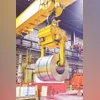
steelmakers, steel
Steelmaking inputs account for an estimated 65-70 per cent of costs, and India imports around 92 per cent of its coking coal requirements
Business Standard Editorial Comment
3 min read Last Updated : Oct 15 2026 | 10:04 PM IST
The draft “National Steel Policy: Vision 2047” sets out an ambitious road map for India’s steel industry. It targets an increase in crude steel capacity from about 220 million tonnes (mt) in 2025-26 to 604 mt by 2047, with production projected at 531 mt and finished steel demand at 505 mt. The scale of the proposed expansion reflects the sector’s importance to infrastructure and manufacturing. These projections assume annual gross domestic product (GDP) growth of around 7 per cent and capacity utilisation of 88 per cent. With construction and infrastructure accounting for roughly two-thirds of steel consumption, public investment will remain a key driver of demand. Notably, the policy recognises that technology and material substitution could alter future requirements. Its proposal to review the projections periodically, preferably every five years, must be welcomed.
 
However, raw-material security remains a challenge. Steelmaking inputs account for an estimated 65-70 per cent of costs, and India imports around 92 per cent of its coking coal requirements. The policy seeks to expand domestic mining, improve beneficiation, develop overseas mineral assets and strengthen supply arrangements. These are necessary steps, but the projected expansion also exposes a contradiction. Coking coal requirements are projected to rise from 72 mt to 236 mt by 2047, with the basic oxygen furnace route retaining a 55 per cent share of production. Unless the transition to less carbon-intensive technologies gathers pace, capacity expansion could deepen import dependence and increase emissions. The policy targets a reduction in emissions intensity from 2.54 tonnes of carbon dioxide per tonne of crude steel to 1.54 tonnes by 2047. It proposes greater use of scrap, renewable electricity, hydrogen-based direct reduced iron, and carbon capture, utilisation and storage. Falling renewable-power and storage costs may improve the economics of cleaner steelmaking. Project appraisals must, therefore, compare the full life-cycle costs of competing technologies rather than assume that conventional production will remain the cheapest option.
 
Trade policy must reinforce this transition towards competitiveness. The draft rightly calls for balancing protection against unfair imports with affordable inputs for downstream users. Safeguards may be justified where injury from unfair trade is established, but protection cannot become a substitute for productivity improvements. With the EU Carbon Border Adjustment Mechanism linking market access to embedded emissions, producers must factor carbon costs and cleaner technology into decisions on new plants. More countries are likely to adopt similar measures. Export ambitions also depend on cost competitiveness. India’s steel exports fell from 10.78 mt in 2020-21 to 6.60 mt in 2025-26, while the policy envisages exports of 45 mt by 2047. Achieving that target will require reliable quality, efficient logistics and access to overseas markets.
 
Finally, support for specialty steel, research & development, digitalisation and cleaner technologies should be judged by results. In this regard, it is also worth debating whether steel needs the planned production-linked incentives. Success will come from commercially viable products, better productivity, and the use of modern technology. The real test, therefore, will be whether the industry can expand while lowering costs, reducing emissions, and moving up the value chain.


One subscription. Two world-class reads.

Already subscribed? Log in

Subscribe to read the full story →
*Subscribe to Business Standard digital and get complimentary access to The New York Times

Smart Quarterly

₹900

3 Months

₹300/Month

SAVE 25%

Smart Essential

₹2,700

1 Year

₹225/Month

SAVE 46%
*Complimentary New York Times access for the 2nd year will be given after 12 months

Super Saver

₹3,900

2 Years

₹162/Month

Subscribe

Renews automatically, cancel anytime

Here’s what’s included in our digital subscription plans

Exclusive premium stories online

  • Premium stories handpicked daily by our editors

Complimentary Access to The New York Times

  • News, Games, Cooking, Audio, Wirecutter & The Athletic

Business Standard Epaper

  • Digital replica of our daily newspaper — with options to read, save, and share

Curated Newsletters

  • Insights on markets, finance, politics, tech, and more delivered to your inbox

Market Analysis & Investment Insights

  • In-depth market analysis & insights with access to The Smart Investor

Archives

  • Repository of articles and publications dating back to 1997

Ad-free Reading

  • Uninterrupted reading experience with no advertisements

Seamless Access Across All Devices

  • Access Business Standard across devices — mobile, tablet, or PC, via web or app

Topics :BS OpinionNational Steel PolicySteel IndustrySteel productions

First Published: Oct 15 2026 | 10:04 PM IST

Next Story


