Actor-turned-politician
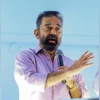
Kamal Haasan has strongly opposed the Centre's proposal for parliamentary constituency delimitation, warning that it could disrupt India's federal structure and undermine the country's diversity.
Speaking at an all-party meeting convened by Tamil Nadu Chief Minister MK Stalin on Wednesday, the Makkal Needhi Maiam (MNM) chief cautioned that the move promotes a homogenised “Hindia” and could disproportionately affect several states beyond Tamil Nadu, including Andhra Pradesh, Karnataka, Kerala, Punjab, Odisha, West Bengal, Himachal Pradesh, Uttarakhand, and the northeastern states.
Haasan, who has been nominated for Rajya Sabha by Stalin's DMK party, reiterated his stance that states which successfully controlled population growth should not be penalised. He cited past decisions by former prime ministers in 1976 and 2001, who upheld federal principles by refraining from redrawing parliamentary constituencies based on population.
“Back then, India had a population of 550 million and 543 Members of Parliament (MPs). Today, with 1.45 billion people, we are still effectively governed with the same number of MPs. This proves that our current representation is sufficient,” he argued.
"Why was the census delayed citing Covid-19, yet delimitation is being pursued for 2026? This raises serious concerns about the real motives behind this move," Haasan said. He warned that the reorganisation of constituencies could reduce representation for non-Hindi-speaking states, undermining India's democratic balance.
MK Stalin passes resolution opposing delimitation
Tamil Nadu Chief Minister MK Stalin led an all-party meeting on Wednesday to discuss the issue of parliamentary constituency delimitation. Five resolutions were unanimously passed at the meeting, including a demand for the Centre to adhere to the 1971 census for any future delimitation.
Stalin reaffirmed that the all-party meeting was not opposed to the delimitation process itself but to the methodology being considered.
During the meeting, Stalin announced the formation of a Joint Action Committee comprising MPs from Tamil Nadu and other southern states. The committee will work to mobilise support, stage protests, and create public awareness about the potential consequences of the delimitation process.
"If the current 543 parliamentary constituencies are maintained, Tamil Nadu could lose eight seats, reducing its representation from 39 to 32. Even if the total number of constituencies is increased to 848, the state would gain only 10 additional seats instead of 22, resulting in a net loss of 12 seats," Stalin explained.
The DMK chief stressed that such a move would be unfair to states that had implemented progressive policies for national welfare. "Tamil Nadu is not against delimitation, but it should not become a punishment for states that have prioritised social development over population growth," he said.
55 political parties attend meet, BJP absent
The meeting, held at the Tamil Nadu Secretariat, saw participation from over 55 political parties and organisations, including AIADMK’s D Jayakumar, Congress leader Selvaperunthagai, CPI State Secretary Mutharasan, CPM’s Shanmugham, VCK’s Thirumavalavan, MDMK’s Vaiko, PMK President Anbumani, and Dravidar Kazhagam’s Veeramani.
However, the Bharatiya Janata Party (BJP), Tamil Manila Congress, and Naam Tamilar Katchi chose not to attend.
What is delimitation?
Delimitation refers to the process of determining the number of seats and the boundaries of electoral constituencies for both the Lok Sabha and Legislative Assemblies within each state. This task is carried out by the Delimitation Commission, which is established through an act of Parliament.
Delimitation exercises have been conducted using the population data with the next adjustment set to occur after the first census conducted post-2026.
(With ANI inputs)

 "Delimitation promotes 'Hindia', non-Hindi states at risk: Kamal Haasan")



