
Kapil Sibal to appear for DPAP during hearings on Article 370 in SC
The Supreme Court will commence day-to-day hearing from August 2 on a batch of petitions challenging the abrogation of Article 370 that bestowed special status
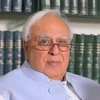 "Kapil Sibal to appear for DPAP during hearings on Article 370 in SC")
WebinarsNew
Deep DiveNew
Explore Business Standard
The Supreme Court will commence day-to-day hearing from August 2 on a batch of petitions challenging the abrogation of Article 370 that bestowed special status
Senior lawyer Kapil Sibal will appear on behalf of the DPAP during hearing on a batch of petitions challenging the abrogation of Article 370 in the Supreme Court, the Ghulam Nabi Azad-led party said on Wednesday.
The Supreme Court will commence day-to-day hearing from August 2 on a batch of petitions challenging the abrogation of Article 370 that bestowed special status on the erstwhile state of Jammu and Kashmir.
A five-judge Constitution bench headed by Chief Justice DY Chandrachud fixed July 27 as the deadline for filing of written submissions and convenience compilations by different parties.
"We requested senior lawyer Kapil Sibal to appear for the hearings on Article 370 and he has graciously agreed," said Salman Nizami, the chief spokesperson of the Democratic Progressive Azad Party (DPAP).
"Nothing has changed after the revocation of Article 370. Kudos to Ghulam Nabi Azad for his unwavering dedication in raising this important issue," he added.
In 2019, the Centre stripped Jammu and Kashmir of its special status and bifurcated it into Union Territories. Several petitions challenging the action of abrogating the provisions of Article 370 and the Jammu and Kashmir Reorganisation Act, 2019, have been filed in the top court.
The DPAP also expressed its resentment against power outages and the installation of smart meters and demanded a reduction in power tariffs.
GM Saroori, the party's vice-president, said the poor have to bear the brunt of anti-people policies.
"Prices of essential commodities are touching the sky, power tariffs are breaking the back of the poor. We have several power projects in Jammu and Kashmir that have the capacity to generate power for other parts of the country. We even have power projects in Ladakh. The country is getting its power supply from Jammu and Kashmir," he said.
"It was promised that consumers in Jammu and Kashmir would get power at lower rates than the rest of the country because of these projects," he said.
Saroori claimed that the monthly power bills have gone up from Rs 1,000 to Rs 10,000.
Prolonged unscheduled power cuts -- lasting between eight and 10 hours a day -- are causing suffering for the people.
"We demand that smart meters should not be installed and the tariff be reduced," he said.
(Only the headline and picture of this report may have been reworked by the Business Standard staff; the rest of the content is auto-generated from a syndicated feed.)
First Published: Jul 27 2023 | 7:11 AM IST


 Connect with us on WhatsApp