Rapido's disruptive ride: Taking on bigger rivals with a bold playbook

Rapido, new kid on the cab aggregator block, is shaking up the market -Rapido
Rapido News
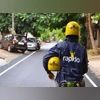
The big bet could be entering the food delivery business — tak­ing on Zomato and Swiggy — whi­c­h Rapido is experimenting with. | File Image
Surajeet Das Gupta New Delhi
8 min read Last Updated : Oct 27 2025 | 10:03 PM IST
Uber Inc’s global Chief Executive Officer (CEO) Dara Khosrowshahi does not see Ola Cabs — with which it has been in a head-to-head battle for years in India — as its main rival in the mobility business anymore, saying it is now a distant number three.   
In a podcast interview in August, he called its new rival an upstart that had aggressively gone into the market but with a simple business model, which maximised driver-income and grabbed the market share. 
The new kid on the block is none other than Bengaluru-based startup Rapido, which, in the last 20 months, has disrupted India’s mobility business. 
The prevailing model, which has stood for years, had driver-partners forking out 20-25 per cent of their trip earnings to the mobility company as commission for being on their platform.   
Rapido offered an alternative — first to its auto drivers in February 2024 and then its cab driver nine months ago. They join by paying a subscription of an average ₹20-25 a day and only if they accept rides. The various subscription models effectively translate to 5 per cent of their ride income.  With zero commission, drivers’ take-home incomes get a boost. However, for bike-taxi drivers who are mostly part-timers using the platform for a few hours a day or just some days a month, Raipdo says the commission model offers more flexibility. 
The gamble has forced rivals to follow suit. Just a few weeks ago, Uber said it was rolling out a nationwide subscription-based model for its drivers across cars, autos, and bikes. Ola Electric, too, has shifted to a similar model across categories.   
The gear-shift is bringing in much-needed volumes. Rapido saw its total number of drivers — for bikes, autos, and cabs — surge from 700,000 before the new model was activated to over 2 million by June this year, the latest month for which figures are available. As a result, rides went up 3x, hitting over 4 million in the same period. And in cabs, with around half-a-million rides a day, it is already the second-largest player in the business.   
The subscription model has given a big push to the overall cab business, which was unable to reach even pre-Covid levels of 2.5-3 million rides a day and had been working at 70 per cent of the peak levels in the last three years. 
Aravind Sanka, one of Rapido’s three cofounders, told Business Standard: “We entered the cab bu­siness for the first time nine mont­hs ago and started straight with the subscription model — it has helped us to increase the number of drivers on our platform by  25 pe­r cent and also helped us to pu­sh the number of rides to pre-Cov­i­d levels again. We expect the nu­­m­ber of rides to double to 5 million a day in the next three-to-four years.”
 
The expectations are of a big upside. Sanka says only 20 per ce­nt of the 2.5 million cab drivers in the country have joined a cab agg­regator platform. But with a high­er income potential, he expects that this percentage will double in the next three-to-four years. 
Of course, the model looks to build scale and volumes but at wafer-thin margins. For example, Rapido’s income from each auto driver, which was based on 20 per cent commission has fallen by 90 per cent under the subscription model. But the higher number of active drivers on the platform paying subscriptions partly makes up for the loss of overall revenue.
 
With Rapido rivals now following the same model will the startup lose its first-mover advantage and find it more difficult to grow faster without making more losses?   
That’s a question even Uber’s Khosrowshahi raised in his interview: The real test of this model, he said, is how fast Rapido can grow profitably. That’s a goal it has not yet reached. According to the latest financials available, the company was still in the red in FY24, although losses had come down from ₹675 crore in FY23 to ₹370 crore in FY24. Questions have been raised over its aggressive acquisition of more drivers and customers, which has seen cash losses going up.     
Sanka, however, said the company is already operationally profitable, which means it does not lo­se money on its operations and expects to reach a scale where it will become profitable by FY26. It has raised $200 million in the last year or so to fund a rapid expansion in the number of cities cov­er­ed from 350 currently to 500 in the next 12 months. This would invo­lve pushing cab services to every district headquarter in the country.       
To be sure, rivals say that Rapido still depends on bike-taxis for 50 per cent of its ridership, and this business is facing regulatory headwinds. “The bike taxi business has come under a lot of regulatory pressure, court cases, new stiff rules and many states forcing them to go electric if they want to continue — which would mean huge costs for riders. In big states like Karnataka, which have a substantial ridership, companies are waiting for a court verdict. So there is a lot of uncertainty,” said a senior executive at a rival mobility company.   
But everyone is reworking their models to take on the new rival. Said the CEO of one of the mobility companies: “The Rapido model is a replication of the ecommerce Meesho (domestic firm Meesho Pvt Ltd) model based on high volumes and low margins. While it is unique to India, and not seen in any other country, we are tweaking our models to reduce costs and make it more efficient.” 
But Rapido believes it has a huge edge over its big rivals here. “We started from building  a low-cost model which could sustain an average ticket size of a bike-taxi ride which is at ₹60 and gives aro­u­nd 5 per cent margin. So we can sustain with the same margins for our autos and cab categories. So it is not different for us.” 
It may be a challenge for rivals whose cost structure is built on an average ₹300 per ride ticket size for a cab (five times more than a bike taxi) with a hefty 20-25 per cent commission to boot. They may now be forced to bring down their margins to around five per cent and cut costs to sustain the business. Rapido has been keeping its costs under control — for instance, the same team which launched bike taxis also launched autos and cab services, and used the same tech platforms. It hardly advertises, expecting word of mouth to do the job instead.  
 
But it is also focusing now on reducing the cost of acquiring new customers. The big success has be­e­n that 60 per cent of its custo­mers use more than one service — whether bikes, autos or cabs. The company has doubled the num­ber of customers since the start of the subscription model while hal­v­ing the cost of acquiring them. 
That apart, it is also opening up newer areas to boost its revenue as well as that of the driver partners — in line with what rivals Uber and Ola also do. This, Sanka said, might not generate a huge revenue but will help the firm improve profitability. One such move just last week was to offer customers facilities to book hotels, flights, buses, and trains by tying up with Goibibo, redBus, and ConfirmTkt. 
Secondly, it is eyeing revenue from advertisements on its platfo­rm, which it has just begun. And three, it already has a delivery bu­s­iness, which is integrated with big ecommerce players like Zepto, apart from its own parcel service, where customers can book on the app. 
The big bet could be entering the food delivery business — tak­ing on Zomato and Swiggy —  whi­c­h Rapido is experimenting with. 
But the experience in India is that both Uber (Uber Eats, sold to Zomato) and Ola have tried and failed with food delivery. The big boy in the game, Zomato CEO Deepinder Goyal, told shareholders he does not think there’s a need for a separate food delivery app to serve budget-conscious customers (the focus for Rapido). Zomato can serve them by, for instance, lowering the minimum free delivery to ₹99.   
But, said Sanka, “Our intent to enter this business is because we are already aware of the customer pain-points (high price of delive­ri­es and hefty commissions for deli­veries).” Customers, he said, are looking for alternatives. As, inde­ed, it seems, are Rapido’s rivals.

One subscription. Two world-class reads.

Already subscribed? Log in

Subscribe to read the full story →
*Subscribe to Business Standard digital and get complimentary access to The New York Times

Smart Quarterly

₹900

3 Months

₹300/Month

SAVE 25%

Smart Essential

₹2,700

1 Year

₹225/Month

SAVE 46%
*Complimentary New York Times access for the 2nd year will be given after 12 months

Super Saver

₹3,900

2 Years

₹162/Month

Subscribe

Renews automatically, cancel anytime

Here’s what’s included in our digital subscription plans

Exclusive premium stories online

  • Over 30 premium stories daily, handpicked by our editors

Complimentary Access to The New York Times

  • News, Games, Cooking, Audio, Wirecutter & The Athletic

Business Standard Epaper

  • Digital replica of our daily newspaper — with options to read, save, and share

Curated Newsletters

  • Insights on markets, finance, politics, tech, and more delivered to your inbox

Market Analysis & Investment Insights

  • In-depth market analysis & insights with access to The Smart Investor

Archives

  • Repository of articles and publications dating back to 1997

Ad-free Reading

  • Uninterrupted reading experience with no advertisements

Seamless Access Across All Devices

  • Access Business Standard across devices — mobile, tablet, or PC, via web or app

Topics :Bike TaxiOLA cabsUber cabsBike riding

Next Story



