A fab debate on display: India's dilemma over display tech self-reliance

India debates which display fab to set up, weighing LCD, OLED, and emerging micro-OLED technologies for self-reliance in the sector
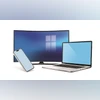
display, screen, electronics
The display unit makes up 15 per cent of the cost of a mobile phone, although this is much higher for LCD and OLED TVs. This means localisation is key to making India a hub for their fabrication.
Surajeet Das Gupta New Delhi
8 min read Last Updated : Sep 24 2025 | 10:52 PM IST

Don't want to miss the best from Business Standard?

The next time you upgrade your mobile phone or television set, you’d do well to remember that its display unit wouldn’t have been fabricated in India. 
This matters because it is a huge missing piece in the government’s ₹75,000 crore semiconductor incentive scheme. While the scheme has cleared complex projects straddling silicon and compound fabrication plants for wafers, as well as units that package, test and turn the wafers into chips, there is one key area it has failed to deliver on — a promise to set up two display fabrication units (where none exists today). 
To be fair, there have been some attempts — like a $3-4 billion proposal from Vedanta and a $3 billion offer from Rajesh Exports — to build display fab plants, but these await clearance. Meanwhile, nearly all the funds earmarked under the incentive scheme have already been committed, to mostly fab and outsourced semiconductor assembly and test (OSAT) plants. 
But there’s some good news: The Ministry of Electronics and Information Technology (MeitY) Secretary S Krishnan told the Semicon India conference a few weeks ago that display fabs will be prioritised in the government’s upcoming semicon 2.0 incentive scheme, which is expected to be cleared by October this year. The Semicon conferences are part of the Centre’s India Semiconductor Mission to put the country on the global semicon map. 
The announcement has kicked off a roaring debate on what kind of technology the country should adopt for its maiden display fab plants. The loudest votaries are for liquid crystal display (LCD). This 50-year-old technology is still going strong because of the mass market it caters to — chiefly mobiles,  laptops, and TV sets. Next up is the more advanced organic light emitting diode (OLED) technology, which has takers among electronic manufacturing service (EMS) players that make finished products on behalf of electronics brands. This technology is finding increasing use in mobile phones, and is slowly making its way into high-end television sets, too. OLED TV sets, however, tend to be far more expensive than LCD ones. 
What has made matters more interesting is the strong support for the third option — the emerging micro-OLED technology — coming from the government. This technology has limited usage — it’s mainly in smart glasses, AR/VR headphones, and state-of-the-art cameras. But top officials in MeitY believe India should invest in emerging new technologies of the future rather than put money into those nearing their use-by date. 
There is no doubt that India needs to have display fab plants at a time geopolitical tensions could wreak havoc with the global supply chain at any time. Without such plants, the mobile, laptop, and TV industry could be in serious trouble, analysts say. 
The display unit makes up 15 per cent of the cost of a mobile phone, although this is much higher for LCD and OLED TVs. This means localisation is key to making India a hub for their fabrication. 
The concern among manufacturers is that control of display fab technology is dominated by just two countries — China and South Korea, although Japan and Taiwan also have some capability. India’s vulnerability was exposed recently, when China suddenly stopped exporting rare earth magnets to it, with the result that production of vehicles, particularly electric vehicles, screeched to a halt for a while. 
Estimates by Omdia say that while the revenue share of LCD in all display forms is set to decline from 59 per cent globally in 2024 to 51 per cent by 2031, the total market for displays will go up from $135 billion in 2024 to $174 billion in 2029. This points to a longer shelf-life for LCD than estimated by many in the government. 
 In India, the share of LCD in the display market is set to decline from 58 per cent in value terms in 2024 to 52 per cent in 2030, according to Counterpoint Research. To be sure, this is a growing market. By the end of the decade, 60 per cent of the LCD business will still come from smartphones, with TV making up the rest in India. 
G Rajeswaran, who runs the consultancy firm Grantwood Technologies, says, “My view is that LCD is in a better space in India than OLED to start with. Companies that did not have the LCD experience have not been successful in OLED. The investments here are smaller, and the Indian market will use all the products made under this investment.” Rajeswaran played a key role in various positions at Kodak to enable mass production of AMOLED, an advanced version of OLED. 
While an LCD display fab unit could be started with $1-2 billion, this figure could run into double that for OLED. There is also the advantage of moving up the tech ladder later: An LCD display plant will take 2-3 years to start commercial production but, Rajeswaran says, it could be quickly scaled up to OLED, cutting two years off the time normally taken. 
A senior official in MeitY is, however, not convinced. “LCD is an old technology. Many of the plants are shutting down and 75 per cent of the world production is controlled by China. The Koreans have got out of it. So why should we get in now?” said the official. 
This view is backed by a leading EMS player: “They (China) have huge scale and they determine the global price. How can one or even two Indian LCD fab plants compete with them in scale? So companies in India will continue to import because it is cheaper to procure from China.” 
There are many stakeholders who argue that since India is looking at two display fab plants, it could set up one for LCD and another for OLED. Nikhil Kishor Singh, senior analyst for displays in Counterpoint Research, says, “As India goes in for mass production by 2030, the country’s display demand will be more evenly split between LCD and OLED. The LCD display fab plant could support smartphones and TV equally, while the OLED display fab plant would prioritise smartphones.” 
 There is yet another challenge with OLED. A battle has broken out in OLED between China and South Korea. While South Korean firms Samsung and LG Display have been the pioneers, China has moved aggressively in this space to challenge their domination. According to industry projections, China has grabbed half the world’s OLED production market, led by its BOE Technology group and TCL, and backed by dollops of state subsidy. 
The rivalry has led the Koreans to impose strict restrictions on transferring the technology or setting up a plant with a partner in another country, making it harder for India to get hold of OLED technology for now. 
 MeitY, however, has made a start: Last year, it set up a centre for excellence on AMOLED in IIT Madras, which is working to simplify OLED manufacturing and, in the process, reduce its price. Experts say the mass-use of the technology in TV is still limited by price — the average price of an OLED TV is around $1,500, compared with $700 for an LCD unit. 
To test these new technologies, India will have to open a pilot line, and experts involved in the project say this will take another three to four years. Till then LCD is the answer, they say. 
The MeitY top brass believes India should consider the third technology — micro-OLED. In simple terms, it offers very high resolution, uses smaller and thinner panels, is brighter, and requires less power than OLED and LCD. 
Although many big firms such as Sony Semiconductor, Samsung, LG and BOE are working on the tech, Rajeswaran says: “It is a technology that will take another five years to become commercially viable as many challenges still remain to be resolved. Only then can it be used for mass market products. At the moment, experimentation has been done on smart glasses, VR/AR glasses, but it is a very small market and the quality of display is still challenging.” 
That it’s not easy to foray into the technology became evident when last year Apple Inc decided to shelve its plan to work on its project for micro-OLED for its smart watches. 
Clearly, the stakes are high. With so many views around, the need is not so much for reaching a consensus as for ensuring the country makes the right tech choice so that Atmanirbhar India can become a reality in its first display fab plants. 
What they mean


LCD: Uses liquid crystals, which have both liquid and solid properties, to create images on screen


OLED: Uses organic compounds to emit light in response to an electric current


Micro-OLED: Uses microscopic light-emitting diodes built directly on a silicon chip to create ultra-high-resolution and compact screens


One subscription. Two world-class reads.

Already subscribed? Log in

Subscribe to read the full story →
*Subscribe to Business Standard digital and get complimentary access to The New York Times

Smart Quarterly

₹900

3 Months

₹300/Month

SAVE 25%

Smart Essential

₹2,700

1 Year

₹225/Month

SAVE 46%
*Complimentary New York Times access for the 2nd year will be given after 12 months

Super Saver

₹3,900

2 Years

₹162/Month

Subscribe

Renews automatically, cancel anytime

Here’s what’s included in our digital subscription plans

Exclusive premium stories online

  • Over 30 premium stories daily, handpicked by our editors

Complimentary Access to The New York Times

  • News, Games, Cooking, Audio, Wirecutter & The Athletic

Business Standard Epaper

  • Digital replica of our daily newspaper — with options to read, save, and share

Curated Newsletters

  • Insights on markets, finance, politics, tech, and more delivered to your inbox

Market Analysis & Investment Insights

  • In-depth market analysis & insights with access to The Smart Investor

Archives

  • Repository of articles and publications dating back to 1997

Ad-free Reading

  • Uninterrupted reading experience with no advertisements

Seamless Access Across All Devices

  • Access Business Standard across devices — mobile, tablet, or PC, via web or app

Topics :semiconductorTechnologyMobile phoneTelevision

Next Story



