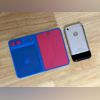
Apple is expected to launch its maiden foldable iPhone model this year, likely alongside the iPhone 18 Pro models. A report by 9To5Mac, citing Six Colors and 512 Pixels, suggested that the “iPhone Fold” may follow a different design approach compared to existing book-style foldables such as Samsung’s Galaxy Z Fold 7 or Google’s Pixel 10 Pro Fold. According to the report, the device could resemble an iPad mini when unfolded, while appearing shorter and wider than standard slab-style smartphones when closed.
Foldable iPhone: What to expect
Based on Six Colors’ analysis of Apple’s supply chain data, the foldable iPhone is said to have a noticeably wider and more compact form factor when folded compared to current iPhone models. The report notes that the device could be shorter than Apple’s discontinued iPhone mini series, while also being wider than the current iPhone Pro Max models in its folded state.
Once unfolded, the device is expected to feature a display with a 4:3 aspect ratio, similar in shape to the iPad mini. That said, the foldable screen is likely to be smaller than the iPad mini’s 8.3-inch panel, with reports pointing to a 7.76-inch inner display.
These details align with earlier reports that suggested the iPhone Fold would include a 7.8-inch internal screen paired with a 5.5-inch cover display. Analyst Jeff Pu has shared similar information, adding that the outer screen could offer a resolution of 2088 × 1422 pixels, while the inner folding panel may deliver a resolution of 2713 × 1920 pixels.
The wider 4:3 aspect ratio could also shape how Apple positions the foldable iPhone. Unlike existing book-style foldables that resemble two vertically stacked smartphone displays when unfolded, Apple’s approach may be better suited for video consumption, where a wider canvas can accommodate standard video formats more naturally. The larger display could also allow Apple to introduce new iOS features tailored for multitasking, such as windowing tools or enhanced split-screen controls, similar to those found on iPadOS.
In terms of thickness, the foldable iPhone is expected to measure between 9mm and 9.5mm when folded, and around 4.5mm to 4.8mm when unfolded. This would make it slightly thicker than Samsung’s Galaxy Z Fold 7.
On the camera front, the device is said to feature a total of four cameras — a dual-camera setup on the rear, along with one front-facing camera on each display. The primary rear sensor is expected to be a 48MP unit, paired with either an ultra-wide or telephoto lens. Both front-facing cameras are reportedly expected to use 24MP sensors.
Unlike Apple’s current iPhones, which rely on Face ID for biometric authentication, the foldable iPhone may instead use Touch ID. This change could allow Apple to move away from the pill-shaped Dynamic Island in favour of punch-hole cutouts for the front cameras.
Powering the foldable iPhone could be an A20-series chip, which is likely to debut alongside the iPhone 18 lineup. The processor is expected to be manufactured using TSMC’s 2nm process, bringing improvements in power efficiency, performance, and on-device AI capabilities.

 "Apple's 'iPhone Fold' may open up to look like iPad mini: What to expect")


 Connect with us on WhatsApp