Home / Technology / Tech News / HTC debuts AI-powered Vive Eagle smart glasses to rival Meta, Google, more
HTC debuts AI-powered Vive Eagle smart glasses to rival Meta, Google, more
The HTC Vive Eagle smart glasses are currently limited to Taiwan, featuring AI-driven translation, voice reminders, and a lightweight design as it gears to compete with Meta, Google, Samsung, and more
Taiwanese consumer electronics maker High Tech Computer (HTC) becomes a new entrant into the artificial intelligence (AI) powered smart glasses market with the launch of Vive Eagle. According to a report by The Verge, HTC is gearing up to compete with the likes of companies like Meta, Google, Samsung, and possibly Apple, which are already working on smart glasses.
Notably, Meta smart glasses are available for purchase in several countries, including the USA and India. On the other hand, as per the report, HTC’s Vive Eagle smart glasses are currently only available for purchase in Taiwan; however, it is uncertain whether it will be launched globally or not.
HTC Vive Eagle glasses: What is it capable of
HTC’s Vive Eagle smart glasses feature AI-driven image translation, allowing users to point at text and have it translated into 13 languages through the built-in Vive AI voice assistant. The glasses also support functions like setting voice reminders, noting down ideas, and even getting restaurant suggestions – echoing some of the features found in rival devices. Weighing 49 grams, they are nearly as light as Meta’s Ray-Ban smart glasses.
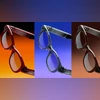
Priced at roughly $520, the Vive Eagle comes fitted with Zeiss sun lenses and is offered in red, brown, gray, or black frame options. HTC has not confirmed whether these glasses will launch in any other region.
Meta has positioned itself comfortably in the smart glasses market with a range of products, including the Meta Ray Ban smart glasses that are already available for purchase in several global regions. Now, it is reportedly developing a “super-sensing” vision technology for smart glasses that could enable advanced real-time recognition of people, objects, and environments.
Apple is reportedly developing smart glasses with built-in cameras, similar to Meta’s Ray-Ban model. Component production could begin in 2026, with a launch expected in 2027. The glasses may use custom Apple Watch–based chips to handle multiple cameras and include microphones, speakers, and Siri integration for tasks, navigation, and app control. Future versions could also feature Apple’s “Visual Intelligence” for real-time contextual assistance.
Google previewed its Android XR platform at TED 2025, showing how smart glasses and headsets can integrate Gemini AI with everyday tasks. The demo highlighted real-world use cases, including generating text, identifying objects, locating items, translating conversations across languages, explaining diagrams visually, recognising music, and offering real-time navigation with 3D overlays. When paired with headsets like Samsung’s upcoming Project Moohan, Android XR also supports immersive Google Maps views and in-game assistance through Gemini.
Samsung is reportedly working on XR smart glasses codenamed Haean, designed for comfort across different face shapes. The glasses are expected to run on Qualcomm’s Snapdragon XR2 Plus Gen 2 chip and may include a 12MP camera, 155mAh battery, and multiple sensors for movement tracking, enabling features like gesture control and fitness monitoring.
Xiaomi has also entered this market with the launch of its AI Glasses in China, powered by the Snapdragon AR1 chip with 4GB RAM and 32GB storage. The glasses feature a 12MP camera capable of 2K video recording, stereo speakers, five microphones, and a 263mAh battery offering up to 8.6 hours of use. Weighing 40g and IP54-rated, they support Wi-Fi 6, Bluetooth 5.4, Android, and iOS devices. Core functions include the XiaoAI assistant for real-time translation in 10 languages, contextual object interaction, and QR code-based payments.

 "HTC debuts AI-powered Vive Eagle smart glasses to rival Meta, Google, more")


 Connect with us on WhatsApp