In-space industry set to unlock multi-billion dollar mkt in manufacturing

In-space manufacturing uses the near-weightless environment of space to produce materials and products of superior quality
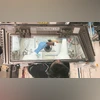
Shubhanshu Shukla, space
Indian astronaut Shubhanshu Shukla performs a study aboard the International Space Station. He was investigating how microgravity contributes to muscle atrophy, a condition where muscles weaken quickly without the pull of gravity. (Photo: Axiom Space)
Shine Jacob Chennai
5 min read Last Updated : Aug 03 2025 | 10:59 PM IST

Don't want to miss the best from Business Standard?

When millions in India were watching what astronaut Shubhanshu Shukla was doing aboard the International Space Station (ISS) in July, they would have noticed him seemingly tinkering with the contents of an enclosed glass box. Shukla was carrying out operations for research on how microgravity shapes muscle atrophy. Such research could result in findings that help people suffering from age-related muscle decline or limited mobility. 
Shukla, on behalf of Indian researchers, carried out experimental tests on muscle stem cells, sprouting methi and moong seeds, and whether microalgae can be used to produce food, oxygen and biofuels. His work put the spotlight on microgravity or in-space manufacturing, the production of materials and products in a near-weightless environment to create items impossible to make on Earth. 
Several private companies, including at least two Indian startups, are in advanced stages of building laboratories for microgravity manufacturing and experiments. In some years, the laboratories will act as factories in space for commercial production. Pharmaceutical and biotech companies — Merck & Co, Amgen, Eli Lilly, Novartis and Johnson & Johnson to name a few — have used microgravity conditions at the ISS for research on drugs, manufacturing and materials. 
Such research included crystallising proteins to determine their structure, testing drugs for bone loss, stability and packaging tests, studies on the immune system, and work on ageing and cancer. Hewlett-Packard and Airbus Defence and Space have conducted microgravity tests for electronics and semiconductors. 
Growing sector 
Varda Space Industries, Space Forge, Redwire Space, and Made In Space (part of Redwire) have plans for in-space manufacturing, complementing the lunar habitat ambitions of Blue Origin, Boeing and SpaceX. Indian startups Inbound Aerospace and Serendipity Space this year secured pre-seed funding, indicating domestic interest in microgravity manufacturing. The $1.2 billion in-space manufacturing market is expected to grow and be worth more than $20 billion by 2033 and over $100 billion by 2040, according to industry reports. 
“With the scheduled decommissioning of the ISS by 2030, there will be a need for uniquely positioned companies like us to address a growing gap in microgravity infrastructure,” said Vishal Reddy, cofounder of Inbound Aerospace. “In the last two decades, several implementation partners have evolved in the ecosystem building the experiment hardware and sending it to the ISS.” 
Inbound, which is incubated by Indian Institute of Technology Madras (IIT Madras), in late July raised more than $1 million in a pre-seed funding round led by Speciale Invest and with participation from Piper Serica. Inbound will use the money for research and development of an unmanned re-entry spacecraft, validate key sub-systems, and achieve critical design review milestones. It expects to launch the first prototype of the spacecraft by late 2027. 
Bengaluru-based Serendipity Space in April secured pre-seed funding from Campus Fund to develop microgravity-enabled drug manufacturing. It plans to develop a proprietary satellite platform that will have an autonomous crystallisation unit called Alchemy for producing superior quality drug and protein crystals in space. “The industry is still in its nascent stage. A lot will depend on the cost factor, and how the weight of the materials can be reduced in the long run. It will also be dependent on the sectors that will be able to capitalise on technology developments,” said A K Bhatt, director general of Indian Space Association (ISpA), which represents the domestic space industry. 
Several of India’s state-run institutes are researching in-space manufacturing. IIT Madras runs a project called ExTeM, short for extraterrestrial manufacturing, to develop technologies for space-based manufacturing. ExTeM’s work includes creating waterless concrete using Martian soil stimulants, bio-manufacturing, and producing dietary supplements and medicines. Shukla’s ISS experiments were on behalf of several research partners, including Indian Institute of Science in Bangalore, International Centre for Genetic Engineering & Biotechnology, National Institute of Plant Genome Research, Indian Institute of Technology Dharwad, and Indian Institute of Space Science and Technology. 
The near-weightless environment of in-space manufacturing offers several advantages. It eliminates the gravitational forces that cause convection and sedimentation, which allows for materials to solidify and crystallise with unprecedented purity and precision. Furthermore, the process is completely isolated from Earth’s environmental vibrations and noise. 
According to estimates, a company will have to spend more than $1 million to conduct an experiment on the ISS and bring the resulting samples to Earth. As in-space manufacturing companies progress, such an expense is expected to reduce by almost half. Pulled by Earth’s gravity, fine particles in a liquid settle to the bottom but in space they are uniformly mixed. Gravity causes convection, the process of hotter material rising and cooler material sinking. Without it, materials can be made with fewer imperfections. 
Tracking progress 
“Microgravity environments are extremely hard to recreate on Earth. Our spacecraft is designed to enable cost-effective, repeatable, and safe return of payloads conducting in-orbit experiments and manufacturing — a capability that's critical to unlocking the next wave of growth in the space economy,” said Aravind I B, another cofounder and chief executive officer of Inbound. 
Sectors that have progressed enough to do microgravity manufacturing include development of high-purity protein crystals for making cancer drugs, semiconductors for electric vehicles, wider bandwidth fibre optics, protein-based artificial retinas, and 3D bio-printing. Bhatt, of ISpA, said that as in-space manufacturing progresses, post-2050s even raw materials may be sourced from asteroids, the Moon or nearby planets. 
According to industry expectations, within a few years in-space manufacturing’s scope will spread beyond pharmaceuticals and semiconductors to areas like defence, textiles and polymers, chemical manufacturing, and optics and photonics. For now, this space technology sector is set to take off for factories in the lower-Earth orbit.

One subscription. Two world-class reads.

Already subscribed? Log in

Subscribe to read the full story →
*Subscribe to Business Standard digital and get complimentary access to The New York Times

Smart Quarterly

₹900

3 Months

₹300/Month

SAVE 25%

Smart Essential

₹2,700

1 Year

₹225/Month

SAVE 46%
*Complimentary New York Times access for the 2nd year will be given after 12 months

Super Saver

₹3,900

2 Years

₹162/Month

Subscribe

Renews automatically, cancel anytime

Here’s what’s included in our digital subscription plans

Exclusive premium stories online

  • Over 30 premium stories daily, handpicked by our editors

Complimentary Access to The New York Times

  • News, Games, Cooking, Audio, Wirecutter & The Athletic

Business Standard Epaper

  • Digital replica of our daily newspaper — with options to read, save, and share

Curated Newsletters

  • Insights on markets, finance, politics, tech, and more delivered to your inbox

Market Analysis & Investment Insights

  • In-depth market analysis & insights with access to The Smart Investor

Archives

  • Repository of articles and publications dating back to 1997

Ad-free Reading

  • Uninterrupted reading experience with no advertisements

Seamless Access Across All Devices

  • Access Business Standard across devices — mobile, tablet, or PC, via web or app

Topics :International Space Stationspace technologyIndian Space Research Organisationbiotech

Next Story



