
AI will concentrate wealth; must solve social issues with it: Nilekani
Smart use of AI can solve problems of healthcare and education for a billion people, Nilekani said
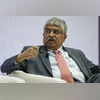 "AI will concentrate wealth; must solve social issues with it: Nilekani")
WebinarsNew
Deep DiveNew
Explore Business Standard
Smart use of AI can solve problems of healthcare and education for a billion people, Nilekani said
IT services major Infosys' co-founder and non-executive chairman Nandan Nilekani has said that artificial intelligence (AI) is bound to lead to concentration of wealth and power in a few, but pitched for deploying new-age technologies at scale for human betterment.
Smart use of AI can solve problems of healthcare and education for a billion people, Nilekani said, stressing that he is an optimist who wants to look at the positive side of technology in tackling real issues.
"Obviously, there is going to be a concentration of wealth and power with AI ... we can't fight that. Forces at play are much bigger than any of us. But in our zone of influence, we have to do what we can to create a different paradigm," he said, speaking at an event hosted by the Asia Society here late on Thursday evening.
"AI will be very well used in India but in a way that helps people's lives, helps them to learn languages, get better healthcare, get better education," Nilekani, who is credited for creating a unique identity for over a billion Indians as part of the Aadhar project and also the widely popular unified payments interface, said.
Even as the Western world and China invest billions of dollars to stay ahead in AI, Nilekani recommended India should avoid that expensive race for now and instead apply the tools to solve real world problems.
Nilekani also went public with his reservations on the universal basic income (UBI) concept, which is being touted as a necessity in some quarters which feel that AI's impact will impact jobs, forcing humans to subsist on the cash transfers from the government.
The IIT-Bombay alum explained that some people feel AI will do all the jobs or work and human life will be about playing video games on the beach while getting money in bank accounts as per this view.
"I don't agree with the vision that these guys are propounding... that is a dystopian idea," Nilekani said, spelling out his view of AI.
AI should be used to "amplify the human potential" and make people's lives better, he exhorted.
The country's ability to render high quality service to the citizens can be amplified using AI tools, Nilekani said, reiterating that he does not subscribe to the UBI idea.
It can be noted that the idea of UBI had also found a mention in one of the economic surveys authored by the then Chief Economic Advisor Arvind Subramanian had suggested it in the economic survey of 2017.
Pointing to successes like Aadhar, account aggregator and their advantages to industry, Nilekani said the future is getting invented here in India but added that there is a need to keep innovating when the aspirations of over a billion people get unlocked.
"... You have to innovate to keep ahead. Otherwise, you will have negative risk-to-rewards and revolutions and so on. So, I think, by force, we will have to innovate to solve the problems of a billion people," he said.
As we innovate, we will have to be cognizant of the low purchasing power levels, and keep the design "frugal", Nilekani said, pointing out that it is only through the adoption of such principles that an amount as small as Re 1 can be sent for free using the UPI platform in India, which is not possible anywhere else in the world.
Design simplicity is the biggest lesson from the Aadhar project which also got implemented in the UPI project, Nilekani recollected, pointing out that the document explaining the payments platform created by Dilip Asbe and Pramod Verma was just one page long.
(Only the headline and picture of this report may have been reworked by the Business Standard staff; the rest of the content is auto-generated from a syndicated feed.)
First Published: Aug 01 2025 | 11:03 AM IST


 Connect with us on WhatsApp