
ISRO's POEM-4 to test seed germination, debris capture, green fuel in space
The Amity Plant Experimental Module in Space (APEMS), developed by Amity University, Mumbai, plans to study the growth of spinach in a microgravity environment
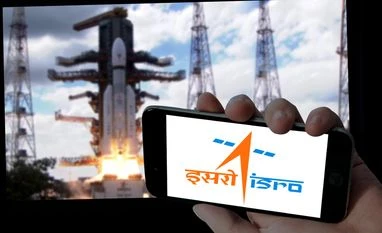 "ISRO's POEM-4 to test seed germination, debris capture, green fuel in space")
WebinarsNew
Deep DiveNew
Explore Business Standard
The Amity Plant Experimental Module in Space (APEMS), developed by Amity University, Mumbai, plans to study the growth of spinach in a microgravity environment
Demonstration of seed germination in outer space, a robotic arm to catch a tethered debris there, and testing of green propulsion systems are some of the experiments planned on the POEM-4 -- the fourth stage of ISRO's PSLV rocket that remains in orbit after launching a satellite.
The PSLV-C60 mission, slated for an yearend launch, is scheduled to place the twin satellites 'Chaser and Target' to demonstrate the space docking technologies that are crucial for building India's space station.
The PSLV Orbital Experiment Module (POEM) will carry 24 experiments -- 14 from various ISRO labs and 10 from private universities and start-ups -- to demonstrate various technologies in space.
ISRO plans to grow eight cowpea seeds from seed germination and plant sustenance until the two-leaf stage in a closed-box environment with active thermal control as part of the Compact Research Module for Orbital Plant Studies (CROPS) developed by the Vikram Sarabhai Space Centre.
The Amity Plant Experimental Module in Space (APEMS), developed by Amity University, Mumbai, plans to study the growth of spinach in a microgravity environment.
Two parallel experiments will be carried out simultaneously -- one on POEM-4 in space and one on the ground at the university.
The experiment's outcome will provide insights into how higher plants sense the direction of gravity and light.
The Debris Capture Robotic Manipulator, developed by VSSC, will demonstrate the capturing of tethered debris by a robotic manipulator using visual servoing and object motion prediction in the space environment.
The robotic manipulator will be capable of capturing free-floating debris and refuelling tethered and free-floating spacecraft in future POEM missions.
Mumbai-based start-up Manastu Space will test Vyom-2U, the green propulsion thruster, that uses a blend of hydrogen peroxide and in-house additives as fuel, with the goal of providing a safer and higher-performing alternative to hydrazine for space applications.
The Varuna payload, developed by Piersight Space-Ahmedabad, is an in-orbit demonstration of a Synthetic Aperture Radar (SAR) in a CubeSat form factor.
This mission marks the initial step towards establishing a constellation of SAR and Automatic Identification System (AIS) satellites, aiming to provide persistent, near real-time monitoring of all human and industrial activity at sea.
First Published: Dec 22 2024 | 7:20 PM IST

