Home / Technology / Tech News / Mospi secy seeks federated global AI infra with citizens as co-creators
Mospi secy seeks federated global AI infra with citizens as co-creators
Mospi Secretary Saurabh Garg urges a trusted, federated global AI infrastructure that gives citizens agency as co-creators, backed by shared resources and the proposed MAITRI platform
3 min read Last Updated : Feb 20 2026 | 6:56 PM IST
Building a trusted, federated global artificial intelligence (AI) infrastructure that treats citizens not just as data consumers but as co-creators is essential to genuinely democratise the use of AI, Ministry of Statistics and Programme Implementation (Mospi) Secretary Saurabh Garg said on Friday, calling for a new global “friendship” platform for shared resources.
Speaking at a session on “Democratising AI Compute and Digital Data Infrastructures,” Garg said digital public infrastructure (DPI) for AI must guarantee not just access but agency. Any such DPI, he argued, must be trusted, interoperable and shareable with reusability built in by design, qualities that systems like Aadhaar and UPI have demonstrated.
Garg, who chaired the summit’s working group on democratising AI resources, said the group identified four foundational AI resources- compute, data, models and talent- supported by appropriate governance frameworks. While compute capacity can be acquired and model efficiency is a “work in progress”, he stressed that high-quality data remains the raw material for AI and needs to be made systematically “AI ready”.
In another session on AI Diffusion, he added that data strategies must balance wide access and dissemination with strong privacy safeguards, because local linguistic, cultural and contextual nuances live in the underlying datasets and ultimately determine whether AI outputs are genuinely relevant on the ground.
Garg also cautioned that expanding shared AI infrastructure should not create new forms of dependency or undermine data sovereignty. To avoid that, he advocated a federated architecture over centralised models, allowing data to remain with those who generate it while using open technologies to enable safe, trusted sharing across borders.
He said that a mix of technological, policy and protocol-based mechanisms will be needed to anchor this trust.
As a concrete response to these challenges, Garg highlighted MAITRI, a platform proposed by the working group. MAITRI—an acronym for Multi-Stakeholder AI for a Trusted and Resilient Infrastructure, meaning “friendship” in Hindi—is envisioned as a modular, voluntary, non-binding global framework through which countries, private firms and philanthropies can contribute compute, datasets, models and talent.
Initially conceived as a digital public good, MAITRI is expected to evolve into a full-fledged global platform that is “owned by all”. “I'm sure there's a major role for not only countries, but for the private sector and philanthropies, to be able to build this structure together,” he added.
He also stressed the need for capability development of people and the ability to use AI for improving productivity. “I would also like to focus on the need for domain-specific and niche models, which will ensure that they use a lot less power, a lot less infrastructure, and not have the problems of large language models,” he emphasised.


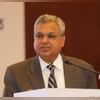 "Mospi secy seeks federated global AI infra with citizens as co-creators")

