The Tonga Trench is the place where the Pacific and Australian plates meet. The motion of these two plates has created one of the most seismogenic ("earthquake making") regions in the world
The Tonga Trench is the place where the Pacific and Australian plates meet. | Image: Bloomberg
An earthquake of 7.0 on the Richter Scale jolted Tonga Islands on Sunday, a statement by the National Center for Seismology said.
As per the NCS, massive earthquake occurred at a shallow depth of 10km, making it susceptible to aftershocks.
In a post on X, the NCS said, "EQ of M: 7.0, On: 30/03/2025 17:48:48 IST, Lat: 20.06 S, Long: 174.04 W, Depth: 10 Km, Location: Tonga Islands."
Shallow earthquakes like this one are more dangerous than deeper ones due to their greater energy release closer to the Earth's surface, causing stronger ground shaking and increased damage to structures and casualties, compared to deeper earthquakes, which lose energy as they travel to the surface.
The Tonga Trench is the place where the Pacific and Australian plates meet. The motion of these two plates has created one of the most seismogenic ("earthquake making") regions in the world; every year, there are approximately 200 earthquakes near Tonga.
Most of these are very small, but large earthquakes happen about once every decade; great earthquakes (those larger than magnitude 7) happen there about once a century. The effects of these earthquakes can be felt around the world. The energy from the earthquake travels as a sound wave through the Earth, and is picked up on seismometers.
This sound wave causes the local rock to change shape (to strain); this change is recorded by strainmeters. And the small changes in position caused by the sound wave are detected on GPS sensors.
Subduction zones have earthquakes because these are places where two plates move against each other. One plate moves under the other ("subducts"), it slowly bends the overriding plate. This causes both plates to bend; in some cases, this bending can raise volcanoes and atolls above the ocean's surface, creating new islands. Eventually, the overriding plate slips, creating an earthquake and submerging some of the islands.
This description of the cycle of events is known as the "elastic rebound model" and can tell us much about where earthquakes can be expected. Scientists developed it to explain their observations following the 1906 earthquake in San Francisco; however, it wasn't until the 1960's that plate tectonic theory was able to explain what causes the motion driving the earthquakes.

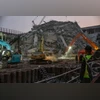 "7.0-magnitude earthquake strikes Tonga Islands, aftershocks expected")


 Connect with us on WhatsApp