Russia's overheating economy is on the cusp of serious cooling, as huge fiscal stimulus, soaring interest rates, stubbornly high inflation and Western sanctions take their toll, but after three years of war, Washington may just have thrown Moscow a lifeline.
US President Donald Trump is pushing for a quick deal to end the war in Ukraine, alarming Washington's European allies by leaving them and Ukraine out of initial talks with Russia and blaming Ukraine for Russia's 2022 invasion, political gifts for Moscow that could also bring strong economic benefits.
Washington's push comes as Moscow faces two undesirable options, according to Oleg Vyugin, former deputy chairman of Russia's central bank.
Russia can either stop inflating military spending as it presses to gain territory in Ukraine, he said, or maintain it and pay the price with years of slow growth, high inflation and falling living standards, all of which carry political risks.
Though government spending usually stimulates growth, non-regenerative spending on missiles at the expense of civilian sectors has caused overheating to the extent that interest rates at 21 per cent are slowing corporate investment and inflation cannot be tamed.
"For economic reasons, Russia is interested in negotiating a diplomatic end to the conflict," Vyugin said. "(This) will avoid further increasing the redistribution of limited resources for unproductive purposes. It's the only way to avoid stagflation." While Russia is unlikely to swiftly reduce defence spending, which accounts for about a third of all budget expenditure, the prospect of a deal should ease other economic pressures, could bring sanctions relief and eventually the return of Western firms.
"The Russians will be reluctant to stop spending on arms production overnight, afraid of causing a recession, and because they need to restore the army," said Alexander Kolyandr, researcher at the Center for European Policy Analysis (CEPA).
"But by letting some soldiers go, that would take a bit of pressure off the labour market."
War-related recruitment and emigration have caused widespread labour shortages, pushing Russian unemployment to a record low 2.3 per cent.
Inflation pressure could also ease, Kolyandr added, as peace prospects may make Washington less likely to enforce secondary sanctions on companies from countries like China, making imports more straightforward and, therefore, cheaper.
Natural Slowdown
Russian markets have already seen a boost. The rouble surged to a near six-month high against the dollar on Friday, buoyed by prospects for sanctions relief.
Russia's economy has grown strongly since a small contraction in 2022, but authorities expect 2024's 4.1 per cent growth to slow to around 1-2 per cent this year and the central bank is not yet seeing sustainable grounds to cut rates.
When holding rates at 21 per cent on February 14, Central Bank Governor Elvira Nabiullina said demand growth has long been faster than production capacity, hence the natural slowdown in growth.
The bank's challenge in finding a balance between growing the economy and lowering inflation is complicated by rampant fiscal stimulus. Russia's fiscal deficit ballooned to 1.7 trillion roubles ($19.21 billion) in January alone, a 14-fold increase year on year as Moscow frontloads 2025 spending.
"...it is very important for us that the budget deficit...remains as the government is currently planning," Nabiullina said.
The finance ministry, which expects a 1.2-trillion-rouble deficit for 2025 as a whole, rejigged its budget plans three times last year.
Carrot and Stick
The war has brought economic advantages for some Russians but pain for others.
For workers in sectors linked to the military, fiscal stimulus has sharply raised wages, while others in civilian sectors struggle with soaring prices for basic goods.
Some businesses have seized opportunities presented by huge shifts in trade flows and reduced competition. For example, Melon Fashion Group's revenues have steadily risen as it has ridden the consumer demand wave.
Melon's brands have significantly expanded over the last two years, the company told Reuters, and since 2023, the average size of stores it opens has doubled.
But for many others, high rates pose a serious challenge.
"At current lending rates, it is difficult for developments to launch new projects," said Elena Bondarchuk, founder of warehouse developer Orientir. "The once-wide circle of investors has narrowed and those who remain are also dependent on banks' terms."
Lower oil prices, budget constraints and a rise in bad corporate debt are among the top economic risks facing Russia, internal documents seen by Reuters show. And Trump, though dangling the carrot of concessions over Ukraine, has threatened additional sanctions if no deal is forthcoming.
"The United States has significant leverage in terms of the economy and it's why the Russians are happy to meet," Chris Weafer, chief executive of Macro-Advisory Ltd, told Reuters.
"The United States is saying: 'We can ease sanctions if you cooperate, but if you don't we can make it a hell of a lot worse'."
(Only the headline and picture of this report may have been reworked by the Business Standard staff; the rest of the content is auto-generated from a syndicated feed.)

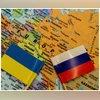 "After three years of war, Trump may give Russian economy a lifeline")


