Home / World News / 'At least $12 trn needed for tripling renewable energy capacity by 2030'
'At least $12 trn needed for tripling renewable energy capacity by 2030'
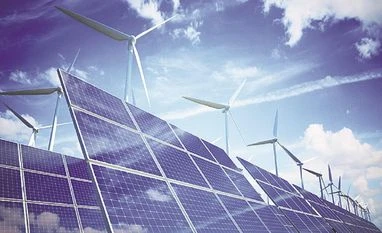
At least USD 12 trillion is required to create new infrastructure over the next six years for tripling global renewable energy capacity by 2030, COP28 President Sultan Al Jaber said on Friday.
Al Jaber said artificial intelligence can be a game changer by multiplying efficiencies and helping solve intermittency and storage.
At least $12 trillion is required to create new infrastructure over the next six years for tripling global renewable energy capacity by 2030, COP28 President Sultan Al Jaber said on Friday.
Addressing the annual Petersberg Climate Dialogue, Al Jaber said the energy transition will not happen without significant investment and a level-up in climate finance.
He said the four key priorities to level up climate finance are infrastructure, technology, people and the Global South.
"On infrastructure, we need to invest at least $6 trillion over the next six years to meet our 2030 target of 11TW of renewable energy capacity. And we need to spend a similar amount to upgrade outdated or non-existent grids," the COP28 president said.
World leaders reached a historic agreement at COP28 in Dubai last year to triple global renewable energy capacity by 2030.
According to the International Energy Agency, tripling global renewable energy capacity and doubling energy efficiency is crucial to limiting the average temperature rise to 1.5 degrees Celsius, a political target set in 2015 to prevent worsening of climate impacts.
At the United Nations climate conference (COP29) in Baku, Azerbaijan, New Collective Quantified Goal (NCQG) or a new climate finance goal will be the key issue. NCQG is the new amount developed countries must mobilise every year from 2025 onwards to support climate action in developing countries. Rich countries are expected to raise more than the $100 billion they promised to provide every year from 2020 but repeatedly failed.
Al Jaber said artificial intelligence can be a game changer by multiplying efficiencies and helping solve intermittency and storage.
"Every country must invest in its people, developing a new set of skills for a new green economy. And we must invest in the Global South. Right now, over 120 developing countries attract less than 15 per cent of global clean tech investment. Public, private, and development finance must work in tandem in creative catalytic models that turn billions into trillions," he said.
Al Jaber said the COP troika, a collaboration between the COP hosts of 2023, 2024, and 2025, is pushing for more ambitious nationally determined contributions (NDCs or national climate plans) ahead of the UN climate conference in Brazil.
"We are encouraging all governments to set out economy-wide emission reduction plans, with explicit renewable energy targets. And we are advocating for smart policies that push industries to step up... and incentivise the private sector to invest," he said.
"My message to governments is simple, think bigger... act bolder. Send a clear message early with your next NDC that puts green infrastructure at the centre of your development plans. Be transparent about the costs and trade-offs involved. And let's make the right investments now that deliver real results, follow the science, keep 1.5 (degrees Celsius) within reach, and advance human progress," he said.
Al Jaber reiterated that the global energy transition would take time and happen at different paces in different places. "And we cannot unplug the current energy system until the new one is built."
During a panel discussion at the climate dialogue on Thursday, UNFCCC Secretary-General Simon Steill had said that the next round of NDCs should cover all emissions from all sectors and greenhouse gases.
Such national climate plans cannot be developed in isolation just with the ministers of environment and climate and require a whole-of-government, whole-of-society approach. That starts with the ministers of finance and economic development being at the heart of NDC development, he said.
(Only the headline and picture of this report may have been reworked by the Business Standard staff; the rest of the content is auto-generated from a syndicated feed.)

 "'At least $12 trn needed for tripling renewable energy capacity by 2030'")


 Connect with us on WhatsApp